Last updated: August 10, 2026
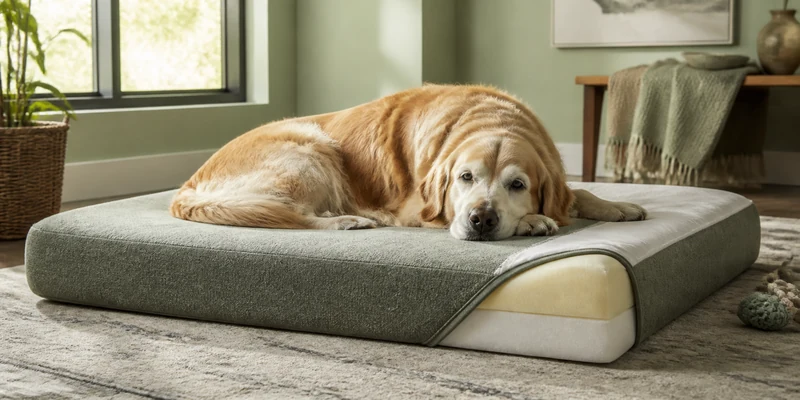
Shopping for an orthopedic dog bed gets confusing fast, because the word orthopedic is a product label, not a regulated standard. Any bed with a slab of foam inside can print it on the box. What separates a bed that actually supports a sleeping dog from one that flattens into the floor within months is the quality and thickness of that foam, and that is exactly the part you cannot see in a product photo.
This guide explains what to check before you buy, which specifications matter for your dog’s size, and which beds come up again and again in owner feedback for holding their shape. One note before we start: an orthopedic bed is a comfort purchase, not a treatment. If your dog seems stiff, sore, or reluctant to move, talk to your veterinarian first.
This article contains affiliate links. If you buy through them, we may earn a commission at no extra cost to you. Learn more.
Quick Answer
What makes an orthopedic dog bed worth buying?
- Foam thickness matched to your dog’s weight. Small dogs do fine on 3 to 4 inches, but dogs over 70 pounds generally need 6 inches or more to avoid bottoming out.
- Dense, supportive foam rather than shredded fill or polyfill. A true foam base is what keeps the bed from flattening under a dog that sleeps in the same spot every night.
- A removable, machine washable cover, ideally with a water-resistant liner underneath to protect the foam itself.
What to Check Before You Buy
Use this as a shopping checklist. Every row is something you can verify from the product listing before spending anything.
| What to check | Why it matters | What to look for |
|---|---|---|
| Foam type | “Orthopedic” is unregulated, so the fill is the real story | A solid foam base, often memory foam over a firmer support layer. Avoid beds filled only with shredded foam or loose polyfill |
| Foam thickness | Thin foam bottoms out under heavy dogs | Roughly 3 to 4 inches for small dogs, 4 to 6 for medium, 6 or more for large and giant breeds |
| Bed dimensions | Dogs stretch out more than you expect | Measure your dog from nose to tail base while lying on its side, then add several inches |
| Cover | The cover takes all the daily abuse | Removable, machine washable, with a zipper that does not sit where the dog lies |
| Waterproof liner | Accidents and drool reach the foam otherwise | An inner liner between cover and foam, valuable for puppies and senior dogs |
| Entry height | Thick beds are a climb for short-legged and stiff dogs | A lower profile, a bolster gap, or a spot next to dog stairs if the bed sits high |
| Warranty | Flattening foam is the most common complaint in this category | Brands that publish a multi-year warranty on the foam are signaling confidence in it |
If you are still deciding whether this category fits your dog at all, our explainer on whether your dog needs an orthopedic bed walks through the signs that make the upgrade worthwhile.
Why Foam Quality Decides Everything
A dog bed carries a concentrated load. A 90-pound dog does not spread its weight evenly like a mattress topper ad suggests; it presses hips, elbows, and shoulders into the same few square inches every night. Cheap open-cell foam compresses under that pressure and stays compressed, which is why owner reviews of budget beds so often mention a visible body-shaped dent after a few months.
Denser foam resists that permanent compression. You usually cannot read density from a listing, but there are honest proxies: product weight (denser foam is heavier), the brand publishing a foam warranty, and whether reviews from owners of heavy dogs mention the bed still springing back after a year. Beds built as a memory foam comfort layer over a firmer base layer tend to hold up better than a single soft slab, a construction our memory foam dog bed guide covers in more detail.
Match the Bed to the Dog, Not the Room
Size is where most buyers go wrong, usually by buying the bed that fits the corner instead of the dog. A bed only delivers its support if the whole dog is on the foam, so a side-sleeping Labrador hanging its legs off a medium bed is effectively sleeping on the floor from the elbows down.
Weight matters as much as length. The same 4-inch bed that supports a Beagle for years can bottom out under a Great Dane in weeks. If your dog is over roughly 70 pounds, treat thickness as non-negotiable and start with our dedicated guide to the orthopedic dog bed for large dogs. Our short explainer on how to measure your dog for furniture shows the two measurements that prevent a wrong-size order.
Our Top Picks at a Glance
How we chose: we compared widely available orthopedic beds on foam construction, published thickness, cover quality, and how consistently owners report the foam holding its shape over time. Selections lean on manufacturer specifications and recurring themes in customer reviews rather than any hands-on trial of our own.
Two notes before the list. Genuinely supportive beds are bulky, so check the outer dimensions against your floor space. And every bed here has a removable washable cover, because in this category that should be the baseline, not a bonus.
🏆 Best Overall
A thick American-made foam bed built specifically for big dogs, with a multi-layer construction and a foam warranty that few competitors match. The default answer for dogs over 50 pounds, and the bed our Big Barker review covers in depth.
💛 Best Value
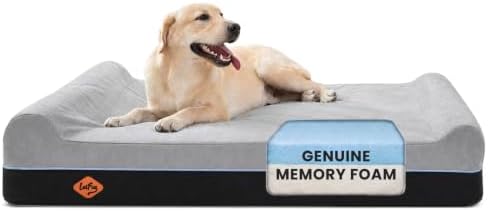
A bolster-style foam bed with a washable cover at a price that makes it an easy first step into the category. The foam is thinner than the premium options, which is a fair trade for small and medium dogs.

🛡️ Best Heavy-Duty
A chew-resistant bed with tough ripstop fabric and a machine washable cover over an orthopedic foam base. The pick for dogs that destroy ordinary beds, and a name that dominates our chew proof dog bed roundup.

Senior Dogs and Dogs With Joint Concerns
Older dogs are the classic reason people search this category, and the priorities shift with age. Entry height starts to matter as much as foam quality, because a stiff dog hesitates at a bed it has to climb onto. A lower profile, a bolster with a cut-out entry, or placing the bed away from slippery flooring all help, and our guide to the orthopedic bed for senior dogs goes through the full checklist. A washable, water-resistant setup also becomes more valuable as dogs age.
To be clear about the limits: joint support is a description of how these beds are built, not a promise about health outcomes. If your dog has been diagnosed with arthritis, or you suspect pain, involve your veterinarian and treat the bed as one comfortable piece of a bigger picture. Our guides on the dog bed for arthritis and on senior dog mobility at home cover that bigger picture, including ramps, traction, and layout.
🐕 Best for Senior Dogs
A memory foam bed built for senior dogs, with a waterproof liner under the machine washable cover and a non-slip bottom. A combination that suits aging dogs particularly well.
👍 Also Great
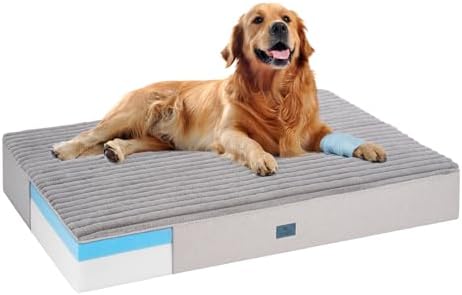
A thick two-layer memory foam bed for large dogs at a friendlier price point than the premium names, with a removable washable cover. Owners frequently mention it as the value alternative in the big-dog class.
Placement, Washing, and Making the Bed Last
Where the bed goes affects whether it gets used. Dogs favor spots with a view of the household and without drafts, so put the bed where your dog already chooses to nap rather than where the bed looks best. On hard flooring, check that the bed has a non-slip bottom, because a bed that slides when the dog steps on it quickly gets avoided, especially by older dogs.
For upkeep, wash the cover regularly and let new foam expand fully before judging it; compressed shipping means most foam beds need a day or two to reach their real loft. Protect the foam itself with the inner liner zipped shut, spot-clean spills before they soak through, and rotate the bed a half turn every few weeks so your dog’s favorite corner is not always the same corner. If accidents are a regular event, a fully waterproof orthopedic dog bed saves the foam and your patience.
Common Mistakes to Avoid
- Trusting the word orthopedic. It is marketing language, not a standard. Judge the foam type, thickness, and warranty instead.
- Buying by breed label instead of measurements. “Large” means something different to every brand. Measure your dog lying down and compare against the listed sleep surface.
- Ignoring the liner. A washable cover without a waterproof inner liner still lets accidents reach foam you cannot wash.
- Underestimating thickness for heavy dogs. Press your hand into the middle of the bed in doubt; if you feel the floor, so will your dog.
- Putting a thick bed in front of a stiff dog with no way up. Pair a tall bed with a shallow entry side, or reconsider the height. Our dog ramp guide covers the equivalent problem for couches and human beds.
- Judging the foam on day one. Vacuum-packed foam needs time to expand; read the unboxing instructions before assuming a defect.
Where to Go From Here
If your dog sleeps in a crate, standard beds rarely fit right; our guide to the orthopedic dog bed for a crate covers pads sized to actual crate dimensions. If you are choosing between the two biggest budget names in the category, our Bedsure review and FurHaven review compare what you give up at the lower price. And for the broader category beyond orthopedic models, our dog bed hub maps every style.
Frequently Asked Questions
What does orthopedic actually mean on a dog bed? Legally, nothing specific. It is a product description brands apply to beds with supportive foam. That is why foam type, density clues, and thickness are more useful signals than the label itself.
How thick should an orthopedic dog bed be? As a rule of thumb: around 3 to 4 inches for small dogs, 4 to 6 for medium dogs, and 6 inches or more for dogs over roughly 70 pounds. Heavier dogs compress foam far more than the difference in their weight suggests.
Do orthopedic beds help dogs with arthritis? They are designed to distribute weight more evenly, and many owners of stiff dogs report their dog settling more comfortably. They do not treat any condition, so if you suspect arthritis or pain, talk to your veterinarian. Our arthritis dog bed guide covers what to prioritize.
At what age should a dog get an orthopedic bed? There is no set age, and a supportive bed suits a dog at any stage. Owners of large breeds often start early, since big dogs put the most stress on cheap foam regardless of age.
Is memory foam safe for dogs? Finished, certified foam in a quality bed is widely used without issue. Look for foam certifications in the listing, let new foam air out as instructed, and choose a chew-resistant model if your dog is a shredder, since eating foam is the real risk.
The Bottom Line
An orthopedic dog bed is worth buying when the foam is worth buying: a real foam base, thickness matched to your dog’s weight, and a washable cover with a liner underneath. Measure your dog lying down, be skeptical of the orthopedic label on thin beds, and give heavy dogs at least 6 inches of quality foam. For stiffness or suspected pain, the bed is a comfort upgrade and your veterinarian is the first call.