Last updated: August 10, 2026
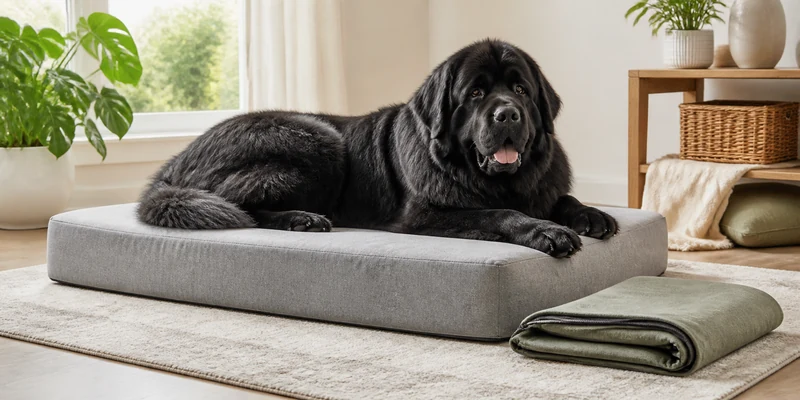
An orthopedic dog bed for large dogs is a different purchase from a large orthopedic dog bed. Plenty of beds come in XL sizes but use the same 3 inches of soft foam as the small version, and under an 85-pound Labrador that foam bottoms out fast. Owners of big dogs know the pattern: the bed looks plush for a month, then develops a permanent crater exactly where the hips land.
This guide focuses on the specifications that keep a bed supportive under real weight: foam thickness, layered construction, and a sleep surface long enough for a dog that sprawls. Below you will find what to check in a listing, the beds that owners of big breeds consistently rate as holding up, and the mistakes that lead to a second purchase within a year.
This article contains affiliate links. If you buy through them, we may earn a commission at no extra cost to you. Learn more.
Quick Answer
What should an orthopedic bed for a large dog have?
- At least 6 inches of foam, ideally in layers: a softer comfort layer over a firm support base. Thinner beds bottom out under dogs past roughly 70 pounds.
- A sleep surface longer than your dog stretched out on its side, not just longer than the dog standing up.
- A foam warranty. Brands that guarantee their foam for years are the ones building for heavy dogs; flattening foam is the number one complaint in this category.
What to Check for a Big Dog
Every row below can be verified from a product listing or a tape measure before you buy.
| What to check | Why it matters at 70+ pounds | What to look for |
|---|---|---|
| Foam thickness | Weight concentrates on hips and elbows and compresses thin foam to the floor | 6 inches minimum, more for giant breeds |
| Layered build | A single soft slab loses shape fastest | Memory foam comfort layer over a firm support foam base |
| Product weight | Shipping weight is the most honest density clue | Between two beds of equal size, the heavier one almost always uses denser foam |
| Sleep surface length | Big dogs sleep stretched out, not curled | Measure nose to tail base lying on the side, add a few inches, compare to inner dimensions |
| Foam warranty | Flattening is the failure mode | A published multi-year guarantee against significant foam flattening |
| Cover and liner | Big dogs mean big messes | Removable washable cover plus a water-resistant inner liner |
| Edge or bolster strength | Heavy dogs sit on edges and use bolsters as headrests | Bolsters with firm fill, or a pillow-top edge that does not collapse |
These are the same principles as in our main orthopedic dog bed guide, dialed up because a big dog exposes weak foam so much faster.
Why Weight Changes the Math
Foam does not fail gradually and evenly; it fails where pressure concentrates. A large dog focuses most of its weight on a few contact points, and every time the dog stands, turns, and flops back down, the same spots get compressed. Low-density foam recovers less each cycle until the dent becomes permanent. That is why the same bed can earn five-star reviews from Beagle owners and one-star reviews from Mastiff owners.
Density is the hidden specification. Most listings will not state it, so use the proxies: total product weight, a foam warranty, and review patterns from owners who mention their dog’s size. On paper, a two-layer build with a dedicated support base is the construction that handles point loads best, and it is what the premium big-dog brands have in common.
Our Top Picks at a Glance
How we chose: we compared beds available in large and XL sizes on foam thickness, layered construction, warranty terms, and how consistently owners of dogs over 70 pounds report the foam keeping its shape. Selections lean on manufacturer specifications and recurring review themes rather than any hands-on trial of our own.
One expectation to set: a properly built big-dog bed is a serious piece of floor real estate and arrives vacuum-packed in a heavy box. Give the foam a day or two to expand before judging it.
🏆 Best Overall
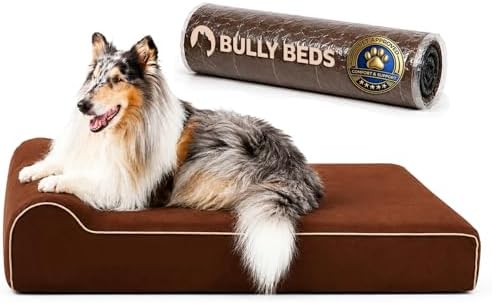
The reference point in this category: 7 inches of layered American-made foam with a long warranty against flattening, sized for big breeds specifically. Our full Big Barker review covers it in detail.
💛 Best Value
A thick memory foam bed for large and extra large dogs at a mid-range price, with a waterproof liner under the removable cover. Owners frequently name it the sensible alternative when the premium names stretch the budget.

🛡️ Best Heavy-Duty
A big-dog specialist brand building thick memory foam beds with a waterproof liner, aimed squarely at giant breeds and multi-dog weight loads.
Large Dogs That Chew, and Large Old Dogs
Two situations deserve their own picks. First, the shredder: a strong jaw makes short work of standard covers, and a destroyed orthopedic bed is an expensive pile of foam crumbs, with the added risk of your dog swallowing pieces. Chew-resistant builds trade some plushness for tougher fabric and protected zippers, and our chew proof dog bed guide goes deeper on that trade-off.
Second, the aging giant. Big breeds tend to slow down earlier than small ones, and a stiff, heavy dog needs an easy step onto the bed, solid footing around it, and a cover system that handles accidents. Our guides to the orthopedic bed for senior dogs and senior dog mobility at home cover the full setup. If your large dog seems sore, hesitates on stairs, or struggles to rise, that is a conversation for your veterinarian, not a shopping decision alone.
🦴 Best for Chewers
Ballistic-grade ripstop fabric over an orthopedic foam base with a washable cover, from the brand most owners of destructive dogs end up with after two or three failed beds.

👍 Also Great
A two-layer memory foam bed in large and jumbo sizes with a washable cover and water-resistant liner, at a price that makes outfitting two sleeping spots realistic.

Placement, Break-In, and Upkeep
Give the bed a spot with room to spare, because a big dog approaches, circles, and flops with momentum; a bed jammed between furniture gets half-missed landings and a frustrated dog. On hard floors, check for a grippy underside, since a 90-pound dog will otherwise surf the bed across the room within a week.
Maintenance is mostly about protecting the foam. Keep the inner liner zipped, wash the outer cover on a regular schedule, and rotate the bed a half turn every few weeks so the favorite corner shifts. If drool, wet coats after walks, or the occasional accident are part of life with your dog, step up to a fully waterproof orthopedic dog bed rather than gambling on spot-cleaning foam.
Common Mistakes to Avoid
- Buying XL dimensions with S-grade foam. Size labels scale the footprint, not necessarily the support. Check thickness and construction on the exact size you order.
- Measuring the standing dog. Big dogs sleep stretched out. Measure lying on the side, nose to tail base, and add several inches.
- Ignoring product weight. A huge bed that ships suspiciously light is telling you what is inside.
- Judging foam on delivery day. Vacuum-packed foam needs a day or two to reach full loft.
- Skipping the liner with a senior dog. One accident into unprotected foam is permanent.
- Treating the bed as therapy. Joint support describes the build, not a medical effect. Stiffness and limping belong at the veterinarian first.
Where to Go From Here
If you want to understand the foam types behind these picks before committing, our memory foam dog bed guide explains layered construction in plain terms. If your big dog sleeps in a crate, standard beds rarely fit the pan; see our guide to the orthopedic dog bed for a crate. And for help getting a heavy senior dog onto couches and human beds without leaps, our dog ramp guide covers the options.
Frequently Asked Questions
How thick should an orthopedic bed be for a large dog? Six inches of quality foam is a sensible floor for dogs over roughly 70 pounds, and giant breeds benefit from more. Thickness only counts if the foam is dense enough not to compress to the floor under pressure.
What size bed does a large dog need? Longer than your dog measured lying on its side from nose to tail base, plus a few inches of margin. When in doubt between two sizes, go bigger; dogs use every inch of a large sleep surface.
Why do big-dog beds flatten so fast? Weight concentrates on a few contact points, and low-density foam loses a little recovery with every compression cycle. Denser, layered foam and a published foam warranty are the best predictors of a bed that lasts.
Are these beds worth it for a young large dog? A supportive bed suits a big dog at any age, and buying quality once tends to beat replacing cheap beds annually. Our explainer on who needs an orthopedic bed helps you weigh it.
Can an orthopedic bed fix my dog’s joint problems? No bed treats a condition. These beds are built to spread weight more evenly, which many owners report their dogs settle into more comfortably, but limping, stiffness, or difficulty rising should always go to your veterinarian.
The Bottom Line
For a large dog, buy the foam, not the footprint: at least 6 inches, layered construction, a real warranty, and a sleep surface longer than your stretched-out dog. Product weight and big-dog review patterns tell you what the listing will not. Get the liner, rotate the bed, and let your veterinarian handle anything that looks like pain.