Last updated: August 10, 2026
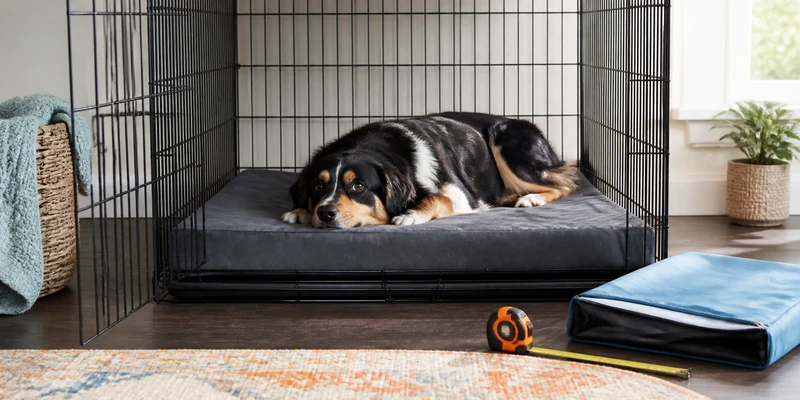
An orthopedic dog bed for a crate has a sizing problem that regular beds never face: it has to fit a metal or wooden box with exact interior dimensions. A standard bolster bed shoved into a crate bunches against the sides, tips the dog toward the middle, and leaves cold pan showing at the corners. What a crate needs is a flat, supportive pad cut to crate sizing, and that turns out to be its own product category with its own rules.
This guide covers how to size a pad to your crate rather than your dog, which foam builds hold up inside a confined footprint, and the crate-specific extras worth having: waterproof layers for housetraining, chew resistance for dogs left alone, and non-slip bottoms for plastic pans. The picks focus on pads that owners report actually fitting the crates they were bought for.
This article contains affiliate links. If you buy through them, we may earn a commission at no extra cost to you. Learn more.
Quick Answer
What should an orthopedic crate bed have?
- Crate sizing, not bed sizing. Buy by your crate’s interior dimensions (30, 36, 42, or 48 inch standards) so the pad covers the pan edge to edge.
- A flat, solid foam pad rather than a bolster bed. Flat builds use the whole footprint and lie stable inside the walls.
- Waterproofing and a washable cover, because crates concentrate accidents, drool, and hair on one small surface.
Crate Pad Sizing and Features at a Glance
Measure your crate’s interior length and width first; the label size on the crate box (like “42 inch”) refers to length, and pads are sold against those same standards.
| What to check | Why it matters in a crate | What to look for |
|---|---|---|
| Pad dimensions | Gaps expose cold pan; oversize pads buckle up the walls | A pad matched to the crate standard, within about an inch of the pan on each side |
| Foam build | Thin polyfill mats flatten in weeks under nightly use | Solid or layered foam, roughly 2 to 4 inches thick |
| Headroom cost | Every inch of pad raises the floor | Enough remaining height for the dog to sit and stand naturally |
| Waterproof layer | Housetraining and confinement multiply accident odds | A sealed liner or waterproof shell under the washable cover |
| Chew resistance | Bored crated dogs chew what they lie on | Tough fabric and hidden zippers for unsupervised hours |
| Non-slip bottom | Pads skate on smooth plastic pans | A grippy underside that stays put at the door side |
The foam quality rules are the same as everywhere in this category; our main orthopedic dog bed guide explains how to judge what is inside a pad from the listing.
Crate Sizing Comes First, Dog Sizing Second
With a freestanding bed you measure the dog; with a crate pad you measure the crate, because the crate was already sized to the dog. A properly fitted crate gives your dog room to stand without crouching, turn around, and lie fully stretched, and the pad simply needs to cover that floor completely. If the crate itself is borderline, fix that first; a supportive pad in a too-small crate solves the wrong problem. Our explainer on how to measure your dog for furniture covers both measurements in one session.
Thickness inside a crate is a genuine trade-off. A 4-inch pad is noticeably more supportive for a big dog, but it also raises the floor and eats headroom, and in wire crates it can sit above the lower door lip. For most dogs, 2 to 3 inches of dense foam beats 4 inches of soft foam, and heavy dogs in 42 and 48 inch crates are the group that benefits from the thick end. The weight-based rules from our large-dog bed guide apply inside the crate too.
Our Top Picks at a Glance
How we chose: we compared crate-sized orthopedic pads on foam construction, fit against standard crate dimensions, waterproofing, and how consistently owners report the pad holding shape under nightly crate use. Selections lean on manufacturer specifications and recurring review themes rather than any hands-on trial of our own.
One reassurance up front: every pick here is a flat pad designed for crates, so you are not paying for bolsters your crate walls make redundant.
🏆 Best Overall
A thick crate pad from the premium big-dog brand, cut to standard crate sizes with the same supportive foam philosophy as its famous full-size bed. The strongest option for medium and large dogs crated nightly; the brand story is in our Big Barker review.
💛 Best Value
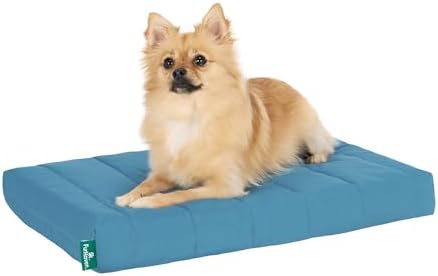
A quilted orthopedic foam crate mattress in the standard size run, with a removable washable cover. The affordable way to upgrade from the flat mat that shipped with the crate; see our FurHaven review for the brand’s trade-offs.
🛡️ Best Heavy-Duty
A chew-resistant armored crate pad that comes preassembled and fits standard wire crates, made for dogs that spend unsupervised hours in the crate and have opinions about bedding. The category leader in our chew proof dog bed roundup.

Puppies, Seniors, and Furniture Crates
Puppies in training are the classic crate-pad buyers, and for them waterproofing outranks everything: a sealed layer means an accident is a wipe-and-wash event instead of a ruined pad. Hold off on premium foam until the chewing phase passes, or go straight to a chew-resistant build. Our guide to crate training in a furniture crate covers the routine side of making the crate a good place to be.
Senior dogs crated at night benefit from the same support as anywhere else, plus an extra eye on the step over the crate threshold and slick flooring on the approach; the wider setup is covered in senior dog mobility at home, and stiffness that makes the crate step difficult is worth raising with your veterinarian. And if the crate is a wooden furniture piece rather than a wire box, pad fit gets stricter, because wooden interiors have fixed walls and visible sight lines; our dog crate furniture guide covers interior dimensions by model type.
💧 Best for Housetraining
A budget-friendly flat crate mat with a water-resistant build and machine washable design, cheap enough to buy two and rotate on laundry day during the puppy months.

Keeping a Crate Pad Fresh
A crate concentrates everything onto one small rectangle, so the cleaning rhythm is faster than for a room bed. Shake hair off outdoors a couple of times a week, wash the cover on a schedule, and wipe any waterproof layer with an enzyme cleaner after accidents rather than a perfumed spray. Let foam air fully before re-covering, since a crate’s enclosed space amplifies any trapped damp.
Check fit and flatness monthly. A pad that has started to buckle up a wall or slide toward the door creates a lumpy floor the dog will start avoiding, and avoidance in a crate shows up as scratching at the pan or sleeping half on, half off. Re-flatten, re-position, and if the foam no longer springs back, replace it; a crate pad is the hardest-working bed in the house.
Common Mistakes to Avoid
- Buying by dog size instead of crate size. The pad must match the pan. Measure the crate interior and buy the matching standard size.
- Putting a bolster bed in a crate. Walls already provide the enclosure; bolsters just steal floor space and bunch up.
- Ignoring headroom. A thick pad raises the floor. Check your dog can still sit and stand naturally on top of it.
- Premium foam under a teething puppy. Either accept sacrificial bedding or buy chew-resistant; do not gamble the expensive pad.
- Skipping waterproofing in a training crate. One accident into bare foam in an enclosed space is a smell you will not win against.
- Leaving a shifting pad unfixed. A pad that slides or buckles teaches the dog the crate floor is unreliable. Fit and grip solve it.
Where to Go From Here
If the crate itself is due for an upgrade, furniture-style crates double as end tables and come with their own sizing logic; start with our dog crate furniture hub. For the bedroom or living room bed outside the crate, the full category map is in the orthopedic dog bed guide, and accident-prone dogs get the dedicated treatment in the waterproof orthopedic dog bed roundup.
Frequently Asked Questions
What size crate pad do I need? Match the crate standard: a 42 inch crate takes a 42 inch pad, and so on. Measure the pan interior if your crate is off-brand, and aim for a pad within about an inch of the pan on each side.
How thick should a crate bed be? Two to 3 inches of dense foam suits most dogs; heavy dogs in large crates justify 4 inches if headroom allows. Density beats raw thickness in the confined footprint.
Should a crate bed be flat or bolstered? Flat. The crate walls already give the dog something to lean against, and flat pads use every square inch of a space that has none to spare.
Are orthopedic crate pads worth it for a young dog? A dense pad outlasts several cheap mats, so the economics often work even before comfort. For a teething puppy, chew resistance is the feature that decides it; see our chew proof bed guide.
My dog pushes the pad aside and sleeps on the bare pan. Why? Often heat: plastic and metal pans run cooler than foam, and warm dogs seek that. A thinner pad, better room ventilation, or summer rotation usually brings the dog back to the bedding.
The Bottom Line
Buy a crate bed the way the crate was built: by the numbers. A flat, dense foam pad in the crate’s own standard size, with a washable cover and a waterproof layer, covers nearly every situation, and chew resistance earns its keep for dogs crated unsupervised. Match the pan, mind the headroom, and the crate becomes the most comfortable spot in the house.