Last updated: August 10, 2026
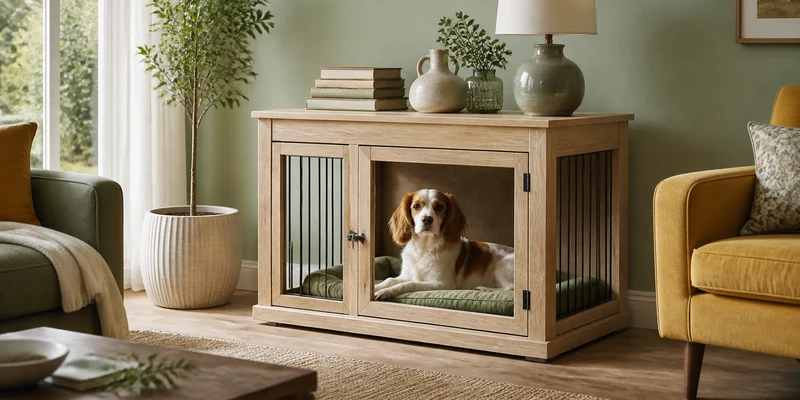
Dog crate furniture solves a problem almost every dog owner in a normal sized home knows well: your dog needs a den, and your living room does not need a wire cage in the corner. A furniture style crate wraps that den in a wooden cabinet that works as an end table, a TV stand, or a console, so the crate stops being the thing you apologize for when guests come over.
The category has exploded in the last few years, and quality now ranges from genuinely well built cabinets to flimsy boxes that a determined Labrador can open with one shove. This guide walks you through what separates the good ones from the regrettable ones, which crate suits which dog and room, and our picks across budgets and styles.
This article contains affiliate links. If you buy through them, we may earn a commission at no extra cost to you. Learn more.
Quick Answer
What should you look for in dog crate furniture?
- Interior size first. Your dog must be able to stand without ducking, turn around, and lie down stretched out. Furniture crates lose interior space to their cabinet walls, so check inside dimensions, not the footprint.
- A crate-trained dog. Furniture crates are for dogs that already settle calmly in a crate. They are not escape-proof containment for anxious dogs or heavy chewers.
- Real construction. Solid or thick engineered wood, metal bars or slats with sensible spacing, a secure latch, and a removable tray for cleaning.
What to Check Before You Buy
Use this checklist against any listing. Every row is something you can verify from the product page before spending anything.
| What to check | Why it matters | What to look for |
|---|---|---|
| Interior dimensions | Cabinet walls and frames eat several inches on every side compared with a wire crate of the same footprint | Inside height, width, and depth listed separately; compare them to your dog standing and lying stretched out |
| Material | Thin particleboard sags under a leaning dog and swells with accidents | Solid wood, thick MDF, or a composite like ecoFLEX; the shipping weight is an honest clue |
| Bar or slat spacing | Gaps sized wrong let paws or muzzles get stuck | Narrow spacing for small dogs, sturdy welded bars for large dogs |
| Door and latch | The latch is where cheap crates fail first | Metal hardware, a latch a paw cannot flip open, and hinges that do not sag |
| Ventilation and sightlines | Dogs settle better when they can see the room and air moves through | Open bars or slats on at least two, ideally three sides |
| Cleaning access | Accidents happen, especially early in training | A removable, wipeable tray or floor panel, plus a top you can wipe without stripping decor off it first |
| Tabletop rating | Most people use the top as a real table | A stated or plausible weight capacity for lamps, plants, or a TV |
If you are still deciding whether a crate belongs in your main living space at all, our piece on the dog crate in the living room covers placement and the household politics around it.
Sizing: The Step Most People Get Wrong
The single most common complaint in owner reviews of furniture crates is not quality, it is size. People buy by breed name or by the label on the box, and the dog ends up crouching. Measure instead: length from nose to base of tail plus a few inches, and height from floor to the top of the head or ears, whichever is taller. Then compare those numbers to the interior dimensions, because a cabinet listed as 40 inches wide can offer noticeably less inside.
Size categories also shift between brands, so one maker’s large is another’s medium. Our guide on how to measure your dog for furniture walks through the tape-measure routine, and if you share your home with a big breed, the interior math gets strict enough that we wrote a separate roundup of large dog crate furniture.
Is a Furniture Crate Right for Your Dog?
Honest answer first: not every dog should sleep in a wooden cabinet. A furniture crate is a piece of furniture wrapped around a den, and wood plus determination is a losing combination. If your dog panics when confined, breaks out of wire crates, or chews frames, fix that first in a conventional crate and keep the furniture money for later. Our guide to crate training in a furniture crate covers how to transition a dog that is partway there.
For the majority of dogs, the ones that already treat a crate as their bedroom, furniture crates are a genuine upgrade for the household. The crate moves out of the spare room and into the space where the family actually lives, which most dogs prefer anyway, and the top surface earns its keep as a table. Owners consistently report their dogs use these crates voluntarily during the day once the door stays open.
Our Top Picks at a Glance
How we chose: we compared widely available furniture crates on interior space, material thickness, latch quality, ventilation, and how consistently owners report them standing up to daily use. Selections lean on manufacturer specifications and recurring themes in customer reviews rather than any hands-on trial of our own.
Two notes before the list. Every crate here ships flat, so plan for an assembly session; owners report the difference between a solid crate and a wobbly one is often just how carefully the bolts were tightened. And if your dog is a chewer, skip straight to the composite pick, since bare wood edges are the first casualty.
🏆 Best Overall
A wooden double-door crate that balances interior space, sturdy metal bars, and a clean cabinet look most rooms can absorb. The sensible default for a crate-trained dog of small to large size.
💛 Best Value
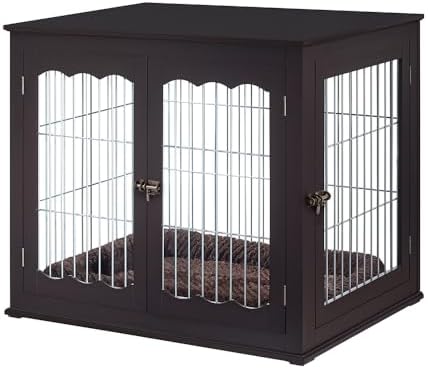
The budget benchmark of the category: an end-table crate in a rustic finish that undercuts most competitors while keeping metal mesh sides and a usable top. A strong first furniture crate.

🛡️ Best Heavy-Duty
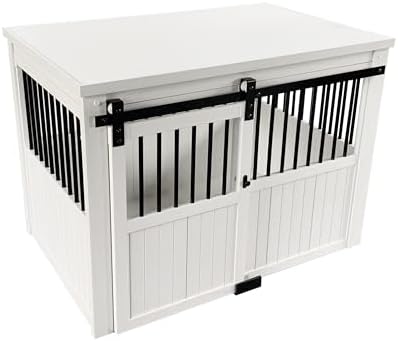
Built from a recycled wood-polymer composite instead of bare wood, so it shrugs off moisture, accidents, and casual chewing that would scar a wooden cabinet. Heavier and plainer, but very durable.
Match the Crate to Your Room and Dog
Beyond the top three, the right crate depends on where it will stand and who sleeps in it. In a small apartment, an end-table crate beside the sofa does double duty, and our dog crate end table roundup compares the best of that format. Two dogs sharing a wall of cabinet is its own puzzle, solved in our guide to double dog crate furniture. And if your priority is that the piece reads as design rather than dog gear, the picks in modern dog crate furniture lean that way.
🛋️ Best for Small Spaces
A classic slatted end table crate in solid wood that has been around long enough to prove itself. Sized for small and medium dogs, and neat enough to sit flush against a sofa arm.

⭐ Upgrade Pick
A design-first crate from a direct-to-consumer brand, with bent wood, clear panels, and hardware that feels like furniture store quality. Sold direct rather than through marketplaces, and priced accordingly.
🧱 Also Great
A two-in-one cabinet crate with a shelf or storage section beside the den, so one piece organizes leashes and toys as well as housing the dog. Good use of a wall in a hallway or living room.

Placement, Assembly, and Everyday Use
Furniture crates work best where the household actually lives. Dogs are social sleepers, and a den with a view of the room gets used far more than one exiled to a hallway. Keep it out of direct sun and away from radiators, since a cabinet holds heat more than an open wire crate does, and leave a hand’s width behind it for airflow. Renters get an extra benefit here: nothing mounts to a wall, so the crate moves out when you do, a point our dog furniture for renters guide expands on.
At assembly time, run all bolts in loosely first, square the cabinet, then tighten in stages so the panels do not rack. Check the latch action last; it should close with a positive click and resist a firm push from inside. Afterward, treat it like furniture: felt pads under the feet on hard floors, coasters under plants on top, and a quick re-tighten of the hardware after the first month of door-slamming enthusiasm.
Common Mistakes to Avoid
- Buying by footprint instead of interior size. The cabinet flatters the numbers. Always compare inside dimensions to your measured dog.
- Using it to contain an untrained dog. Wooden crates are dens, not jails. An anxious or untrained dog can damage the crate and, worse, itself.
- Ignoring the latch. Clever paws flip simple hook latches. Look for hardware a dog cannot nose open.
- Forgetting the accident plan. A crate without a removable tray means cleaning urine out of wood seams. Check the floor panel before buying.
- Putting a water bowl loose inside. Spills soak into board and swell it. Use a clip-on bowl or keep water outside the crate.
- Blocking every side with walls and sofas. Two open sides minimum keeps air moving and lets the dog watch the room, which is half the point.
Where to Go From Here
If you love the concept but want it to disappear entirely into the room, our roundup of hidden dog crate ideas covers built-ins and under-counter setups. Wood purists can compare finishes and joinery in wood dog crate furniture. And because a crate is only one piece of a dog-friendly home, the wider category of modern dog furniture shows what else can match it.
Frequently Asked Questions
Is dog crate furniture safe for dogs? For a crate-trained dog, yes. The safety questions are the same as any crate: correct sizing, decent ventilation, a secure latch, and no gaps that catch paws. Dogs with separation anxiety or a history of breaking out of crates should not be confined in a wooden one.
Can a dog chew through a wooden crate? A determined chewer can damage wood edges and, over time, chew through thinner panels. If your dog chews under stress, choose a composite build or address the chewing first. Our heavy duty dog crate furniture guide covers the sturdier end of the category.
What size furniture crate does my dog need? Big enough to stand without ducking, turn around, and lie fully stretched out, measured against the interior dimensions rather than the cabinet footprint. When in doubt between two sizes, most owners regret going smaller, not larger.
Can I put a TV on a dog crate? Many owners use the larger crates as TV stands. Check the stated top weight capacity, keep cables out of reach of the bars, and make sure the crate stands level so the door still latches cleanly.
Do dogs actually like furniture crates? Owners consistently report that dogs use them voluntarily once the crate lives in a social room and the door stays open by day. The enclosed sides and roof mimic a den, which many dogs prefer to an open bed.
Where should I put a furniture crate? In the room where the family spends evenings, against a wall, out of direct sun and drafts. See our piece on the dog crate in the living room for layouts that work.
The Bottom Line
The best dog crate furniture is the piece that fits your measured dog on the inside and your room on the outside, built from material thick enough to shrug off daily use. Buy by interior dimensions, insist on a real latch and a removable tray, and reserve the category for dogs that already accept a crate calmly. Get those three things right and the crate stops being equipment and becomes furniture.