Last updated: August 10, 2026
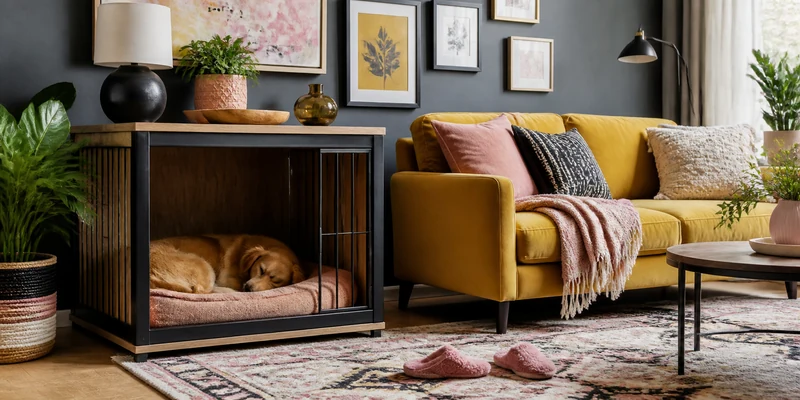
The living room is where most crates end up, and for good reason: it is where the family is, and dogs settle best within sight of their people. The catch is aesthetic. A wire box with a fleece pad does no favors to a room you spent years getting right, which is why dog crate furniture for the living room has become its own category, and why so many owners are quietly redesigning around the crate instead of hiding it in the laundry.
The good news is that the crate and the decor are not actually in conflict. You have three workable routes, from restyling the wire crate you already own to a furniture piece that earns its spot next to the sofa, and the right choice depends on your dog, your room and your budget. This guide compares the options, covers where in the room a crate belongs, and shows how to make whichever route you pick look intentional.
Quick Answer
How do you make a dog crate work in the living room?
- Pick your route: restyle the wire crate you own, replace it with a furniture style crate that doubles as a table, or build the crate into existing joinery.
- Placement first: against a wall, out of the walkway and the direct sun, with a clear sightline to the seating area.
- Make it belong by repeating the room’s own materials and giving the top surface a real job, a lamp, books or plants.
Three Routes, Compared
All three solve the same problem at very different price points. The honest comparison looks like this.
| Route | What it involves | Best for | Watch out for |
|---|---|---|---|
| Restyle the wire crate | A fitted wooden or fabric topper, side panels, better bedding, styling on top | Puppies, chewers, tight budgets, dogs mid training | Fabric covers can block airflow and become chew targets |
| Furniture style crate | A wooden or composite crate built as an end table, console or credenza | Crate trained adult dogs in rooms where the crate is visible | Interior space shrinks; not for determined chewers |
| Built in crate | Crate integrated into shelving, a media wall or a window bench | Renovations, custom joinery, long term homes | Fixed size; the dog you have in ten years must still fit |
If the furniture route is calling to you, it pays to know what separates a good piece from a photogenic one. Our dog crate furniture guide walks through sizing, ventilation and materials before you spend anything.
Where in the Living Room the Crate Should Go
Placement decides more of your dog’s crate happiness than the crate itself. The best spot in almost every living room shares four qualities.
- A wall or corner at the dog’s back. Dogs rest easier with solid cover behind them and the room in front. A crate floating mid room stays half used.
- Sightline to the sofa. The whole point of the living room crate is company. Your dog should see the family from inside without craning.
- Out of the walkway and the draft. Not beside the main door, not under the air vent, not in the traffic lane between kitchen and couch.
- Out of direct afternoon sun. A crate is an enclosure, and enclosures heat up. Morning sun is pleasant; a west window in summer is not.
End of sofa, flanking a media wall, or the quiet side of a reading corner are the classic winners. If your dog is still learning to love the crate, location does half the training for you, and the routine in crate training in a furniture crate does the rest.
Making the Crate Look Like It Belongs
Whatever route you chose, the same three styling moves make the crate read as furniture rather than equipment.
Repeat the room’s materials. Match the crate’s wood tone to the coffee table or the media unit, or paint a topper the same color as your built ins. One matching tone does more than any amount of decorating on top. Give the top surface a job. A lamp, a stack of books, a plant out of tail range: a crate with a purpose on top registers as a side table. An empty crate top registers as a cage with aspirations. Control the soft goods. A well fitted bed in a color that belongs to the room’s palette, rather than whatever fleece was on sale, quietly upgrades the whole corner.
When the crate should disappear instead
Some rooms are too small or too formal for even a handsome crate to sit in the open, and that is a legitimate conclusion. Consoles that read as credenzas, benches with a crate below and full built ins can make the crate effectively invisible; the hidden dog crate ideas roundup covers that whole direction. And if you are rethinking the room more broadly around your dog, the modern dog furniture guide shows how crates, beds and storage can share one design language.
Common Mistakes With Living Room Crates
- Buying the furniture crate before the dog is crate trained. A dog that still chews or panics in a crate will test a wooden one to destruction. Train in the wire crate, then upgrade.
- Sizing by the room instead of the dog. The crate that fits the alcove perfectly but not the dog is a failed purchase. Interior dimensions come first; your dog must stand, turn and lie stretched out.
- Draping a blanket over everything. Full covers block the airflow and sightlines that make a den work, and dangling fabric invites chewing. If you want a covered feel, choose a crate designed with solid panels and proper ventilation.
- Putting it beside the TV speakers. A resting spot next to a subwoofer is a resting spot your dog will abandon on movie night. Think about sound, not just looks.
- Letting the crate become the junk table. Remotes, mail and coffee cups migrating onto the crate top teach everyone to disturb the dog constantly. Style it once, keep it that way.
If You Are Rethinking More Than the Crate
A living room crate is often the first move in a bigger question: where does the dog’s stuff actually live? If the answer is turning into a whole corner or room, our dog room ideas guide lays out the options from a single wall to a full conversion. Households with stairs can put the den under them instead of in the living room; the under stairs dog nook guide covers when that works and when it does not.
Frequently Asked Questions
Is it okay to keep the dog crate in the living room? For most dogs it is the best room in the house for it. Dogs rest more readily within sight of the family, and a living room crate gets used voluntarily during the day instead of only at night.
Are furniture style crates as good as wire crates? For crate trained adult dogs, yes, provided the piece has real ventilation and the right interior size. For puppies, heavy chewers and escape artists, a wire crate remains the practical choice until that phase passes.
Can I put things on top of a dog crate? On a furniture style or topped crate, that is the point: a lamp or books make it read as a table. Keep anything unstable, trailing or chewable out of reach, and skip loose items on a bare wire crate.
Where should I not put a dog crate? In the main walkway, against a radiator or air vent, in direct afternoon sun, or in an unused room away from the family. Isolation defeats the purpose of the crate as a den.
Should the crate door stay open during the day? Once your dog is settled, yes. An open door turns the crate into a chosen resting spot rather than a container, which is exactly the habit you want in a shared room.
The Bottom Line
A dog crate and a good looking living room are not enemies: restyle the wire crate, upgrade to a furniture piece or build it in, and the choice depends on your dog’s stage more than your taste. Placement carries the day, a wall at the back, sightline to the sofa, out of traffic, sun and drafts. Then make it belong with the room’s own materials and a real job for the top surface, and the crate stops being the thing guests pretend not to notice.