Last updated: August 10, 2026
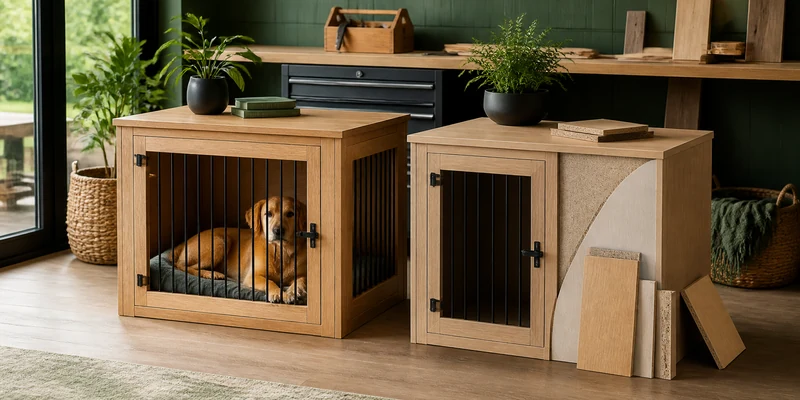
Wood dog crate furniture is what most people picture when they imagine a crate that belongs in a living room: warm grain, real joinery, a piece that could pass for a cabinet from a furniture store. But “wood” on a product listing covers everything from solid pine to thin laminated particleboard, and the difference decides whether your crate lasts a decade or a year.
This guide sorts the materials honestly, solid wood, engineered board, and the composite alternatives, explains which dogs each can handle, and picks the wooden crates that owners consistently report aging well. If you can tell oak from MDF by the end, it has done its job.
This article contains affiliate links. If you buy through them, we may earn a commission at no extra cost to you. Learn more.
Quick Answer
What is the best wood for dog crate furniture?
- Solid wood (pine, acacia, rubberwood) is the most durable and repairable, and the only choice that truly shrugs off years of leaning and scratching.
- Engineered wood (MDF, particleboard with veneer) looks the same on day one and costs less, but hates moisture and cannot be sanded back once damaged.
- For chewers and messy drinkers, a wood-polymer composite beats both: it keeps the furniture look while ignoring water and teeth.
Wood Types Compared
Use this table to decode the materials line on any listing. When a product page just says “wood,” assume engineered board until proven otherwise.
| Material | Strengths | Weaknesses | Best for |
|---|---|---|---|
| Solid wood | Strongest, repairable, sands and refinishes, ages well | Priciest, heavier, can scratch and dent visibly | Long-term buyers, bigger dogs, furniture-first households |
| MDF with veneer | Smooth modern finishes, stable, affordable | Swells with moisture, edges chip, not repairable | Calm dogs, dry rooms, style on a budget |
| Particleboard | Cheapest way into the category | Weakest under load, worst with accidents and humidity | Small, fully house-trained dogs only |
| Wood-polymer composite | Waterproof, chew-resistant, wipes clean | Plainer look, limited finishes, heavy | Chewers, drooly breeds, households that value easy cleaning |
Material is one axis; size and construction are the other. The full checklist, interior dimensions, latch hardware, ventilation, lives in our main dog crate furniture guide and applies to every pick below.
How to Spot Quality From a Listing
Product photos all look the same, so read the numbers instead. Shipping weight is the most honest signal: solid wood and dense board are heavy, and a suspiciously light large crate is thin particleboard in a nice photo. Look for the actual wood species named, pine, acacia, rubberwood, fir, rather than the word “wooden,” and check whether the bars are metal set into the wood frame or wooden dowels, which are considerably easier for a dog to crack.
Then read the one-star reviews for three phrases: swelled, sagged, and chewed through. Swelling means moisture met bare board, sagging means thin panels under a heavy dog, and chewing tells you where the material sits on the toughness scale. A crate whose complaints are about slow shipping and confusing instructions is usually a safe buy; a crate whose complaints are structural is not, whatever the average rating says.
Our Top Wooden Crate Picks
How we chose: we compared wooden furniture crates on stated materials, construction details, interior space, and the durability patterns that repeat across owner reviews. Selections rest on manufacturer specifications and consistent review themes rather than hands-on testing of our own.
One thing owners of wooden crates mention often: finish variation. Real wood grain differs piece to piece, so expect your crate to differ slightly from the listing photo, and treat that as the point rather than a flaw.
🏆 Best Overall
A solid wood end table crate with proper slatted sides and the kind of joinery that survives being dragged during vacuuming. The benchmark wooden crate for small and medium dogs.

💛 Best Value
An engineered wood cabinet with metal mesh sides that delivers the wooden-furniture look at the friendliest price in the category. Best matched with a calm, house-trained dog and a dry room.

🛡️ Best Heavy-Duty
Technically a wood-polymer composite, and that is exactly why it is here: the furniture look without wood’s two weaknesses, water and teeth. The pick when durability outranks grain.
Matching Wood Crates to Dogs and Rooms
Solid wood earns its price fastest under bigger dogs, where panel strength is constantly loaded; if that is your household, cross-reference the size guidance in large dog crate furniture before choosing a finish. Style-wise, wooden crates split into two families: the warm, slatted farmhouse look, and flat-panel pieces in painted or dark finishes that lean contemporary, a direction our modern dog crate furniture roundup explores fully.
And be honest about teeth. A dog that chews window sills will chew a crate frame, and no finish survives that. For those dogs, composite builds or bar-heavy designs from the heavy duty dog crate furniture guide are the wiser spend, with the wooden showpiece waiting until the chewing years pass.
🐕 Best for Style-Focused Rooms
A wooden double-door crate with a furniture-grade finish and clean proportions that photograph like a sideboard. For crate-trained dogs in rooms where the piece will be seen daily.

🧱 Also Great
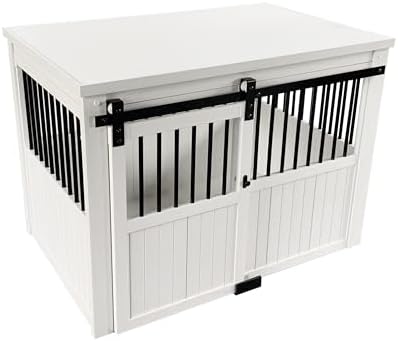
A wood crate with a sliding door and generous sizing that solves two classic wooden-crate gripes at once: door clearance in tight rooms and interiors that run small.

🪵 Best for Decor Cohesion
A crate from a maker whose finishes match their other pet furniture, so the crate, gate, and feeder can share one wood tone across the room.

Protecting a Wooden Crate From Its Occupant
Wood’s enemy number one is standing moisture. Skip loose water bowls inside, wipe drool and nose art off the bars’ surrounds weekly, and put an absorbent, washable mat over the crate floor so accidents never reach a seam. In humid climates, leave airflow space behind the crate and avoid pressing it against a cold exterior wall, where condensation quietly does what a spilled bowl does loudly.
Wear you can manage: felt pads under the feet stop floor scuffing, a re-tighten of all hardware after the first month stops the creaks before they start, and light scratches in solid wood disappear under a matching furniture marker or a gentle sand and re-oil. Engineered board is less forgiving, so with those crates prevention is the whole game. Treat the top like any side table, coasters and all, and the crate stays presentable for years.
Common Mistakes to Avoid
- Reading “wooden” as solid wood. Most budget crates are veneered board. Check the materials line and the shipping weight.
- Buying wood for a chewer. Frames and slat edges are exactly bite-shaped. Composite or bar-heavy designs first, wood later.
- Letting water live inside. One tipped bowl a week is a swelling schedule. Clip-on bowls or water outside the crate.
- Ignoring the floor panel. A removable tray or washable mat stands between accidents and permanent board damage.
- Placing it against a radiator or in full sun. Heat cycles crack finishes and warp thin panels.
- Skipping the re-tighten. Wood moves in its first season. Five minutes with the hex key after month one prevents most wobbles.
Where to Go From Here
If the end-table proportions suit your room, the format has its own dedicated comparison in dog crate end table. Renters weighing a heavy wooden purchase against future moves should read dog furniture for renters first. And the complete category picture, materials included, starts at the dog crate furniture hub.
Frequently Asked Questions
Is wood dog crate furniture safe for dogs? For crate-trained dogs, yes, provided the construction is sound: no chewable loose parts, sensible bar spacing, a secure latch, and a finish in good condition. Dogs that chew under stress need the habit addressed before living with a wooden crate.
Solid wood or MDF for a dog crate? Solid wood if the budget allows, especially for medium and large dogs; it is stronger and can be repaired. MDF and veneered board are fine for calm, small, house-trained dogs in dry rooms, at a clearly lower price.
What if my dog chews the wooden crate? Interrupt the habit rather than the crate: more exercise, chew toys inside, shorter sessions, and training help if the chewing is anxiety-driven. Materially, switch to a composite build; our heavy duty dog crate furniture guide covers the options.
How do I clean a wooden dog crate? Vacuum hair from corners, wipe surfaces with a barely damp cloth and mild soap, and dry immediately. Never soak wood or board. A removable tray or washable mat inside handles the real messes before they reach the wood.
Do wooden crates smell over time? A crate kept dry with washable bedding stays neutral. Persistent smell means moisture found bare board, which is hard to reverse in engineered wood; solid wood can be sanded and resealed.
The Bottom Line
Wood dog crate furniture rewards buyers who read the materials line: solid wood for durability and repairability, engineered board for budget style with a calm dog, and composite when teeth or moisture are in play. Judge listings by shipping weight, named wood species, and structural review complaints, then protect your pick from water and re-tighten the hardware once. The right wooden crate is furniture first, and it lasts like it.