Last updated: August 10, 2026
At some point most dog owners stand in front of a wall of bedding and wonder: does my dog need an orthopedic bed, or is that just a word brands use to charge more? Both halves of the suspicion contain truth. “Orthopedic” is an unregulated marketing label, and at the same time, the beds behind the label, when honestly built, offer real advantages for particular dogs: solid supportive foam instead of a sack of stuffing.
This article gives you a straight answer per situation: which dogs genuinely benefit from a supportive foam bed, which dogs are fine on ordinary bedding, and which signs mean the shopping trip should wait until after a veterinarian visit. No products here, just the decision itself.
Quick Answer
Does my dog need an orthopedic bed?
- Most likely yes if your dog is large or heavy, getting older, very lean and bony, or spends long hours on its bed. These dogs feel thin, collapsed bedding the most.
- Probably not yet if your dog is small, young, and healthy; a decent regular bed serves fine, and an early upgrade is a nice-to-have rather than a need.
- If you are asking because of limping, stiffness, or slow rising: see your veterinarian first. Those are health questions, and a bed is not the answer to them.
The Answer by Situation
Find your dog in the left column. “Worth it” here means the supportive build makes a noticeable everyday difference, not that anything is medically required.
| Your dog | Orthopedic bed worth it? | Why |
|---|---|---|
| Large or giant breed, any age | Yes | Heavy dogs flatten ordinary bedding quickly and end up sleeping on compressed fabric over the floor |
| Senior dog | Yes | Older dogs sleep more hours, rise more slowly, and benefit from a surface that supports rather than swallows |
| Lean, bony build (sighthounds and similar) | Yes | Minimal natural padding means pressure points meet thin bedding directly; owners often see visible relief on solid foam |
| Diagnosed joint condition | Yes, alongside veterinary care | Comfort support for rest, while treatment stays with your veterinarian |
| Young, small, healthy dog | Optional | Light dogs barely compress a normal bed; upgrade for longevity, not necessity |
| Crated at night | Often, in pad form | The stock crate mat is usually the thinnest bedding in the house; a dense flat pad fixes the hardest-working sleeping spot |
| Puppy in the chewing phase | Not yet | Wait out the shredding months with cheap or chew-resistant bedding, then invest |
What an Orthopedic Bed Actually Is
Strip away the marketing and an orthopedic bed is one thing: a bed with a solid, supportive foam core, often a conforming layer over a firmer base, instead of loose polyfill or foam scraps. Solid foam spreads a dog’s weight across the whole contact area, so hips, elbows, and shoulders press less sharply into the surface. Filled beds feel plush in the store but migrate away from pressure points; the heaviest parts of the dog push the filling aside and rest near the floor.
Because no authority regulates the word, the label appears on both kinds of product. That is the single most useful thing to know as a buyer: the question is never “is it labeled orthopedic” but “what is inside, and how thick.” The weight of the product, the described foam construction, and any warranty against flattening tell you the truth the label will not.
The Signs Worth Watching at Home
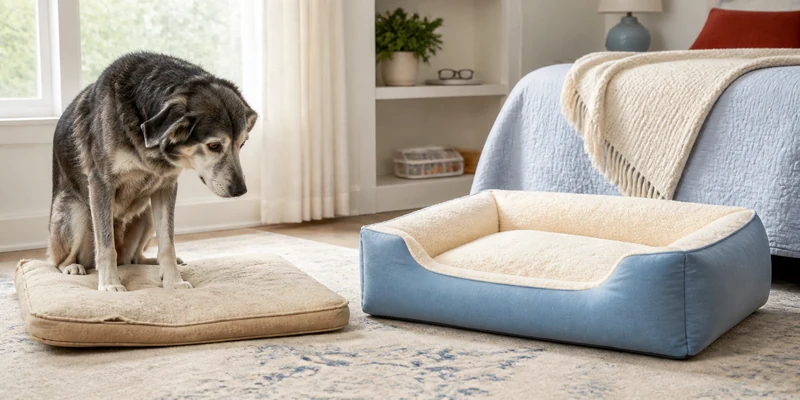
Dogs communicate bedding problems through behavior, not complaint. A dog that circles endlessly and repositions all night may be failing to find a comfortable arrangement on collapsed bedding. A dog that abandons its bed for the sofa, a pile of laundry, or a cool bare floor is voting against the surface it was given. Visible dents that no longer spring back, filling bunched at the edges, and a bed that folds in half when lifted are the bed’s own confession.
Draw a hard line at body signals, though. Stiffness after rest, reluctance on stairs, limping, difficulty standing up, or a new preference for lying down over sitting are not bedding reviews; they are health signals, and the right response is a veterinarian appointment, not a purchase. The same goes for any sudden change in sleeping habits. A bed upgrade can follow the visit, informed by what you learn there; our guide to senior dog mobility at home covers the household side of that conversation.
If the Answer Is Yes: What to Do With It
Buy by what is inside, not by the label. Solid or layered foam, thickness matched to weight, as a rule of thumb 3 to 4 inches for small dogs and 6 or more above roughly 70 pounds, a machine washable cover, and ideally a waterproof liner protecting the foam. If those boxes are ticked, the orthopedic label on the outside is finally telling the truth. When you are ready to compare actual beds, our full guide to choosing the best orthopedic dog bed walks through what to look for tier by tier.
Placement decides whether the investment gets used. Keep the new bed exactly where the old one stood, move the familiar blanket onto it, and give a skeptical dog days rather than hours. For crate sleepers, remember the pad is sized to the crate pan, not to the dog; that sizing logic is its own small subject, covered under orthopedic beds for crates.
Common Mistakes to Avoid
- Reading “orthopedic” as a guarantee. The word is unregulated. Foam construction, thickness, and product weight are the real signals.
- Buying softness for an old dog. Deep plush is harder to stand up from. Supportive and medium-firm serves seniors better.
- Using the bed to answer a health question. Limping and stiffness go to the veterinarian. The bed comes after, not instead.
- Upgrading the bedroom and ignoring the crate. The crate mat is usually the thinnest surface a dog sleeps on and the one used the most hours.
- Investing during the chewing phase. A teething puppy and premium foam is a short, expensive story.
- Judging the new bed in one day. Dogs are habit animals; adoption takes days, and vacuum-packed foam needs time to expand fully.
Deciding for an Aging Dog?
Most people asking this question are watching a dog get older, and the bed is only one lever. The bigger wins often come from the floor and furniture around it: traction on slick surfaces, fewer jumps on and off couches and beds, and sleeping spots that stay near the family. Our overview of senior dog mobility at home covers that full setup, and the buying-side checklist for older dogs specifically lives in the orthopedic bed for senior dogs guide. Between the two, you can make the whole house easier before spending a dollar on foam.
Frequently Asked Questions
Is an orthopedic bed worth it for a healthy young dog? For a large breed, yes, because heavy dogs destroy ordinary bedding fast regardless of age. For a small healthy dog it is a comfort upgrade you can defer without guilt.
At what age should a dog get an orthopedic bed? There is no set age. Owners of big breeds often switch early; for others, the natural moment is when the dog starts sleeping longer hours or the current bed stops springing back.
Do orthopedic beds actually help with joint problems? They make resting more comfortable by spreading weight away from pressure points, and owners of stiff dogs commonly report better settling. They do not treat any condition; that is your veterinarian’s domain.
What is the difference between an orthopedic bed and a regular bed? The core. Orthopedic builds use solid or layered supportive foam; regular beds mostly use polyfill or foam scraps that compress and migrate away from the dog’s weight.
How do I know when to replace any dog bed? When the core stays dented, the filling has bunched permanently, or your dog starts choosing the floor. A bed that folds flat in your hands has already retired itself.
The Bottom Line
Big, old, bony, or crate-sleeping dogs get real everyday value from a supportive foam bed; small young dogs can wait. The label itself means nothing, so judge foam, thickness, and washability instead. And whenever the question is prompted by limping or stiffness rather than a flattened bed, the first stop is your veterinarian, not the bedding aisle.