Last updated: August 10, 2026
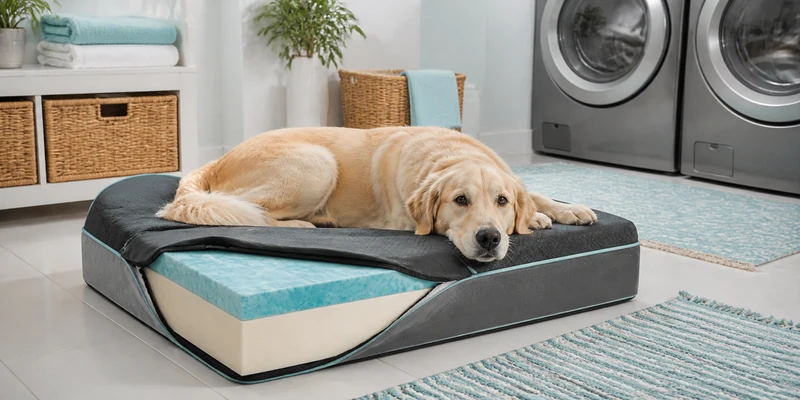
A memory foam orthopedic dog bed sounds like a single product, but the phrase hides the most important buying decision in the category: what is actually under the cover. Some beds are a genuine slab of memory foam over a firm base. Others are a thin memory foam sheet over cheap filler, or shredded foam scraps in a sack, and all of them use the same words on the box.
This guide sorts real memory foam construction from marketing, explains which build suits which dog, and lists the beds that owners consistently report keeping their shape. The short version: memory foam is the comfort layer, but the support layer underneath decides how the bed performs a year from now.
This article contains affiliate links. If you buy through them, we may earn a commission at no extra cost to you. Learn more.
Quick Answer
What should you look for in a memory foam dog bed?
- Solid foam, not shredded fill. A single or layered slab supports a sleeping dog; loose foam scraps shift away from pressure points.
- A memory foam layer over a firmer support base, especially for dogs over 50 pounds. Memory foam alone sinks; the base layer stops the sinking at the right point.
- A washable cover with a water-resistant liner underneath, because memory foam is nearly impossible to clean once liquid soaks in.
Memory Foam Constructions Compared
Product listings rarely use these words honestly, so here is what each construction means for your dog.
| Construction | What it is | Who it suits |
|---|---|---|
| Layered slab | Memory foam comfort layer glued over a firm support foam base | The best all-round build, and the only one worth considering for large dogs |
| Single memory foam slab | One uniform piece of memory foam | Small and light dogs; under heavy dogs it can sink until the dog rests near the floor |
| Egg-crate foam | Convoluted foam with peaks and valleys, softer and airier | Budget beds for small to medium dogs; comfortable, but compresses sooner |
| Thin topper over filler | A memory foam sheet over polyfill or foam scraps | Nobody, really; it delivers the label without the support |
| Shredded memory foam | Loose foam pieces in a fabric shell | Dogs that like to burrow and nest; it conforms, but does not give even support |
When a listing does not say which build it uses, product weight is your best clue: solid layered foam is heavy, filler is light. Our main orthopedic dog bed guide covers the rest of the buying checklist, from covers to warranties.
How Memory Foam Actually Works for Dogs
Memory foam softens with body heat and pressure, letting the surface mold around whatever presses into it. For a dog, that means hips, elbows, and shoulders sink slightly while the rest of the body stays supported, spreading weight across more of the surface instead of concentrating it on the bony points. That pressure-spreading is the whole appeal, and it is why the material shows up in nearly every bed marketed as orthopedic.
The catch is that molding equals sinking, and sinking has to stop somewhere. In a quality bed the firm base layer catches the dog well above the floor. In a cheap bed there is nothing to catch anything, which is why the same material can feel luxurious in one product and useless in another. Heat is a second consideration: memory foam holds warmth, which cold-sensitive dogs love and thick-coated dogs may not. Some beds add ventilation channels or gel layers to offset it.
Our Top Picks at a Glance
How we chose: we compared widely available memory foam beds on construction type, foam thickness, cover and liner quality, and how consistently owners report the foam recovering its shape over months of use. Selections lean on manufacturer specifications and recurring review themes rather than any hands-on trial of our own.
All three picks use solid foam with a washable cover; the differences are in thickness, build, and price bracket.
🏆 Best Overall
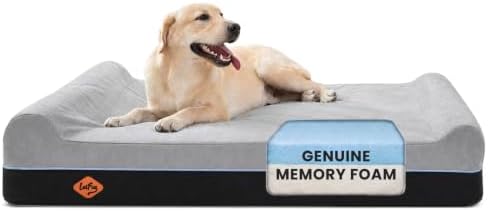
An orthopedic memory foam bed with bolster headrests, a waterproof washable cover, and an anti-slip base. The certified-foam build is exactly the step up from budget beds that this category rewards.

💛 Best Value
The budget favorite: egg-crate foam base, bolster sides, and a machine washable cover. Not the bed for a heavy dog, but a lot of comfort per dollar for small and medium dogs, as our Bedsure review details.

🐕 Best for Large Dogs
Seven inches of solid memory foam with a waterproof liner, sized for big breeds. The thickness that dogs over 70 pounds actually need, without the premium-brand price.

Matching the Build to Your Dog
Weight is the first filter. Under roughly 30 pounds, almost any solid foam build works, and softer egg-crate beds are a reasonable saving. Between 30 and 70 pounds, look for at least 4 inches of solid foam, preferably layered. Past 70 pounds, thickness and density stop being optional; our guide to the orthopedic dog bed for large dogs covers that class in depth, and the premium big-dog builds in our Big Barker review show what the top of the market looks like.
Sleep style is the second filter. Sprawlers need a flat open surface with maximum usable area. Curlers and leaners get real value from a bolster to rest their head against. Burrowers are the one group for whom shredded fill makes sense. And senior dogs benefit from a lower profile and easy entry, a topic our senior dog bed guide handles fully; if your older dog also struggles with couches or stairs, our overview of senior dog mobility at home is the place to start. As always, stiffness or reluctance to lie down is a veterinarian conversation, not just a bedding one.
🛋️ Best for Couch-Style Comfort
A sofa-style bed with orthopedic foam and a walk-on front entry that suits dogs who like a step-over lip and a headrest. A budget-friendly way to test the sofa shape, covered in our FurHaven review.

👍 Also Great
A two-layer memory foam build in sizes up to jumbo, with a water-resistant liner and washable cover. A solid mid-range answer for households with more than one sleeping spot to fill.
Care: The Part Memory Foam Punishes You For Skipping
Memory foam and moisture are enemies. Once urine, drool, or a wet coat soaks through to the foam, you cannot machine wash it, and odors settle in for good. The defense is layered: keep the waterproof liner zipped at all times, wash the outer cover regularly, and blot spills immediately before they wick down. If your dog is a puppy, a senior, or simply enthusiastic about water bowls, go straight to a fully waterproof orthopedic dog bed.
Two more habits extend the bed’s life. Let a vacuum-packed bed expand for a day or two before judging its loft, and rotate the bed a half turn every few weeks so the dents from your dog’s favorite position get time to recover. Direct sunlight and floor vents accelerate foam aging, so placement matters for the material as well as the dog.
Common Mistakes to Avoid
- Buying the label instead of the build. “Memory foam” on the box can mean a thin topper over filler. Check construction and product weight.
- Putting a heavy dog on a single soft slab. Without a firm base layer, a big dog sinks through the comfort and onto the floor.
- Skipping the liner. One accident into bare memory foam is permanent. The liner is the product’s insurance policy.
- Ignoring heat. Thick-coated or heat-sensitive dogs may abandon a warm memory foam bed in summer; ventilated or gel builds help.
- Sizing by breed name. Measure your dog stretched out on its side and compare against the inner sleep surface, not the outer dimensions.
- Expecting medical results. Pressure-spreading comfort is a design feature, not a treatment. Concerns about joints or pain belong at your veterinarian.
Where to Go From Here
Not sure the upgrade is justified for your dog at all? Our explainer on whether your dog needs an orthopedic bed gives you a straight answer per situation. If the bed is destined for a crate, sizing works differently; see the orthopedic dog bed for a crate. And for the full map of the category beyond memory foam, our orthopedic dog bed hub compares every build and brand tier.
Frequently Asked Questions
Is memory foam good for dogs? As a comfort layer over a supportive base, yes: it spreads weight across more of the body and away from bony pressure points. The material only underperforms when it is too thin, too soft without a base layer, or replaced by shredded scraps.
How thick should the memory foam be? Total foam of around 4 inches suits small and medium dogs, while dogs over 70 pounds need 6 inches or more of layered foam. The memory foam layer itself is often 2 to 3 inches, with support foam making up the rest.
Is memory foam safe if my dog chews? Swallowed foam is the real risk with a shredder. Choose a chew-resistant build with tough fabric and hidden zippers, and see our chew proof dog bed guide for models designed around exactly this problem.
Can you wash memory foam? Not really; machine washing destroys it and soaking traps odor. Wash the cover, keep the liner zipped, and spot-clean the foam only when unavoidable.
Why does my new bed smell and look flat? Vacuum packing compresses the foam and can leave a temporary factory odor. Let the bed expand and air out for a day or two in a ventilated room before judging either.
The Bottom Line
A memory foam dog bed earns its keep when the construction is honest: solid foam, a firm base layer under the memory foam, and thickness matched to your dog’s weight. Product weight and owner reviews reveal what listings hide, and the waterproof liner is non-negotiable because soaked memory foam cannot be saved. Buy the build, not the label.