Last updated: August 10, 2026
Shopping for dog stairs sounds simple until you notice how many dogs refuse to use the set their owner picked. The stairs slide on the floor, the steps are too tall for short legs, or the whole thing feels wobbly the first time a nervous dog tests it with one paw. A good set of pet steps is not a miniature staircase; it is a piece of furniture built around how dogs actually climb, with low rises, deep treads, and a surface that grips.
This guide covers the whole category: foam steps, framed steps, and wood models, what to check before you buy, and which sets make sense for small dogs, big dogs, and seniors. If you are still deciding between steps and a slope, our comparison of dog stairs versus a ramp settles that question first.
This article contains affiliate links. If you buy through them, we may earn a commission at no extra cost to you. Learn more.
Quick Answer
What makes a good set of dog stairs?
- Low rises and deep treads. Each step should be shallow enough that your dog walks up rather than hops, with room for all four paws in motion.
- The right total height. Measure your bed or couch first; stairs that stop short of the mattress leave one big jump at the top, which defeats the purpose.
- Grip at both ends. A non-slip surface on the steps and a non-slip base on the floor. A set that slides once can be a set your dog never trusts again.
What to Check Before You Buy Dog Stairs
Every line in this table is something you can verify from a product listing and a tape measure. Start with your furniture height and your dog’s size, then work down the list.
| What to check | Why it matters | What to look for |
|---|---|---|
| Total height | Stairs that end below the mattress still force a jump at the top | A top step that reaches the sitting surface, or comes within one easy step of it |
| Rise per step | Tall rises turn walking into hopping, which many dogs avoid | Shallow individual steps; more steps at the same total height means a gentler climb |
| Tread depth and width | Dogs need room to place front and back paws while moving | Deep, wide treads; long-bodied and large dogs need noticeably more depth |
| Weight capacity | An overloaded step flexes, and flex makes dogs hesitate | A stated capacity comfortably above your dog’s weight, not right at it |
| Step surface | Smooth fabric or bare wood offers little traction on the way down | Carpet-style, textured, or rubberized tread on every step |
| Base grip | On hard floors the whole unit can shoot backward mid-climb | Rubber feet or a full non-slip bottom, plus enough weight to stay planted |
| Cover and cleaning | Steps live next to beds and couches and collect hair fast | A removable, machine-washable cover on foam models; wipeable surfaces on framed ones |
If your dog is older, stiff, or recovering from a procedure, furniture access is only one part of the picture. Our overview of senior dog mobility at home looks at the whole house, and any sudden reluctance to climb is worth raising with your veterinarian before you solve it with furniture.
Why Steps Beat Jumping
The case for dog stairs is mostly about the dismount. Jumping up onto a couch takes effort; jumping down concentrates the landing force on the front legs and shoulders, and a dog that does it a dozen times a day repeats that impact every time. Small breeds land hard relative to their size, long-backed breeds like dachshunds land awkwardly, and older dogs often start refusing furniture entirely rather than face the drop.
Stairs replace one big impact with a series of small, controlled movements. That does not make them a treatment for anything: if your dog seems sore, moves stiffly, or has stopped jumping suddenly, talk to your veterinarian first. What stairs reliably do is remove a daily obstacle, and owners consistently report that dogs who hesitated at the bedside start coming and going on their own once a stable set is in place.
Foam, Framed, or Wood: The Three Builds
Almost every set of pet steps on the market falls into one of three constructions, and each has a natural audience.
- Foam steps are blocks of high-density foam with a washable cover. They are light, quiet, and soft on paws, which suits small and senior dogs, but light also means they can shift under an enthusiastic climber. Our dedicated guide to foam dog stairs covers density and cover quality in detail.
- Framed steps use a molded plastic or metal frame with carpeted or rubberized treads. They hold more weight, feel more solid underfoot, and many fold or snap apart for storage. This is the default choice for medium and large dogs.
- Wood steps read as furniture rather than pet gear. They are heavy enough to stay put and often the best-looking option next to a bed, but the tread surface matters double, since bare wood is slippery under paws.
Whichever build you choose, stability is the trait dogs care about most. A step that compresses unevenly or rocks even slightly teaches a cautious dog to avoid the whole unit.
Our Top Picks at a Glance
How we chose: we compared widely available dog steps on step geometry, stated weight capacity, surface traction, and how consistently owners report their dogs actually using them. Selections lean on manufacturer specifications and recurring themes in customer reviews rather than any hands-on trial of our own.
One reassurance before the list: hesitation at new stairs is normal and usually short-lived. A few treats on the lower steps and a stable placement against the furniture solve most refusals within days; the training sequence in our ramp and stairs training guide works for steps too.
🏆 Best Overall
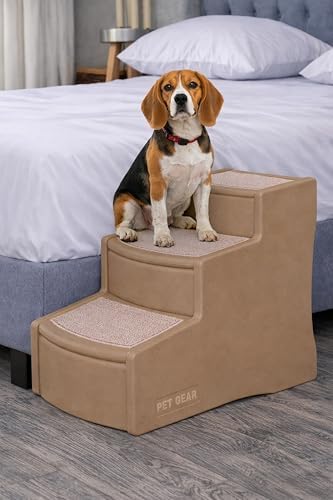
A framed step set with a wide, deep tread design and a removable washable tread cover, sized for the couch and standard beds. A sensible default for most dogs and most furniture.
💛 Best Value
A simple folding step set with soft fabric treads that stores flat between uses. Covers the basics well without a premium price, and adds storage inside the steps.

🐕 Best for Small and Senior Dogs
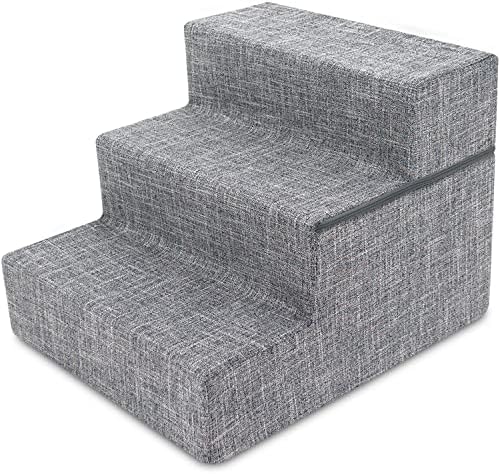
High-density foam steps with a soft, machine-washable cover and a non-slip bottom. Gentle on stiff joints and light enough to move from bed to couch in one hand.
Match the Stairs to Your Dog’s Size
Dogs range from four-pound Chihuahuas to giant breeds, and no single step geometry fits that spread. Size changes the answer in predictable ways.
- Small breeds need shallow rises above all. A step height that a Labrador ignores is a genuine climb for a Yorkie, so more steps over the same height is better. Our guide to small dog stairs goes deeper on low-rise sets.
- Medium dogs are the easiest to buy for; most standard three-step and four-step sets fit, and the deciding factors become traction and capacity.
- Large breeds need width and depth. A big dog descending a narrow set has to place paws in a line, which feels unstable; look for wide treads and a generous stated capacity.
- Giant breeds and heavy seniors often do better on a gradual slope than on steps at all, since a long body on short treads is an awkward fit. That is the core case in stairs versus ramp.
When in doubt, measure: your dog standing, your furniture height, and the tread depth on the listing, in that order.
For Tall Beds and Other Special Cases
Standard three-step sets top out around couch height. If your mattress sits high, or your dog needs something between a step and a slope, these are the picks worth a look. For the full treatment of tall-bed options, see our guide to dog stairs for high beds.
🛏️ Best for Tall Beds
A four-step framed model that reaches high mattresses without steep rises. Check the listed top-step height against your bed before ordering.
🐾 Also Great: Stair and Ramp Hybrid
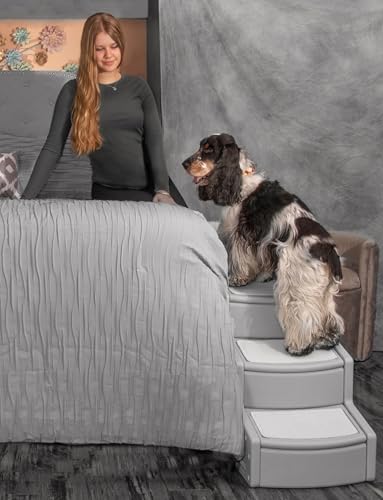
A combination unit that works as broad, shallow steps with a ramp-like walking line, useful for long-bodied dogs and hesitant seniors who dislike conventional stairs.
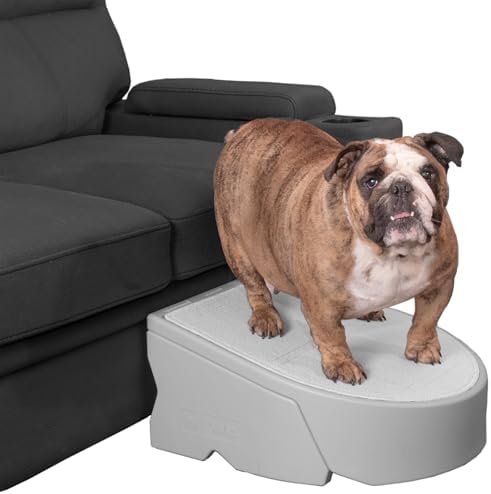
Placement, Traction, and Keeping Steps in Place
Where and how you set stairs up decides half of whether they get used. Push the top step snugly against the furniture with no gap, and place the unit where your dog already jumps up, usually the spot facing the door or your side of the bed. A set parked at the foot of the bed when your dog sleeps at the head will be ignored.
On hard floors, put a rug or non-slip mat under light foam sets even when they have a gripping bottom, because a single slide can undo a week of trust. Check fabric covers stay drum-tight after washing, since loose fabric shifts underfoot. And keep the treads clean: a fur-slicked carpet tread loses much of its grip, so vacuum the steps when you vacuum the floor.
Common Mistakes to Avoid
- Buying before measuring. The most common complaint in reviews is stairs that end a jump short of the mattress. Measure floor to sitting surface first.
- Choosing by looks alone. A handsome wood set with slick treads is furniture for you, not access for your dog. Traction outranks finish.
- Ignoring the capacity margin. A set rated near your dog’s exact weight will flex; flex feels unsafe to a dog, and unsafe means unused.
- Too few steps for a small dog. Two tall steps are harder than four shallow ones. Rise per step matters more than the step count on the box.
- Expecting instant adoption. Most dogs need a short introduction with treats and patience. Skipping it, or forcing a dog up the stairs, builds exactly the wrong association.
- Treating stairs as a fix for limping. Stairs remove strain; they do not diagnose anything. A dog that suddenly avoids furniture needs a veterinarian first.
Where to Go From Here
If your bed is the destination, start with dog stairs for high beds, which handles the height math in detail. If your dog is small, light, or arthritic, the soft option in foam dog stairs is usually the better first try. For car access, seniors, and long-bodied breeds, a slope often wins; our hub on the best dog ramps covers that side of the category. And if the reason you are shopping is an aging dog, pair the stairs with a supportive sleeping spot from our orthopedic dog bed guide, since the bed and the route to it work as a set.
Frequently Asked Questions
Do dogs really use pet stairs? Most do, once the stairs are stable, correctly sized, and introduced with a little patience. Refusals usually trace back to steps that wobble, slide, or have rises too tall for the dog’s legs.
How tall should dog stairs be? As tall as the furniture they serve. The top step should reach the sitting surface or come within one easy step of it, so measure from the floor to the top of the mattress or cushion before buying.
Are stairs or a ramp better for my dog? Stairs suit compact spaces and dogs that still climb comfortably; ramps suit seniors, long-backed breeds, and post-surgery recovery walking. Our full stairs versus ramp comparison walks through the decision.
What weight capacity do I need? Comfortably more than your dog weighs, not exactly what your dog weighs. A margin keeps the steps from flexing underfoot, which is what makes dogs distrust them.
Are foam stairs good enough for a big dog? Usually not the best match. Heavy dogs compress foam unevenly, which makes each step feel unstable. Framed or wood stairs with a high stated capacity are the safer pick for large breeds.
My dog is suddenly avoiding the stairs. What now? Rule out the stairs first: sliding, a loose cover, or a bad experience. If the stairs are fine and the reluctance is new, mention it to your veterinarian, since a change in climbing habits can reflect discomfort.
The Bottom Line
Good dog stairs are stable, correctly sized for both the furniture and the dog, and grippy at the treads and the base. Foam suits small and senior dogs, framed sets carry medium and large dogs, and wood earns its place when it stays put and keeps real traction. Measure your furniture, leave a weight margin, and give your dog a short, treat-funded introduction.