Last updated: August 10, 2026
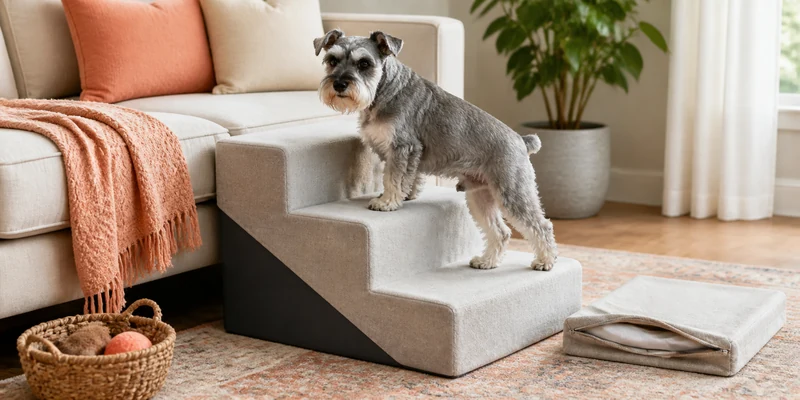
Foam dog stairs are the gentlest entry point in the whole pet steps category: soft under the paws, silent in use, light enough to carry between the bedroom and the living room, and free of hard edges for a clumsy descent. That is why they are the default recommendation for small breeds, seniors, and dogs that find hard plastic steps intimidating.
They are also the easiest product in the category to buy badly. Cheap foam compresses into a slumped wedge within months, and a step that sinks underfoot is exactly the kind of unstable footing that makes dogs quit. This guide covers what separates foam sets that last from foam that fails, which dogs foam suits, and where a framed set is honestly the better buy.
This article contains affiliate links. If you buy through them, we may earn a commission at no extra cost to you. Learn more.
Quick Answer
Are foam dog stairs a good choice?
- Yes for small, light, and senior dogs: soft footing, no hard edges, and easy to reposition, which suits stiff joints and cautious climbers.
- Only with high-density foam. The core is the whole product; low-density foam sinks underfoot and slumps out of shape within months.
- Not for heavy dogs. Big dogs compress even good foam unevenly, so a framed or wood set from our dog stairs hub is the safer pick above the medium-size mark.
Foam Stairs at a Glance: What to Check
Foam sets look nearly identical in photos, so the differences live in the specifications. These are the lines worth reading twice.
| What to check | Why it matters | What to look for |
|---|---|---|
| Foam density | Density decides whether steps stay step-shaped under repeated use | “High-density” foam named explicitly; firm support foam rather than soft comfort foam |
| Firmness underfoot | A paw that sinks in reads as unstable footing to a dog | Owner reviews describing steps as firm; complaints about sinking are a red flag |
| Cover fabric and grip | The cover is the traction surface | A textured, snug-fitting cover; loose or silky covers shift and slide underfoot |
| Removable, washable cover | Foam cannot be hosed off; the cover takes all the cleaning | A zippered, machine-washable cover, ideally sold as replaceable |
| Non-slip bottom | Light foam units migrate on hard floors | A gripping base layer across the whole underside, not just corner dots |
| Step geometry | Soft material with tall rises combines two problems | Shallow rises and deep treads, same as any stairs; more steps for taller furniture |
| Stated weight range | Foam capacity claims vary widely in honesty | A stated limit well above your dog’s weight and reviews from owners of similar-size dogs |
If your dog is on the borderline of what foam can support, weight is the tiebreaker: the heavier the dog, the more the balance tips toward a framed set.
Density Is the Whole Product
Every complaint pattern in foam stair reviews traces back to the core. High-density foam pushes back against a paw and returns to shape; low-density foam feels pleasantly soft in the store and then packs down along the exact path the dog walks, leaving a dished, tilted surface within a season. Once that happens the stairs are not just ugly, they are worse than no stairs, because each step now slopes toward the edge.
You usually cannot see density in a product photo, so buy it indirectly: manufacturers that state high-density or support-grade foam, product weight that seems high for the size, and review histories where owners of dogs your size report the steps holding shape after months. The same logic applies to foam dog beds, which is why our orthopedic dog bed guide spends most of its time on the same spec; in both categories, the foam you cannot see is the product.
Our Top Foam Picks
How we chose: we compared widely available foam pet steps on foam density claims, cover quality and washability, base grip, and how consistently owners of small and senior dogs report long-term shape retention. Selections rest on manufacturer specifications and recurring review themes, not on hands-on testing of our own.
A quick reassurance: dogs that have never used soft steps sometimes startle at the give underfoot. A treat trail up firm, well-placed foam steps settles most of them within a few sessions.
🏆 Best Overall
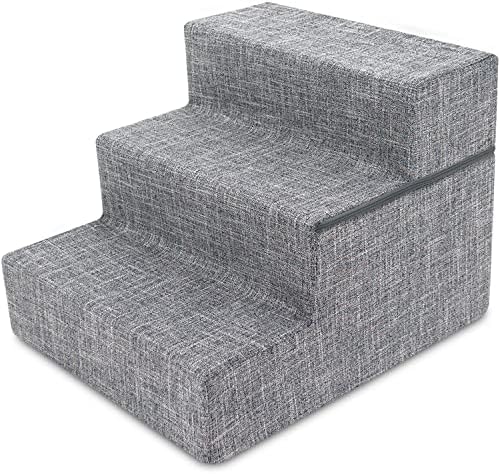
High-density foam steps with a machine-washable cover and a full non-slip bottom, available in multiple heights. The benchmark foam set that most owners of small and senior dogs end up with.
💛 Best Value
A simple high-density foam set with a fleece-style washable cover at an entry-level price. Fewer height options, but the core spec where it counts.

🛏️ Best for High Beds
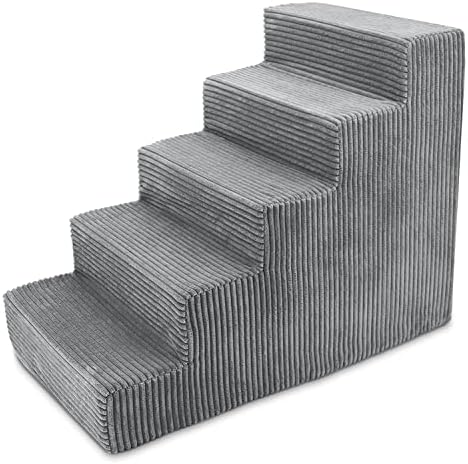
A taller four-step or five-step foam tower for mattresses past couch height, with the same washable cover system. Place it against the bed frame for lateral stability.
Which Dogs Foam Suits, and Which It Does Not
Foam is a size-and-condition product more than a taste product. The match matters because the failure mode, compression, scales with weight.
- Small breeds are the ideal foam customer: light enough that even mid-grade foam holds, and most in need of the shallow rises foam sets typically offer. See small dog stairs for the full small-breed picture.
- Senior and arthritic dogs appreciate soft, quiet footing and forgiving edges. Foam is often the first thing owners try when an older dog starts hesitating at the couch, alongside the broader adjustments in senior dog mobility at home. If the hesitation is new, let your veterinarian rule things out first.
- Medium dogs sit on the boundary. Good high-density sets carry them, but check stated capacity and owner reports at your dog’s weight.
- Large and heavy dogs are a poor match. Even quality foam compresses visibly under a big dog, each step feels different from the last, and the set wears out fast. A framed or wood set is the better spend.
- Enthusiastic sprinters of any size can skid light foam units across hard floors. If your dog hits the stairs at a run, weight and base grip beat softness.
When a Framed Set Is the Better Buy
Foam’s limits are worth respecting rather than working around. If your dog is heavy, if the stairs must serve a tall bed where wobble matters more, or if the set will live in a high-traffic spot where it gets bumped and shoved, a framed set with carpeted treads simply does the job with less compromise. The middle ground is a framed step with padded treads: solid geometry underneath, soft contact surface on top.
🐾 Also Great: Framed Alternative
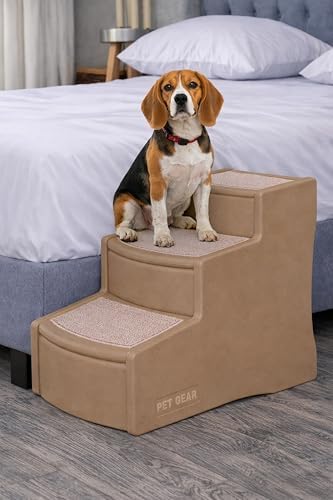
A framed step set with wide treads and a removable soft tread cover, for dogs past foam’s comfortable weight range or homes where the stairs take rough use.
Care: Keeping Foam Steps Working
Foam stairs need a little routine to stay trustworthy. Wash the cover on the schedule the label allows, and put it back on tight; a cover that has stretched loose shifts underfoot and undoes the traction the texture provides. Rotate the unit occasionally if your dog always climbs the same line, which spreads compression instead of digging one channel. Keep the bottom and the floor beneath it free of fur and dust, since a gripping base only grips a clean surface, and add a rug pad on slick floors regardless.
Retire the set when the treads stay dished after a night’s rest. Foam that no longer rebounds will not come back, and a sloping step is worse footing than the couch jump it replaced. If you are replacing foam every year under the same dog, that is the product telling you to move up a construction class.
Common Mistakes with Foam Stairs
- Buying on softness. Soft is the marketing; firm is the function. The best foam steps feel more solid than plush showroom foam.
- Ignoring the weight limit. Capacity numbers on foam are optimistic. Leave a wide margin and read reviews from owners of similar dogs.
- Skipping the washable cover check. Steps beside a bed collect hair, drool, and the occasional accident. A non-removable cover shortens the product’s life to the first serious mess.
- Placing light foam on bare hardwood. One backward skid can put a cautious dog off the stairs for weeks. Rug pad first, stairs second.
- Using a low tower for a tall bed. Foam does not fix a top-step jump. Match total height to the furniture, as covered in dog stairs for high beds.
- Keeping slumped steps in service. Once the shape goes, so does the safety. Compressed foam is a replacement signal, not a cosmetic issue.
Where to Go From Here
If you are still weighing constructions, the full category comparison lives in our best dog stairs guide. Owners of very small breeds should read small dog stairs next, since rise height matters even more than material at that size. And if your dog is hesitant about any kind of climb, a gentle slope may sidestep the issue entirely; stairs versus ramp lays out which dogs genuinely do better on an incline.
Frequently Asked Questions
Are foam stairs good for dogs? For small, light, and senior dogs, yes: they offer soft, quiet footing with no hard edges. The requirement is a high-density core; low-density foam loses its shape and becomes unstable footing.
How much weight can foam dog stairs hold? It varies by model, and stated limits are best treated conservatively. Choose a set rated well above your dog’s weight and check reviews from owners of similar-size dogs for reports of sinking.
Do foam dog stairs hold up for big dogs? Generally no. Heavy dogs compress foam unevenly, which makes each step feel unpredictable and wears the set out quickly. Framed or wood stairs are the better choice for large breeds.
Can you wash foam dog stairs? The cover, yes, on most quality sets; the foam core itself should stay dry. Buy only sets with a removable machine-washable cover and refit it snugly after washing.
Why does my dog avoid the foam steps? Usually the give underfoot or a past slide on a slick floor. Anchor the unit, check the cover is tight, and rebuild trust with treats on the bottom step; if avoidance appears suddenly in a dog that used them happily, mention it to your veterinarian.
The Bottom Line
Foam dog stairs are the right call for small, light, and senior dogs, provided the core is genuinely high-density, the cover is washable and grippy, and the base stays put on your floor. Heavy dogs and rough use call for a framed set instead. Judge foam sets by density and shape retention, not softness, and replace them the moment the treads stop springing back.