Last updated: August 10, 2026
Choosing an orthopedic dog bed for older dogs is less about one hero feature and more about removing small obstacles. A senior dog that circles the bed three times and lies down on the floor next to it is usually not being stubborn; the bed is too high to step onto, too unstable underfoot, or too far from the family. Age changes what a good bed looks like.
This guide walks through the senior-specific checklist: supportive foam, yes, but also entry height, footing, warmth, washability, and placement. One thing before anything else: if your older dog has started struggling to rise, limping, or avoiding stairs, make a veterinarian appointment first. A bed can make a comfortable dog more comfortable, but it cannot diagnose or treat whatever changed.
This article contains affiliate links. If you buy through them, we may earn a commission at no extra cost to you. Learn more.
Quick Answer
What should a bed for an older dog have?
- Supportive foam the dog does not sink through, with a low or cut-out entry so getting on and off takes a step, not a climb.
- A washable cover over a waterproof liner, because accidents become more likely with age and soaked foam is unrecoverable.
- A non-slip base on hard floors. Stable footing at the moment of lying down and standing up matters as much as the foam itself.
The Senior Dog Bed Checklist
Every item below can be checked from a product listing before you order.
| What to check | Why it matters for seniors | What to look for |
|---|---|---|
| Foam support | Older dogs spend more hours on the bed and rise more slowly | Solid or layered foam matched to weight; firm enough to push up from |
| Entry height | A high step discourages a stiff dog from using the bed at all | A low profile or a bolster bed with a cut-out front entry |
| Non-slip base | Paws slide during the getting-up push on hard floors | A grippy underside, or a rug under the bed |
| Waterproof liner | Accidents get more common with age | A zipped inner liner between cover and foam |
| Washable cover | Hygiene becomes a weekly job, not a monthly one | Removable, machine washable, easy to rezip |
| Warmth | Many older dogs seek warmth and avoid drafts | Memory foam’s natural warmth, plus placement away from doors and vents |
| Bolster or headrest | Many seniors like an elevated head and something to lean on | A firm bolster on one or more sides, entry side open |
These priorities build on the general foam rules in our main orthopedic dog bed guide; the difference is how heavily entry, footing, and washability start to weigh.
Support Versus Softness: The Senior Trade-Off
The instinct with an old dog is to buy the softest bed in the store, and it is usually the wrong call. A very soft bed lets the dog sink deep, which feels cozy but makes standing up harder, because the dog has to push out of a hollow with joints that no longer cooperate. What suits most seniors is a medium-firm surface: enough give to cushion pressure points, enough resistance to push against when getting up.
That is exactly what layered foam builds deliver, with a conforming top layer over a firm base, and it is why the memory foam category dominates senior bedding. Our memory foam dog bed guide explains how to spot the honest constructions. For a heavy senior, thickness rules still apply on top of everything here; see the orthopedic dog bed for large dogs for the big-breed numbers.
Our Top Picks at a Glance
How we chose: we compared widely available beds on foam support, entry height, liner and cover design, and how often owners of senior dogs specifically mention their dog adopting the bed. Selections lean on manufacturer specifications and recurring review themes rather than any hands-on trial of our own.
A practical note: whichever bed you choose, put it where your dog already sleeps. Senior dogs are creatures of habit, and a new bed in a new spot fights two battles at once.
🏆 Best Overall
Orthopedic memory foam with bolsters to lean on, a waterproof washable cover, and an anti-slip base for steady footing. The feature set reads like it was written from the senior checklist above.

💛 Best Value
An egg-crate foam bolster bed with a washable cover at an entry-level price. The foam is softer and thinner than the premium builds, which keeps it a small-to-medium-dog pick, but the low entry and washability are right.

🐕 Best for Large Senior Dogs
Seven inches of layered foam with a long flattening warranty, built for big breeds whose weight defeats ordinary beds. The higher profile is the one senior consideration: pair it with easy access and good footing. Full details in our Big Barker review.
The Bed Is Half the Battle: Footing and Access
Watch an older dog get up from a bed on a wood or tile floor and you see the real problem: the push-off. Paws splay, the bed shifts, and the dog learns that this spot costs effort. A non-slip bed base helps, a rug or runner under and around the bed helps more, and keeping nails and paw fur trimmed helps again. Our guide to senior dog mobility at home covers the whole-house version of this, from traction paths to layout.
Access is the other half. If your dog still sleeps on the couch or your bed part of the time, jumping down is the hardest thing an old dog does all day. A gradual ramp or low steps next to the furniture removes those landings; our dog ramp guide and dog stairs guide compare the options, and the choice between them depends mostly on your dog’s confidence and the available floor length.
Accidents, Hygiene, and Nighttime Restlessness
Plan for accidents before the first one. A waterproof liner keeps urine out of the foam, a spare cover means the bed is never out of service on laundry day, and an absorbent washable blanket on top catches most incidents entirely. If accidents are already frequent, a fully waterproof orthopedic dog bed with sealed seams is the sturdier answer. Mention any new incontinence to your veterinarian, since it can have treatable causes.
Many owners of senior dogs also report more nighttime repositioning and pacing. A second, cheaper bed in the bedroom often solves more than an expensive single bed elsewhere, because the dog can stay near the family through the night without couch acrobatics.
💧 Best for Accident-Prone Dogs
A tough ripstop bed with a durable machine washable cover over orthopedic foam, from a brand built around beds that survive worst-case treatment.

🛋️ Also Great
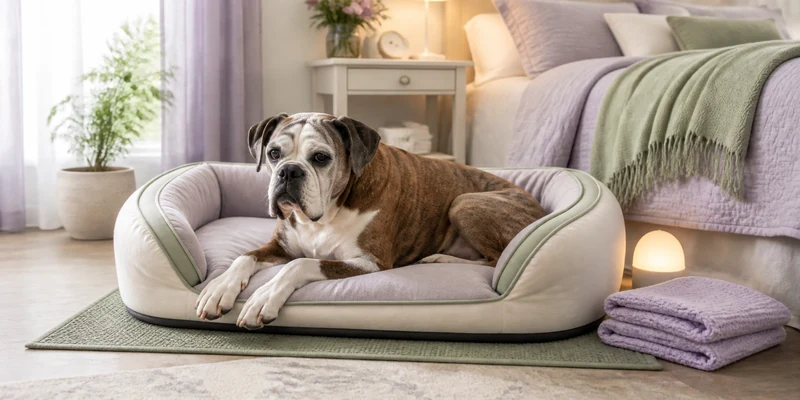
A sofa-style orthopedic foam bed with a walk-on front and headrest bolsters, a shape many older dogs settle into readily. Budget-friendly enough to place a second one in the bedroom; see our FurHaven review.

Common Mistakes to Avoid
- Buying maximum softness. A dog that sinks deep has to climb out of a hollow to stand. Medium-firm layered foam serves seniors better.
- Ignoring entry height. A thick bed with tall bolsters can be a wall to a stiff dog. Look for a cut-out entry or lower profile.
- Placing the bed on bare slick floor. The moment of standing up is when footing matters most. Put a rug under and in front of the bed.
- Moving the bed to a quiet corner. Senior dogs want to see the household. Isolation is why perfectly good beds go unused.
- Waiting for the first accident to think about liners. By then the foam has already paid the price.
- Reading behavior changes as just age. Reluctance to lie down, limping, or restlessness at night can have treatable causes. Your veterinarian should hear about them.
Where to Go From Here
If arthritis has been diagnosed or is suspected, our guide to the dog bed for arthritis covers that situation, including what a bed can and cannot do. Unsure whether your aging dog needs the orthopedic upgrade at all? Our explainer does my dog need an orthopedic bed gives a plain answer. And for the room-by-room adjustments beyond bedding, start with senior dog mobility at home.
Frequently Asked Questions
What kind of bed is best for an older dog? A medium-firm foam bed with a low entry, washable cover, waterproof liner, and non-slip base. Support the dog can push up from beats maximum plushness at this age.
Should a senior dog bed be firm or soft? Firmer than instinct suggests. The surface should cushion pressure points but resist deep sinking, so the dog can stand up without climbing out of a hollow.
Do heated beds help old dogs? Many older dogs clearly seek warmth, and warmth is a comfort feature owners report their seniors enjoying. Choose products with certified low-voltage heating and intact cords, and ask your veterinarian what is appropriate for your dog’s situation.
How do I get my old dog to use the new bed? Put it exactly where the old sleeping spot was, transfer the familiar-smelling blanket onto it, and give it days, not hours. Senior dogs change habits slowly.
My older dog suddenly avoids its bed. Why? Sudden avoidance can mean the bed moved, the floor got slicker, or lying down has become uncomfortable. Rule out the room first, and raise it with your veterinarian if the avoidance continues, since pain is a common hidden reason.
The Bottom Line
The right bed for an older dog is supportive rather than sinky, low at the entry, washable to the core, and planted on floor the dog can grip. Placement near the family finishes the job. Treat the bed as one part of a senior-friendly home alongside traction and ramps, and let your veterinarian handle anything that looks like pain rather than preference.