Last updated: August 10, 2026
A dog ramp does one thing stairs cannot: it turns a climb into a walk. No stepping motion, no landings, just a continuous slope from the floor to the couch, the bed, or the back of the SUV. That is why ramps are the go-to answer for senior dogs, long-backed breeds, post-surgery recovery periods, and any dog that has decided jumping into the car is no longer happening.
It is also a category where the details decide everything. A ramp that is too short becomes a steep, scary slide; a surface without grip fails the first time it rains; a flimsy fold buckles under a running dog. This hub guide covers the whole field, indoor and vehicle ramps alike: how slope really works, which surfaces hold paws, and the models that owners keep recommending.
This article contains affiliate links. If you buy through them, we may earn a commission at no extra cost to you. Learn more.
Quick Answer
What makes a good dog ramp?
- Length first. For the same height, a longer ramp means a gentler slope, and slope is what your dog feels. Buy the longest ramp your space and car allow.
- A surface that grips wet and dry. Textured rubber, grit-style coating, or carpet; smooth plastic is where paws slide.
- Solidity under load. A stated capacity well above your dog’s weight, no flex mid-span, and feet that stay planted at both ends.
What to Check Before You Buy a Dog Ramp
Ramps are simple machines, which means a short list of specs tells you most of the story. Here is the checklist, verifiable from any product listing.
| What to check | Why it matters | What to look for |
|---|---|---|
| Length vs. height | Slope is the ratio of the two; short ramps to high targets get steep fast | The longest ramp that fits your space; for SUVs, look at long or telescoping models |
| Walking surface | Grip is what lets a hesitant dog trust the slope, especially downhill | High-traction rubber, grit coating, or carpet; avoid smooth or glossy surfaces |
| Stiffness under load | A ramp that flexes in the middle bounces, and bounce scares dogs off | A stated weight capacity well above your dog, and reviews free of “sagging” complaints |
| Width | Large dogs and nervous walkers drift sideways on narrow ramps | A walking surface wide enough for your dog’s natural gait, wider for big breeds |
| End grip and lip | The failure point is usually a ramp end skating off the tailgate or floor | Rubber feet, a lip or attachment point at the top edge, non-slip pads both ends |
| Weight and handling | A vehicle ramp you struggle to lift stays home | Light enough to deploy one-handed if it travels; heavier is fine indoors |
| Folded or stored size | Car ramps live in the trunk; indoor ramps live against a wall | Folding or telescoping designs for travel, freestanding stable builds for indoors |
If you are choosing between this category and steps, the short version: ramps win for seniors, long dogs, and vehicles; stairs win for tight floor plans and confident climbers. The full decision framework is in dog stairs or ramp.
Slope: The Spec Hiding Behind Every Other Spec
The geometry is worth thirty seconds because it explains most ramp complaints. The steepness your dog experiences is set by height divided by length: a tailgate around two feet high reached by a six-foot ramp is a moderate walk, while the same height on a four-foot ramp is a scramble. Nothing about the ramp’s quality changes that math, which is why the most common review complaint, “my dog refuses it,” so often traces to a ramp bought too short.
There is no official standard for how steep a dog ramp may be, so use your dog as the gauge: on the right slope, your dog walks up and down at a normal pace without crouching, rushing, or clawing for grip. Older and less confident dogs need the gentle end of the range, and going downhill is always the harder test. When in doubt, longer is the answer, and for cars a telescoping design lets you extend to the gentlest slope the parking space allows.
Grip and Edges: What Keeps Paws On the Ramp
Traction separates ramps dogs trust from ramps dogs tolerate. Surfaces come in three families: carpet-style covers, comfortable indoors but slow to dry and quick to slick with fur; molded rubber or textured plastic, the mainstream vehicle choice; and grit or sand-textured coatings, the grippiest option and the one working-dog owners tend to favor for wet weather. Whatever the surface, it has to work when wet, because car ramps meet rain and lake water as a matter of course.
The edges matter almost as much. Raised side rails or a visible edge line help dogs track straight, and the contact points at each end need their own grip: rubber feet on the ground and a secured or rubberized lip where the ramp meets the tailgate or bed frame. A ramp that shifts an inch at the moment a dog commits is how one bad experience undoes weeks of training; the fix and the prevention are covered in teaching your dog to use a ramp.
Our Top Picks at a Glance
How we chose: we compared widely available dog ramps on length options, surface traction, stiffness under load, stated capacity, and how consistently owners report their dogs using them willingly. Selections rest on manufacturer specifications and recurring themes in customer reviews rather than hands-on testing of our own.
If your dog has never walked a slope, plan on a short training runway of a few sessions; nearly every refusal story in reviews is a first-week story, and nearly every success story mentions treats.
🏆 Best Overall
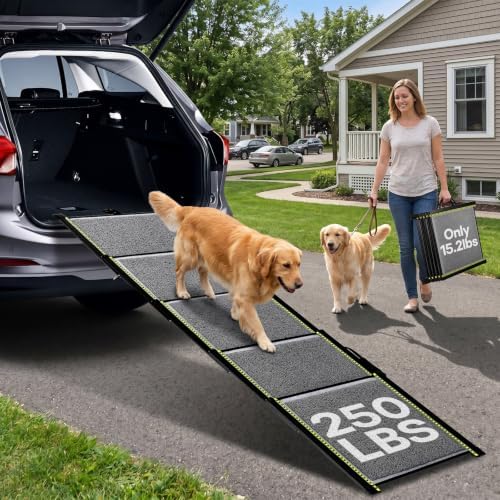
A telescoping vehicle ramp with a wide deck and a high-traction surface that extends to a gentle slope and slides compact for the trunk. The most flexible single answer for SUVs and crossovers.
💛 Best Value
A light folding ramp with a gripping tread surface at a friendly price, easy to lift and stow one-handed. A sensible first ramp for smaller vehicles and moderate heights.

🛏️ Best for Indoors
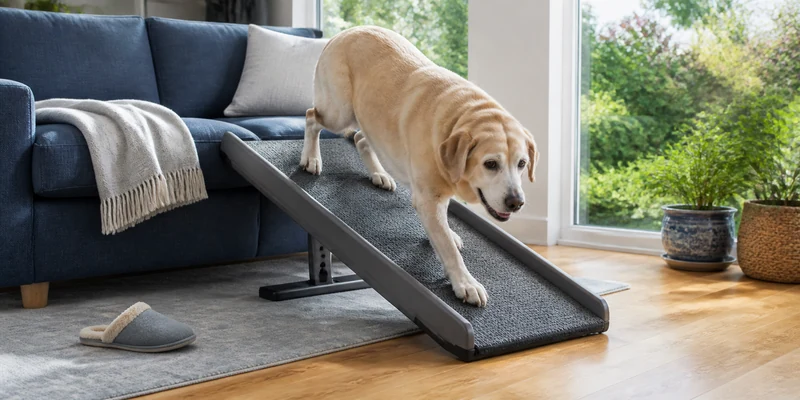
A furniture-style bedside ramp in solid hardwood with side rails and a non-slip surface, built for beds and couches rather than vehicles. The pick when the destination is the mattress.

Indoor Ramps, Vehicle Ramps, and the Dogs They Serve
The category splits cleanly in two, and buying across the split is a common mistake.
- Indoor ramps are freestanding furniture: stable frames, carpeted surfaces, fixed or adjustable heights matched to beds and couches. They stay deployed all day so a senior dog can come and go alone. The bedside specifics live in dog ramp for bed.
- Vehicle ramps are portable bridges: folding or telescoping, weather-resistant surfaces, and end grip designed for tailgates. Everything about loading heights, truck beds, and one-handed setup is in dog ramp for car, and the storage question in folding dog ramp.
Size changes the calculus too. Small and long-backed dogs benefit from ramps at heights big dogs ignore, while large seniors are the classic vehicle-ramp customer because lifting seventy pounds into a trunk is a back injury waiting for an owner. Giant breeds need width, capacity margin, and the stiffest deck you can find. And for any dog whose reluctance to jump appeared recently, let your veterinarian look before you assume furniture solves it; a ramp helps a stiff dog move around the house, but it is an aid, not a treatment, as our overview of senior dog mobility at home explains alongside the rest of the aging-dog setup.
Two More Worth Knowing
Beyond the main picks, two designs solve problems the standard ramps do not.
🐕 Best for Heavy Dogs and Trucks
A modular platform-step loader that assembles into a wide, rigid climbing line for tall truck beds and SUVs. Heavier and bulkier than a folding ramp, but the stable option for big dogs at serious heights.

🐾 Also Great: Adjustable Indoor Ramp
A freestanding indoor ramp with adjustable height settings, so one unit serves the couch now and the bed later. Useful in homes where the destination changes room to room.

Setup, Angle, and Everyday Use
Deploy a vehicle ramp on the flattest ground available and let the geometry help you: parking a couple of feet farther from a curb, or angling the ramp toward the vehicle’s lowest entry point, buys a gentler slope for free. Seat the top lip firmly on the tailgate before every use and make checking it a habit, since that connection point is where slips start. Indoors, push freestanding ramps snug to the furniture and park them on a rug or pad if the floor is slick.
Maintenance is mostly about the surface. Rinse mud and road grit off vehicle ramps and let them dry before folding; vacuum carpeted indoor ramps when they slick over with fur. Check rubber feet and hinge hardware seasonally, and retire any ramp that has developed mid-span flex, because a bouncing deck teaches exactly the wrong lesson.
Common Mistakes to Avoid
- Buying short. The number one ramp regret. Length is comfort; measure your height target and take the longest ramp that fits your storage.
- Trusting a dry-weather surface. A ramp that grips in the driveway can be an ice rink after rain. Check reviews for wet-grip reports before relying on it.
- Ignoring end grip. Mid-ramp traction means nothing if the ramp itself skates off the tailgate. Rubber feet and a seated lip are the safety system.
- Skipping the introduction. Dogs do not generalize slopes from stairs. A few flat-ramp sessions with treats, per our training guide, prevent the standoff at the tailgate.
- Buying one ramp for two jobs. The bed ramp that lives deployed and the car ramp that lives folded are different tools; a compromise unit often does neither job well.
- Treating refusal as defiance. A dog that suddenly balks at a familiar ramp may be sore, or may have slipped once. Check the ramp, then check with your veterinarian.
Where to Go From Here
Match the guide to your destination: dog ramp for car for SUVs and trucks, dog ramp for bed for the bedroom, and folding dog ramp if trunk space rules your choice. Still torn between a slope and steps? The head-to-head in dog stairs or ramp settles it per dog, and the stairs side of the family lives in best dog stairs. For older dogs, consider the full picture: a ramp for access plus a supportive sleeping spot from our orthopedic dog bed guide covers both halves of the comfort equation.
Frequently Asked Questions
What is a good angle for a dog ramp? There is no official standard; gentler is better, and the practical test is that your dog walks it at a normal pace without crouching or scrambling. You get a gentler angle by choosing a longer ramp for the same height, which is why length is the spec to prioritize.
Are ramps better than stairs for dogs? For seniors, long-backed breeds, recovery periods, and vehicles, usually yes, because a ramp removes the stepping motion entirely. Stairs win on floor space and suit confident climbers; see our full comparison.
How long should a dog ramp be for an SUV? Long enough that the slope to your cargo floor looks like a walk, not a climb; for typical SUV heights that points toward the longer and telescoping end of the market. Measure ground to cargo floor and buy the longest ramp your trunk can store.
Will my dog use a ramp? Almost all dogs learn with a short, treat-based introduction starting on flat ground. Refusals usually come from steep slopes, slippery surfaces, or a ramp that shifted underfoot, all of which are fixable.
What weight capacity does a dog ramp need? Comfortably above your dog’s weight, with margin for the dynamic load of walking and the occasional bounce. A deck that flexes in the middle is under-built for that dog regardless of the number on the box.
Do ramps help dogs with arthritis? A ramp reduces jumping and lets a stiff dog keep reaching the couch, bed, or car on foot. It is a comfort and access aid, not a treatment; for any dog with suspected joint pain, your veterinarian is the first call.
The Bottom Line
Buy a dog ramp on three things: enough length for a genuinely gentle slope, a surface that grips wet and dry, and a build that neither flexes mid-span nor shifts at the ends. Indoor and vehicle ramps are different tools, so match the ramp to the destination, and give any new ramp a short treat-based introduction. For seniors and long-backed dogs, a good ramp is one of the highest-value pieces of pet furniture you can own.