Last updated: August 10, 2026
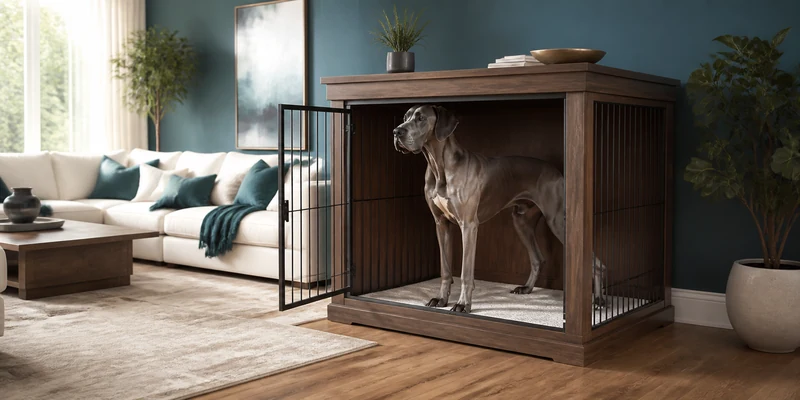
Shopping for large dog crate furniture is where this category gets unforgiving. A furniture crate that is an inch too small for a Beagle is a minor annoyance; the same mistake with a German Shepherd means a seventy pound dog crouching in a cabinet, and a piece of furniture you cannot return without renting a van. Big dogs also lean, flop, and push, so material thickness and latch quality stop being nice-to-haves and become the whole purchase.
This guide starts from the dog, not the decor. Below: how to translate a large dog’s measurements into interior cabinet space, which construction details survive a heavy dog’s daily use, and our picks among the crates that owners of big breeds consistently report holding up.
This article contains affiliate links. If you buy through them, we may earn a commission at no extra cost to you. Learn more.
Quick Answer
What does a large dog need in a furniture crate?
- Interior height above your dog’s head and interior length beyond a fully stretched-out lie. Measure the dog, then compare against inside dimensions, never the cabinet footprint.
- Thick panels and welded metal bars. Big dogs lean on walls and push on doors daily, and thin board or flimsy mesh fails within months.
- A door and latch built for shoulder-level pressure, plus a removable tray sized to slide out in a large room, not just a hallway.
Sizing a Furniture Crate for a Big Dog
Start with two tape measurements and let them overrule everything on the product page. This table turns them into a shopping rule.
| Measurement | How to take it | What it means for the crate |
|---|---|---|
| Standing height | Floor to the top of the head or ear tips, whichever is higher, standing naturally | Interior height should clear this; a dog that ducks to enter is fine, a dog that cannot stand inside is not |
| Body length | Nose to base of tail, then add a few inches | Interior length must let the dog lie fully stretched on its side, the position big dogs sleep in most |
| Turning room | No tape needed | The dog should be able to turn around without folding itself; width close to body length is a good sign |
| Weight and habits | Your scale plus honesty about leaning and door-pushing | Heavier dogs need thicker panels, metal bars rather than wooden slats only, and metal latch hardware |
The catch specific to furniture crates: cabinet construction eats interior space. A crate marketed for large dogs can lose several inches to its frame, so a big-boned Labrador often needs the XL cabinet even when a 42 inch wire crate fits. Our guide on how to measure your dog for furniture covers the routine in detail, and the wider hub on dog crate furniture explains the category basics if you are starting from zero.
Why Big Dogs Break Cheap Crates
A large dog does not have to misbehave to destroy a badly built cabinet. Seventy pounds leaning against a side panel while settling, twenty times a day, works fasteners loose in thin board. A tail at Labrador height whips the door frame. A dog standing up inside lifts its back against the top panel. None of that is destructive behavior; it is just mass, and it is why shipping weight is the most honest number on a listing. Between two crates of the same size, the heavier one is almost always using denser board.
The failure points owners report most are the same three every time: doors that sag on their hinges until the latch no longer lines up, wooden slats that crack where a dog leans or chews, and floors that bow under a heavy dog until the tray no longer slides. Scan reviews for exactly these phrases before buying, and if your dog is an active pusher or chewer, step up to the reinforced end of the category in our heavy duty dog crate furniture guide.
Our Top Picks for Large Dogs
How we chose: we compared furniture crates offered in XL sizes on interior dimensions, panel and bar construction, door hardware, and how consistently owners of large breeds report them surviving daily use. Selections are based on manufacturer specifications and recurring review themes, not hands-on testing of our own.
Expect big boxes: an XL furniture crate ships heavy, usually in two cartons, and assembly is a two-person job. That weight is the good news, since it is the material thickness your dog needs.
🏆 Best Overall
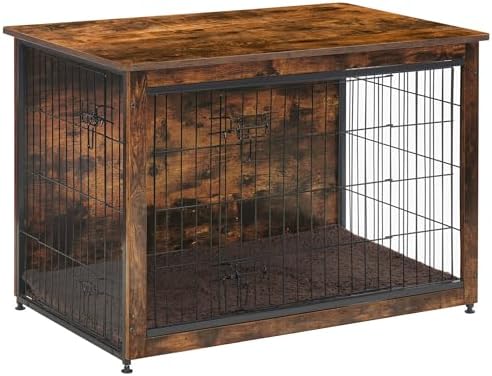
An XL wooden crate with double doors, sturdy metal bars, and interior space that genuinely fits retriever-sized dogs. Owners of large breeds repeatedly name it as the one that did not wobble.
💛 Best Value
The budget path to a large furniture crate: simpler finish and lighter board than the premium picks, but honest interior space and metal mesh sides at a price that leaves room for a good crate mattress.

🛡️ Best Heavy-Duty
A composite-built crate that handles moisture, scratching, and leaning better than bare wood, in sizes up to large breeds. The plainest looker here and the one most likely to outlast the dog’s crate years.

One Big Dog or Two?
Households with two large dogs face a different math problem: two XL crates side by side occupy an entire wall, which is why the double formats exist. A shared cabinet with a divider, or one long console with two doors, uses the wall better and reads as one piece of furniture instead of a kennel row. We compare those formats in double dog crate furniture, and the dedicated guide to dog crate furniture for 2 large dogs deals with the size-XL version of the problem, including when two separate crates remain the wiser choice.
🐕 Best for Tall Breeds
A 48 inch crate format with more interior room for Shepherds, Dobermans, and other tall-standing dogs that most cabinets force into a crouch. Verify the inside height against your dog’s ear-tip measurement.

🧱 Also Great
A large cabinet crate that adds a side section or top surface big enough to work as a real console or TV stand, so the XL footprint pays rent in the living room.

Setup, Comfort, and Keeping It Solid
Place the crate against a wall in the room where the household spends evenings, with at least two barred sides open for airflow and sightlines. On hard floors, a rug or felt pads under the feet stops the daily shuffle of a big dog entering from walking the crate across the room. Big dogs also hit the floor harder and sleep longer on pressure points, so the interior deserves a proper supportive mattress; our roundup of the orthopedic dog bed for crate sizes covers options that fit inside trays.
Assemble with all bolts loose first, square the cabinet, then tighten in stages, and re-tighten everything after the first month. Check the door weekly early on: sagging shows up first as a latch that needs a lift to close. If the crate doubles as a table, keep heavy items centered rather than on the door-side edge, and route any cables where a bored muzzle cannot reach them through the bars.
Common Mistakes to Avoid
- Trusting the size label. One brand’s XL is another’s large. Compare stated interior dimensions to your measured dog, every time.
- Buying furniture for a dog that breaks out of wire. A wooden cabinet is easier to defeat, not harder. Solve containment and anxiety first.
- Underestimating door traffic. Big dogs push doors with a shoulder. Metal hinges and a latch that locks positively are non-negotiable.
- Skipping the tray check. An XL tray needs slide-out clearance. Make sure the room layout leaves space to pull it fully out for cleaning.
- Putting the crate in the traffic lane. An XL cabinet in a walkway gets hip-checked by everyone. Give it a wall and a corner.
- Forgetting the mattress budget. A bare tray under a heavy senior dog is a pressure-sore risk. Plan bedding into the purchase.
Where to Go From Here
If your large dog is entering its senior years, crate comfort connects to a bigger picture of joints and traction around the house, which our anchor guide to senior dog mobility at home pulls together. Style-focused owners can see how XL crates look in cleaner finishes in modern dog crate furniture. And for the full category map, start at the dog crate furniture hub.
Frequently Asked Questions
What size furniture crate fits a Labrador or Golden Retriever? Usually the XL cabinet, even though these breeds often use 42 inch wire crates. Cabinet walls reduce interior space, so compare your dog’s standing height and stretched length to the listed inside dimensions rather than the wire-crate size you use now.
Can furniture crates hold a 90 pound dog? The better-built ones can, if the dog is crate trained and calm. Look for thick panels, welded bars, metal latch hardware, and reviews from owners of similar sized dogs. For pushers and chewers, see our heavy duty dog crate furniture picks.
Is a furniture crate strong enough for a German Shepherd? For a Shepherd that settles calmly, yes, with the interior height being the usual catch since they stand tall. For a Shepherd with separation anxiety or escape history, no wooden crate is the right tool, and a trainer is a better investment than furniture.
Do XL furniture crates come apart for moving? Most disassemble the way they were built, panel by panel. Keep the hardware bag and the manual; owners report reassembly goes fine but stripped screw holes from repeated moves are the main wear point in board-built models.
What goes inside a large furniture crate? A supportive mattress sized to the tray, and not much else. Skip loose water bowls, which spill and swell the board; use a clip-on bowl if water must be inside. Our orthopedic dog bed for crate guide covers mattress fit.
The Bottom Line
Large dog crate furniture succeeds or fails on interior dimensions and material thickness. Measure your dog standing and stretched out, buy the cabinet whose inside numbers clear those measurements, and choose the heavier build every time your dog leans, pushes, or chews. Size up when in doubt, and put the savings into a proper mattress rather than a prettier finish.