Last updated: August 10, 2026
Heavy duty dog crate furniture gets searched for two very different reasons, and it is worth being honest about both. The first is the strong, boisterous dog: a healthy adolescent Lab or Shepherd mix that leans, paws, and mouths its way through cheap board without malice. For that dog, this category has excellent answers. The second is the true escape artist or panicking dog, and for that dog, no wooden cabinet is the answer at all.
This guide serves the first case and flags the second, because selling a furniture crate as containment for a dog in distress helps no one. Below: what actually makes a furniture crate tougher, the materials that shrug off teeth and weight, and the picks that owners of strong, energetic dogs report surviving years of daily use.
This article contains affiliate links. If you buy through them, we may earn a commission at no extra cost to you. Learn more.
Quick Answer
What makes dog crate furniture heavy duty, and who is it for?
- Thick panels or wood-polymer composite, welded metal bars set into the frame, and metal latch hardware. Shipping weight is the honest tell.
- It is for strong, crate-trained dogs that are hard on furniture, not for escape artists or dogs with separation anxiety. Those dogs need training help, not thicker wood.
- Composite builds (like New Age Pet’s ecoFLEX) resist chewing and moisture better than any painted board and are the smart default here.
What “Heavy Duty” Actually Means on a Listing
The phrase is unregulated, so translate it yourself with this checklist.
| Component | Weak version | Heavy-duty version |
|---|---|---|
| Panels | Thin particleboard with paper veneer | Thick MDF, solid wood, or wood-polymer composite |
| Bars | Light mesh stapled to the frame | Welded steel bars anchored into the panel frame |
| Door | Thin frame, friction or hook latch | Rigid frame, metal slide-bolt or double latch |
| Hinges | Small cabinet hinges into board edge | Long or reinforced hinges into solid material |
| Floor | Bare board | Removable waterproof tray over a supported floor |
| Honest signal | Light shipping weight for the size | Noticeably heavy for its footprint |
Size still comes first, though: a heavy-duty crate the dog cannot stand up in solves the wrong problem. The sizing rules at the dog crate furniture hub apply before anything on this page.
The Honest Line: Sturdy Dog vs. Escaping Dog
A strong dog that likes its crate but treats the world roughly needs durability: material that does not dent when leaned on, edges that survive idle mouthing, a latch that holds against a pushed shoulder. That is a product problem, and this page solves it. A dog that panics when confined, injures itself trying to get out, or has learned to break crates open has a welfare problem that no cabinet fixes. Confining that dog in wood risks broken teeth and worse, and the money is better spent on a veterinary behavior consult and a trainer.
The gray zone is the adolescent chewer: destructive in the crate now, but calm about confinement itself. For that dog, composite builds buy you the year the habit takes to fade, paired with real chew toys inside and more exercise outside. If the chewing spikes only when you leave, treat it as the anxiety signal it probably is; the groundwork in crate training in a furniture crate helps you tell habit from distress before you spend on hardware.
Our Heavy-Duty Picks
How we chose: we compared the sturdier end of the furniture crate market on materials, bar and latch construction, and the durability record that owners of strong dogs describe in reviews, working from manufacturer specifications and recurring review themes rather than tests of our own.
Expect weight, and welcome it: these ship as the heaviest boxes in the category, and that mass is the product working. Plan a two-person assembly and a permanent spot, because nobody relocates these on a whim.
🏆 Best Overall
A wood-polymer composite crate that ignores moisture, wipes clean, and takes casual chewing that would scar any painted board. The default answer when durability leads the brief.
💛 Best Value
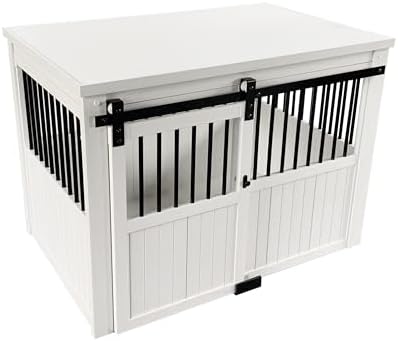
A thick-panel wooden crate with sturdy metal bars and honest hardware that reaches most of the durability at a fraction of the composite price. For strong dogs that push rather than chew.

🐕 Best for Big, Boisterous Dogs
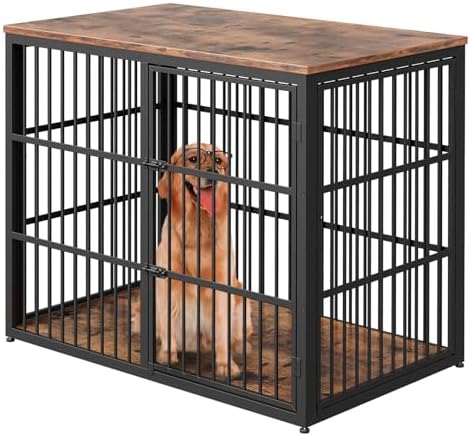
An XXL-format cabinet with a reinforced metal frame and interior space for retriever-sized dogs that hit the door frame with real momentum. Verify interior height against your dog’s ear tips.
Materials Deep-Dive: Composite, Wood, and Metal-Forward
Wood-polymer composite is this niche’s quiet champion: it does not absorb urine or water, dents rather than splinters, and its surface offers little purchase for teeth, which is why it dominates reviews from owners of rough dogs. Its cost is aesthetic, with fewer finishes and a plainer profile than furniture-grade wood. Thick solid wood is the middle path, strong and repairable, best for leaners and door-pushers rather than dedicated chewers; the full materials story lives in our wood dog crate furniture guide.
The third road is metal-forward design: crates where steel does the containment and wood is trim, or engineered crates from design brands built around aluminum and reinforced plastics. They give up some furniture-look in exchange for the most genuine strength in the category, and for households with big dogs the overlap with our large dog crate furniture picks is considerable.
🛡️ Best Metal-Forward
An engineered collapsible crate from a design DTC brand, built in aluminum and reinforced polymers with safety-tested hardware. The strongest thing here that still looks at home indoors.
🧱 Also Great
A budget-tier wooden crate with metal mesh sides thick enough for medium dogs that are hard on furniture but not demolition-grade, keeping the price of entry low.

Setup That Makes Any Crate Tougher
Assembly quality is half of durability. Run every bolt loose, square the cabinet, tighten in stages, and then, uniquely important in this niche, re-tighten after the first week, the first month, and quarterly, because a strong dog finds the loose fastener before you do. Back the crate against a wall so leaning has nowhere to go, use felt pads or a rug so door-charging cannot walk the cabinet, and keep the latch action crisp; a latch that needs a jiggle today is a latch that opens tomorrow.
Inside, give teeth a legal outlet: a durable chew that lives only in the crate makes the frame the boring option. Bedding should be tough and washable rather than plush and shreddable for dogs in a destructive phase. And burn off the energy that becomes furniture damage, since owners consistently report that the same dog is twice as hard on a crate on an unwalked day.
Common Mistakes to Avoid
- Buying wood to contain an escape artist. Wooden furniture is easier to defeat than wire, not harder. Distress needs a trainer, not a thicker panel.
- Trusting the phrase “heavy duty.” It is marketing. Verify panels, bars, latch, and shipping weight yourself.
- Under-sizing for the sake of strength. A cramped strong dog fights the crate more, not less. Interior dimensions first.
- Skipping the re-tighten schedule. Strong dogs loosen fasteners gradually and exploit them suddenly.
- Leaving nothing legal to chew. An empty den plus a bored jaw equals frame damage. Crate-only chew toys work.
- Ignoring what triggers the roughness. Damage only when you leave is anxiety, not toughness. Different problem, different fix.
Where to Go From Here
If your strong dog is also simply large, the sizing math in large dog crate furniture comes before anything else. Two powerful dogs raise the stakes again, covered in dog crate furniture for 2 large dogs. And the category fundamentals, from latch standards to tray design, live at the dog crate furniture hub.
Frequently Asked Questions
Can a furniture crate hold a powerful dog like a Pit Bull or Shepherd? A calm, crate-trained powerful dog, yes, in composite or thick-panel builds with welded bars. A powerful dog actively trying to get out, no; that situation calls for behavior work before any crate purchase.
What is the most chew-resistant crate material? Among furniture-style options, wood-polymer composite leads; teeth find little purchase and moisture does no harm. Metal-forward engineered crates are stronger still at the cost of the furniture look.
Is ecoFLEX actually durable? Owners consistently report the composite handling chewing, accidents, and years of use better than painted board, with the trade-offs being weight and a plainer look. As with any material, a truly determined dog eventually marks it.
My dog only destroys the crate when I leave. Which crate should I buy? None yet. Damage tied to your absence points at separation distress, and a sturdier crate can make it worse. Talk to your veterinarian or a qualified trainer first; the crate purchase comes after the dog can settle calmly.
Do heavy-duty crates come in furniture styles for small dogs? Yes, small composite and thick-panel models exist and suit little dogs in destructive phases; the compact end of the market is covered in our small dog crate furniture guide.
The Bottom Line
Heavy duty dog crate furniture is for strong, crate-happy dogs that are simply hard on their surroundings: choose composite or thick-panel builds, welded bars, metal latches, and let shipping weight confirm the story. It is not an escape solution, and buying it for a distressed dog fixes nothing. Match the material to the dog’s habits, keep the hardware tight, and the crate outlasts the rowdy years.