Last updated: August 10, 2026
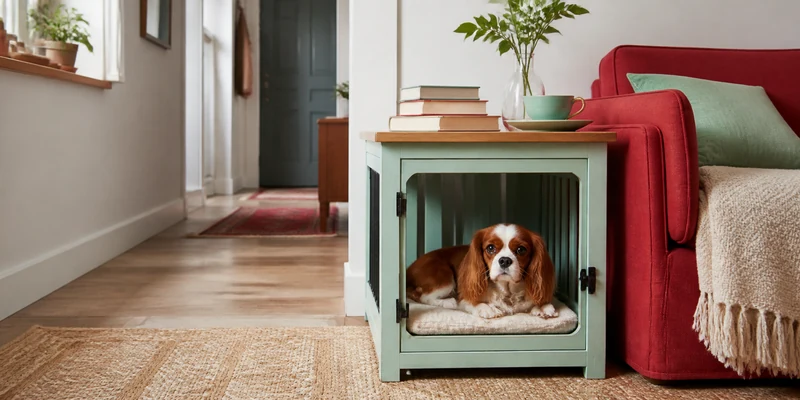
Small dog crate furniture should be the easiest corner of the category, and it is quietly one of the trickiest. Because little dogs fit in almost anything, owners buy on looks alone, and end up with crates that are too big to feel like a den, doors sized for a Labrador, and bar spacing a Chihuahua can put her head through. A crate for a ten pound dog is not a shrunken large crate; it has its own rules.
The upside is real: at small sizes, furniture crates are affordable, genuinely cute, and easy to place, an end table here, a nightstand there. This guide covers how snug is right for a small dog, the safety details that only matter at this scale, and the compact crates owners of little dogs keep recommending.
This article contains affiliate links. If you buy through them, we may earn a commission at no extra cost to you. Learn more.
Quick Answer
What should you look for in small dog crate furniture?
- Right-sized, not oversized: room to stand, turn, and stretch out, but snug enough to feel like a den. Small dogs settle worse in cavernous crates.
- Narrow bar or slat spacing, so a small head, paw, or jaw cannot get through or stuck. This is the safety spec that changes most at this scale.
- A low, wide-enough door for confident entries, and a latch a clever little paw cannot flip open.
Sizing a Crate for a Small Dog
Two tape measurements and one judgment call cover it. This table translates them into a purchase decision.
| Check | How to measure | What it means |
|---|---|---|
| Standing height | Floor to top of head or ears, standing naturally | Interior height should clear this by a small margin; a duck-under entry is fine |
| Stretched length | Nose to tail base plus a couple of inches | Interior length must allow a full side-sleep stretch |
| Snugness | Compare interior size to your dog’s curled footprint | Aim for cozy: much larger than a stretch-and-turn allowance adds anxiety, not luxury |
| Bar spacing | Listing spec or seller question | Narrow enough that head and paws stay inside; critical for toy breeds and puppies |
| Door width | Listing spec | A hesitant dog needs an easy, open entry; tight doors breed avoidance |
If the tape-measure routine is new to you, our guide on how to measure your dog for furniture walks through it, and the general construction standards, latch, tray, ventilation, are covered at the dog crate furniture hub.
Why Oversizing Backfires With Little Dogs
The instinct to give a small dog extra room comes from kindness, and it works against the dog twice. First, dens comfort by enclosure: a crate that hugs the dog’s curled shape holds warmth and reads as safe, while a half-empty box reads as exposed space with walls. Trainers see the difference in settling time, and owners report small dogs choosing snug beds over roomy crates until the crate is right-sized. Second, in housetraining, an oversized crate offers a bathroom corner, undoing the crate’s core logic for puppies.
The other scale-specific issue is the room itself. A small crate ends up beside sofas and beds, at ankle height in traffic lanes, so stability matters differently: it must not slide when bumped, and nothing on top should topple onto it. Felt pads plus a spot against a wall solve most of it. The end-table placement question, which side, which room, is the same one covered in our dog crate end table guide, whose smallest models overlap heavily with this category.
Our Top Small Crate Picks
How we chose: we compared compact furniture crates on interior proportions for small dogs, bar spacing, door design, and the reliability themes in owner reviews, drawing on manufacturer specifications and recurring review patterns rather than our own testing.
A pleasant note for this size class: these are the lightest, easiest builds in the category, and most owners report solo assembly within the hour. The savings against large formats also leave budget for a good bed inside.
🏆 Best Overall
A small solid wood end table crate with slatted sides, proportioned so a little dog gets a genuine den and your sofa gets a side table. The classic of the compact class.
💛 Best Value
The budget compact crate: engineered wood, metal mesh, and a usable top at a price that makes the furniture upgrade an easy yes for a first-time buyer.

🐕 Best for Nightstand Duty
A compact crate with clean lines and a low profile that sits beside a bed as naturally as beside a sofa, for the many small dogs that sleep in the bedroom.

Small Dogs, Specific Situations
Puppies of small breeds deserve one caution: buy for the adult size, not the eight-week fluffball, or use a cheap wire crate with a divider during the growth months and bring in the furniture piece after. Two small dogs are this category’s happiest case, since even a double format stays furniture-sized; the layouts in double dog crate furniture show how one cabinet can house both. And senior small dogs appreciate a lower entry threshold and a spot away from drafts, details that cost nothing to check on a listing.
🧱 Also Great
A composite compact crate that handles accidents and chewing phases without wood damage, a practical pick for puppies growing into it or messy little rescues.

🛏️ Best for Style Seekers
A small crate in a contemporary finish with slim bars, for owners who chose their apartment furniture carefully and want the crate to keep up.

Setup and Daily Life at Ankle Height
Place the crate where your small dog already chooses to be, which for most is within sight of the household’s main seating, and against a wall so it cannot slide. Keep it out of the draft line of doors and off cold tile if you can; small bodies lose heat faster, and a crate that is cozy in summer can be chilly in January. A washable bed that fills most of the floor, rather than a loose blanket pile, keeps the den warm and the cabinet clean.
Daily life is mostly about the top surface staying honest: at end-table height it collects mugs, remotes, and phones, so respect the weight limit and keep cords out of bar reach, since small dogs are eye-level with them. Re-tighten hardware after the first month, check the latch action when you clip nails, and wash the bedding on a schedule. If your little dog is new to crates entirely, the settling routine in crate training in a furniture crate works at every size.
Common Mistakes to Avoid
- Buying two sizes up to be nice. Cavernous crates unsettle small dogs and sabotage housetraining. Right-size it.
- Ignoring bar spacing. The spec barely matters for a Labrador and completely matters for a Yorkie. Check it.
- Placing the crate in the walkway. Ankle-height furniture gets kicked. Wall, corner, or sofa-side only.
- Buying for the puppy, not the adult. Small breeds still double in size. Buy the adult dimensions or bridge with wire first.
- Treating small as chew-proof. Little jaws ruin veneer edges too. Composite or metal-forward builds for determined chewers.
- Forgetting warmth. Small dogs run cold. Draft-free placement and a proper bed beat an extra blanket on top.
Where to Go From Here
If the end-table format is the draw, the full comparison lives at dog crate end table. Renters with small dogs are the category’s ideal case, and dog furniture for renters covers what else moves house well. For every construction and sizing fundamental, the dog crate furniture hub is the starting point.
Frequently Asked Questions
What size crate furniture fits a Chihuahua or Yorkie? The smallest end-table formats, judged by interior dimensions: room to stand, turn, and stretch, and not dramatically more. Bar spacing narrow enough to keep heads and paws inside is the spec to verify for toy breeds.
Can a French Bulldog use small crate furniture? Frenchies are small in height but broad and stocky; many fit better in the medium formats. Measure standing height and stretched length and compare against interior numbers rather than the size label.
Is a furniture crate okay for a small puppy? Once basic crate comfort exists, yes, sized to the adult dog. During housetraining months, an oversized den invites accidents, so bridge with a divided wire crate or block off excess space, then move to the furniture piece.
Do small dogs actually use these crates? Owners consistently report that right-sized crates beside the household’s seating become the dog’s default nap spot with the door open. Oversized or isolated crates are the ones that go unused.
Can I put my small dog’s crate in the bedroom? Yes, and many small dogs settle best there. A compact crate doubles as a nightstand; keep it off the draft path and away from radiators, and the arrangement works for everyone.
The Bottom Line
Small dog crate furniture works when you resist the urge to oversize: a snug, right-measured den with narrow bar spacing, an easy door, and a solid latch. Place it inside the family circle, warm and wall-backed, and the crate becomes the little dog’s chosen spot rather than a furniture-shaped ornament. Spend the size savings on the bed inside.