Last updated: August 10, 2026
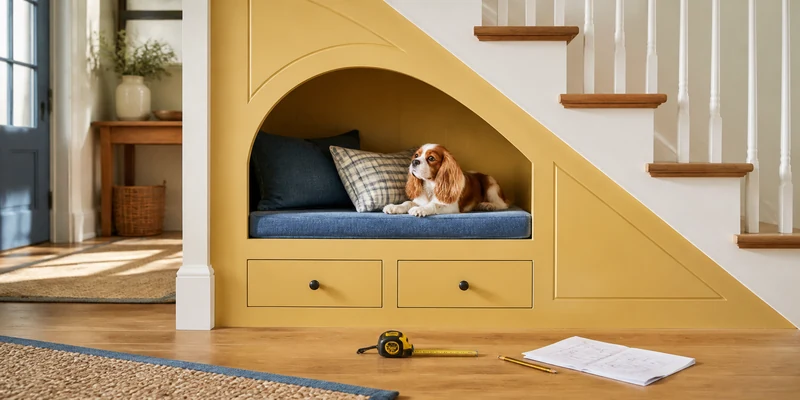
The space under the stairs is where most homes keep a vacuum cleaner and a box of things nobody remembers packing. A dog nook under the stairs puts that space to better use: it is naturally den shaped, it sits close to the household traffic dogs like to monitor, and it costs you zero square feet you were actually using.
The idea photographs beautifully, which is exactly why it is worth being practical about it. Some under stairs spaces make a wonderful dog den, and some are too cramped, too dark or too busy for a dog to ever choose them. This guide walks through how to judge your space, a step by step plan for the build, and the finishing details that turn a cleared out closet into a spot your dog genuinely uses.
Quick Answer
Can the space under your stairs work as a dog nook?
- Yes, if your dog can stand, turn around and lie fully stretched inside the usable part, with headroom at the tallest point your dog actually occupies.
- The build is mostly cosmetic: clear, clean, add flooring, bed and lighting. A gate or half door is optional and can come later.
- Skip it if the stairs sit in a loud walkway, the space is windowless and airless, or your dog already refuses enclosed spots.
The Build, Step by Step
Save this plan for the weekend you do it. None of the steps require more than basic tools, and the first two cost nothing.
- Measure the dog, then the space. Measure your dog standing (floor to top of head), lying stretched out, and sitting. The usable nook must beat the lying length in depth or width, and the standing height at the point where your dog will stand. Sloped ceilings count only where they are tall enough. Our guide on measuring your dog for furniture covers the technique.
- Live test the spot for a week. Before touching a tool, put your dog’s current bed in the cleared space. If your dog settles there voluntarily, build on. If not, the location has a problem no amount of trim carpentry will fix.
- Clear, clean and seal. Empty the space, vacuum thoroughly, and check for exposed nails, splinters, cables and outlets at dog height. Cover or reroute anything chewable. A coat of washable paint in a light color brightens a space that will never see much daylight.
- Sort the floor. Hard and washable wins: vinyl plank, linoleum or a sealed finish, topped with a washable rug or mat. In a rental, a rug over the existing floor does the job without touching the lease.
- Add light and air. A plug in wall light or battery puck light on a warm setting makes the nook usable, and dogs avoid pitch dark corners more than people expect. Leave the opening generous so air moves; a nook is a den, not a cupboard.
- Furnish it. A mattress style bed sized to the back wall, a water bowl if the space allows, and one basket for the toys that migrate there anyway. Hooks on the inside wall for a leash turn the nook into a small station.
- Finish the opening. Trim the entry so it looks intentional, and decide on the door question: nothing, a low gate, or a half door. Start with nothing. You can add a gate later if you need one, and many households never do.
Is Your Under Stairs Space Actually Suitable?
The go or no go question comes down to three things: size, location and your individual dog. Size is settled by the measurements in step one. Location and dog temperament deserve a closer look.
| Check | Good sign | Warning sign |
|---|---|---|
| Traffic around the stairs | Beside the action, not in it: dog can watch the room from the nook | Feet pass directly over or past the opening all day |
| Noise and vibration | Stairs are used a handful of times a day | Kids thunder up and down; every trip rumbles through the nook |
| Air and light | Open sightline to a lit room, air moves freely | Deep closed closet, stale air, total darkness |
| Your dog’s preferences | Already naps under tables and desks | Avoids crates and enclosed spots entirely |
A dog that loves den spaces will treat a good nook as a gift. A dog that has never chosen an enclosed spot in its life is telling you something, and a floor bed in the same location may serve better than a built out cave. For older dogs, also think a few years ahead: a nook works best on the ground floor, and the broader adjustments in senior dog mobility at home are worth reading before you invest in a build.
Making the Nook Look Built In
The difference between “we cleared out the understairs closet” and the version people photograph is finish, not budget. Paint the interior the same color as the surrounding wall or trim so the nook reads as architecture. Repeat one material from the room, the floor tone, the trim profile or a cabinet color, inside the nook. Keep the opening clean: a simple painted arch or squared trim beats a novelty bone shaped cutout in every room style.
If the space is too shallow for a full den, do not force it. A furniture style crate pushed into the alcove gives the same built in effect with proper ventilation and a door you can actually use, and it moves with you. If that ends up being your route, our dog crate furniture guide shows what to look for, and the wider modern dog furniture guide covers pieces that hold their own in a finished room. A nook also pairs naturally with crate skills: a dog that has learned to settle in a den, as covered in crate training in a furniture crate, adopts a nook almost immediately.
Common Mistakes With Under Stairs Dog Nooks
- Building before testing. The week long bed test in step two exists because location failures are permanent. Carpentry cannot fix a spot your dog dislikes.
- Measuring the opening instead of the interior. Under stairs spaces taper. Your dog lives in the usable volume, not the doorway, so measure where the dog will actually lie.
- Sealing it up. A door that closes turns a den into a box. If you need containment, a low gate keeps sightlines and airflow open.
- Storing things overhead inside the nook. A shelf of paint cans above a sleeping dog is a bad bet. If the space must share storage duty, keep stored items behind a fixed panel.
- Making it the punishment spot. If the nook only appears in the story when the dog is wet, muddy or in disgrace, the dog stops going in voluntarily. Feed treats there, hide chews there, keep it positive.
If You Are Planning the Bigger Picture
A nook is often the first move in a larger reorganization of where the dog stuff lives. The full range of options, from laundry corners to closet conversions, is laid out in our dog room ideas guide. If the space by your back door is the real problem, the dog friendly mudroom guide tackles leashes, towels and muddy paws at the source. And if the crate currently dominating your living room is what sent you here, dog crate in the living room covers the alternatives.
Frequently Asked Questions
How big does an under stairs dog nook need to be? Bigger than your dog stretched out flat, with standing headroom at the spot where your dog enters and turns. Measure the usable interior, not the opening, because most under stairs spaces taper sharply.
Do I need planning permission or a contractor? For the version described here, no. You are decorating an existing space, not altering the structure. The moment you want to remove framing, cut into a wall or add wiring, bring in a professional.
Should the nook have a door? Start without one. Most dogs use an open nook more, and a low gate added later covers the situations where you need containment while keeping air and sightlines open.
What if my dog will not go in? Do not force it. Feed meals at the entrance, toss treats inside and let your dog explore at its own pace over a week or two. If the resistance persists, the location or the enclosure itself is the issue, and a bed in the open beats an unused den.
Can the nook double as storage? Only with a hard separation. Stored items above or behind a fixed panel are fine; loose boxes sharing floor space with your dog are not, both for safety and because the dog reads the clutter as the room’s real purpose.
The Bottom Line
An under stairs dog nook works when three things line up: enough usable interior for your dog to stand, turn and stretch, a location beside the household action rather than inside it, and a dog that actually likes den spaces. The build itself is a weekend of cleaning, flooring, light and bedding, with the live bed test doing the real decision making before you start. Finish it in the room’s own colors and keep it positive, and the leftover closet becomes the most used spot in the house.