Last updated: August 10, 2026
A dog house heater is one of the few pet purchases where the safety details matter more than the product choice. You are putting an electrical heat source in a small wooden or plastic box, filling that box with straw, and leaving an animal alone with it overnight. Done with purpose-built equipment, guarded elements, thermostats, chew-protected cords, that is a solved problem, and outdoor dogs in cold regions are far more comfortable for it. Done with a clamp lamp or a garage space heater, it is how doghouse fires start.
This guide sorts the safe options from the hazards: mounted furnace-style heaters versus heated pads, the safety features that are non-negotiable, how to install and power either type, and when a heater is even the right answer compared to better insulation.
This article contains affiliate links. If you buy through them, we may earn a commission at no extra cost to you. Learn more.
Quick Answer
What is the safest way to heat a dog house?
- For most dogs: an outdoor-rated heated pad with a thermostat, low wattage, a chew-resistant cord, and an independent safety listing. It warms the dog directly and draws little power.
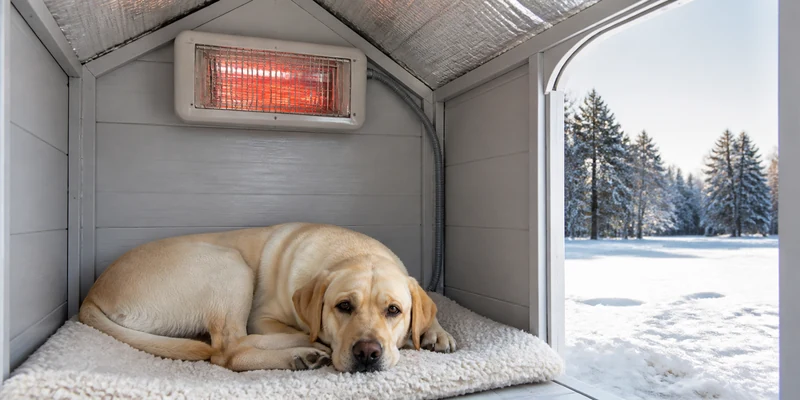
- For very cold regions: a purpose-built mounted heater with a fully guarded element and thermostat, installed high with clearance from bedding, inside an insulated house.
- Never: heat lamps, human space heaters, or human heating pads. None are built for unattended animals in confined spaces.
Dog House Heating Options Compared
Everything sold for warming a doghouse falls into one of these rows. The last one is included because people keep trying it.
| Option | How it heats | Best for | Key risk to manage |
|---|---|---|---|
| Soft heated pad | Thermostat-controlled low-wattage bed, warms the dog on contact | Most dogs, most winters | Cord routing; must be outdoor-rated |
| Rigid heated pad | Hard thermoplastic panel, same principle, tougher surface | Diggers, chewers, kennel floors | Same, plus correct sizing to the sleeping area |
| Mounted furnace heater | Enclosed unit warms the air inside the house | Sustained hard freezes, insulated houses | Clearance, guarded element, proper mounting |
| Heat lamp | Radiant bulb, typically clamp-mounted | Not recommended for dog houses | Falls into bedding; fire and burn hazard |
| Human heater or pad | Fixed output, made for supervised use | Never in a dog house | No pet thermostat behavior, no chew protection |
The pattern in that table: warming the dog beats warming the air for efficiency and safety, and everything designed for supervised human use fails the unattended-animal test.
The Non-Negotiable Safety Features
Whatever you buy, it must clear all four of these bars. Products that clear three are not close enough.
- Thermostat control. Pet heating regulates itself toward a safe surface or air temperature and cycles down. Fixed-output devices keep pushing heat into a confined space, which is the root of most accidents.
- A guarded or enclosed element. Nothing glowing, nothing a nose or paw can touch. Pads seal the element inside; proper mounted heaters put it behind a guard.
- A chew-resistant cord. Steel-wrapped cords are standard on legitimate outdoor pet heating. The cord is the most common failure point, and dogs find cords interesting exactly once.
- An independent safety listing. Testing by a recognized lab such as MET or UL, stated on the listing. Absence of a listing on an electrical pet product is a decision made for you.
Two installation rules complete the set. First, ventilation stays: a heated house still needs a small high vent so moisture escapes, and a sealed heated box turns clammy. Second, escape stays: the dog must always be able to move away from the heat source, which means a pad covers part of the floor, never all of it, and a mounted heater points across the space, not at the only sleeping spot.
Heater or Better Insulation First?
Insulation first, every time. A heater in a drafty, oversized, ground-sitting house fights a losing battle and costs you the difference on the power bill. The order of operations: size the house snugly, raise the floor, fit a door flap, bed with straw, and insulate the walls if the house allows it. Our step-by-step insulation guide covers the retrofit, and the insulated dog house guide covers buying it built in. Many owners find the insulated setup alone is enough, and the heater becomes a hard-freeze tool rather than an all-winter necessity.
Add active heat when the climate holds below freezing for long stretches, or when the dog is short-coated, lean, senior, or clearly uncomfortable. If your dog suddenly cannot get warm, or seeks heat far more than usual, involve your veterinarian; that pattern can mean more than a cold yard.
Our Dog House Heating Picks
How we chose: we compared outdoor pet heating products on thermostat design, element protection, wattage, cord construction, safety listings, and long-running owner feedback from cold-climate use. Selections are based on manufacturer specifications and owner reviews, not hands-on assessment.
K&H Pet Products sets the standard in pads, with thermostats and safety listings across the range. Furnace-style house heaters are a smaller field; buy only guarded, thermostat-controlled units sold specifically for dog houses.
🏆 Best Overall
The default choice: a soft outdoor-rated heated bed with thermostat control, low wattage, and a steel-wrapped cord. Comfortable enough to be the sleeping surface itself, and safe for continuous winter use.

🐾 Best Heavy-Duty
A rigid thermoplastic heated pad that shrugs off digging, scratching, and chewing-prone dogs. Easy to wipe clean and a natural fit for kennel and doghouse floors that see rough use.

🔥 Best for Sustained Hard Freezes
A purpose-built wall-mounted dog house heater: thermostat control, overheat protection, and a bite-resistant cord, mounted high on the interior wall with clearance from bedding. The air-warming step up for insulated houses in brutal climates.

Installation and Power: Doing It Properly
Pads are simple: place the pad on the floor covering part of the sleeping area, route the cord out through a corner or notch where a lying dog cannot reach it, and follow the manufacturer on whether bedding may cover the surface. Mounted heaters take more care: high on a wall per the instructions, clearances to bedding and walls respected, straw kept away from the outlet side, and the mounting checked after the first weeks of use.
Power safely or not at all. Use a GFCI-protected outdoor outlet, an outdoor-rated cord only if the manufacturer permits extensions, and keep every connection off the ground and out of water. Then put inspection on a schedule: cords for nicks and bite marks every few weeks, pad surfaces for damage, connections for corrosion. Retire anything with compromised insulation immediately, and store equipment dry and flat over summer rather than folded around its own element.
Common Mistakes to Avoid
- The clamp-on heat lamp. The classic doghouse fire: lamp works loose, lands in straw. No lamp, ever, in a dog house.
- Indoor products outdoors. Indoor heated beds and human pads lack the weather rating, thermostat behavior, and cord protection this job requires.
- Heating an uninsulated house. The warmth leaves as fast as it arrives. Insulate first, heat second.
- Covering the whole floor with heat. The dog needs unheated space to retreat to. Partial coverage is correct coverage.
- Daisy-chained indoor extension cords. Outdoor-rated cord, GFCI outlet, connections off the ground. Anything less is a hazard in rain and snow.
- Never re-checking. Outdoor electrics degrade quietly. A monthly look at cords and connections is the cheapest insurance there is.
Where to Go From Here
The full warm-setup picture, house choice plus heat, is in the heated dog house guide. If the house itself is the weak link, start with the dog house buying guide or go straight to the winter setup guide, which pulls placement, bedding, and insulation into one checklist alongside the heating question.
Frequently Asked Questions
Are dog house heaters safe? Purpose-built ones are: thermostat control, guarded elements, chew-resistant cords, and independent safety listings are what make unattended use reasonable. The accidents in this category overwhelmingly involve improvised equipment, heat lamps, and human heaters.
Is a heated pad or a mounted heater better? A pad for most situations: it warms the dog directly, draws less power, and installs in seconds. A mounted furnace heater earns its complexity only in genuinely cold regions, inside a well-insulated house, as our heated setup guide explains.
How much power does a dog house heater use? Pet heated pads are low-wattage by design and cycle down on their thermostats, so running costs stay modest. Air-warming mounted heaters draw more, which is another reason insulation comes first.
Can I use a heat lamp instead of a heater? No. Clamp lamps over straw bedding are a well-documented fire risk, and radiant bulbs can burn a dog in a confined space. Thermostat-controlled, guarded pet equipment exists precisely to replace them.
Do I still need insulation if I add a heater? Yes, insulation is what lets a small heat source keep up. Fix the house first with our insulation guide, then size the heat to the gap that remains.
The Bottom Line
A dog house heater is safe when it is built for the job: thermostat, guarded element, protected cord, independent listing, outdoor rating. Choose a heated pad for most dogs, a mounted furnace heater only for hard-freeze climates and insulated houses, and power everything through GFCI-protected outdoor connections. Insulate first, inspect on a schedule, and never let a heat lamp near straw.