Last updated: August 10, 2026
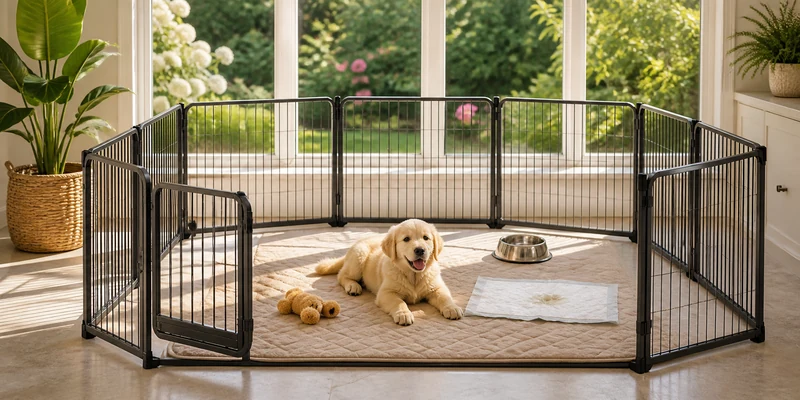
A dog playpen fills the gap between a crate and a closed door. A crate is a den, small by design; a whole room is more freedom than a puppy or a new rescue is ready for. A pen gives your dog real space to move, play, and nap, inside a boundary you chose, and it does this in the living room, the yard, or a hotel room, wherever the panels happen to be standing that week.
The catch is that “playpen” covers everything from featherweight fabric hexagons to steel panel systems that could fence livestock, and buying the wrong weight class for your dog is the classic mistake. This guide sorts the types, matches them to dogs and situations, and names the pens that have earned their reputations.
This article contains affiliate links. If you buy through them, we may earn a commission at no extra cost to you. Learn more.
Quick Answer
Which dog playpen should you get?
- For most dogs and puppies indoors, a foldable metal exercise pen with a door is the versatile default.
- For big, strong, or outdoor dogs, step up to a heavy-duty panel pen with thicker steel and ground stakes.
- Match panel height to your dog: jumpers and climbers need tall panels, and any pen needs to be tip-resistant at your dog’s weight.
Dog Playpen Types at a Glance
Four families cover the market. Weight class and material decide which dogs each can actually hold.
| Pen type | What it is | Best for | Keep in mind |
|---|---|---|---|
| Wire exercise pen | Hinged metal panels that fold flat, usually eight | Puppies, most indoor dogs, travel, breeders | Light gauges bend under big dogs; smooth floors need grip |
| Heavy-duty panel pen | Thick steel panels bolted or rodded together | Large and strong dogs, outdoor use, yards | Heavy to move; assembly is a project, not a fold-out |
| Plastic panel pen | Molded interlocking panels, often colorful | Small dogs and young puppies indoors | Chewable and light; outgrown quickly by medium dogs |
| Gate-style play yard | Gate panels that close into a loop | Flexible homes that need a pen and a barrier | Doubles as a room divider, but lighter than dedicated pens |
If what you actually need is to block a doorway rather than enclose a dog, that is a different tool with different rules; start with our best dog gate hub before buying panels.
Pen, Crate, or Gate: Choosing the Right Tool
The three containment tools answer three different questions. A crate answers “where does my dog sleep and settle?”, and it should stay just big enough to stand, turn, and lie down, because coziness is the point. A gate answers “which parts of the house are open?”, dividing space without enclosing the dog. A pen answers “how do I give my dog safe freedom?”, which makes it the tool for puppies too young for house freedom, for dogs recovering from the zoomies-prone stage, and for anyone who wants a yard boundary that moves.
The strongest setup for a puppy is a combination: a crate with the door open, inside or attached to a pen, with a water bowl and toys in the penned area. The dog gets a den plus a living room, and housetraining benefits from the clear zones. If the crate side of that equation is still undecided, our crate training in a furniture crate guide covers how a den works inside the home, and the best dog crate furniture hub covers the furniture-style options.
Sizing and height, honestly
Floor space first: the dog needs room to walk several body lengths, stretch out flat, and have a bed at one end with a mess-safe zone at the other for young puppies. Height second, and this is where returns happen: a small dog can be a great jumper, and athletic breeds treat medium panels as an agility obstacle. When in doubt, buy the taller panel height; nobody has ever regretted a pen their dog could not vault. For climbers, look for smooth vertical bars without horizontal footholds. And weight class matters most of all: a pen the dog can bend, lift, or walk across the floor is a suggestion, not a boundary.
Our Top Picks at a Glance
How we chose: we compared pens from MidWest Homes for Pets, FXW, IRIS USA, and Regalo on panel strength, door quality, height options, and how consistently owners report them containing real dogs indoors and out. We work from manufacturer specifications and recurring themes in reviews, not hands-on trials of our own.
Every pick below folds or disassembles for storage, so committing to a pen does not mean committing your floor plan to it forever.
🏆 Best Overall
The classic foldable wire exercise pen with a step-through door, sold in multiple heights. It sets up in minutes, folds flat, reshapes into whatever the room allows, and connects to a crate. The default for puppies and most indoor dogs.

🧱 Best Heavy-Duty
A thick-steel panel pen that locks together into a seriously rigid enclosure, with a latched door and stakes for lawn use. The answer for large, strong dogs and for pens that live outdoors.

🐶 Best for Puppies and Small Dogs
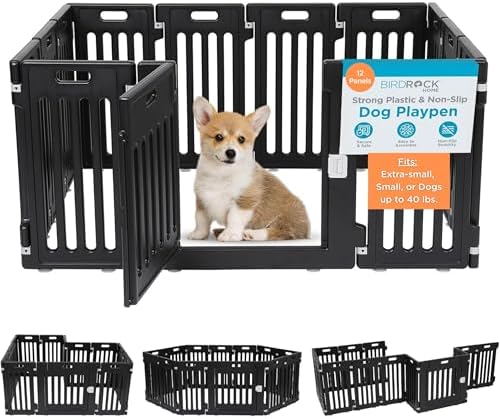
A molded plastic panel pen with an integrated door, light enough to move for cleaning and gentle on floors. Sized and priced for the small-dog and young-puppy stage.
Indoors, Outdoors, and In Between
Indoors, the pen’s enemies are the floor and the furniture. Hard floors let a light pen skate when the dog leans on it, so anchor the pen against a wall, weight the corners, or stand it on a rug; hard floors also deserve a waterproof mat under a puppy pen for obvious reasons. Our indoor dog playpen guide goes deep on layouts, floor protection, and living-room-friendly setups.
Outdoors, sun, ground, and motivation change the math. Grass gives panels nothing to grip, which is what ground stakes are for; slopes make gaps under the panels; and a bored dog alone in a yard pen works on weaknesses a supervised dog never finds. Use heavy panels outside, stake them, provide shade and water, and treat any outdoor pen as supervised space rather than all-day housing. In hot weather especially, an unshaded pen is not a safe place to leave a dog.
🚪 Best Gate-Style Play Yard
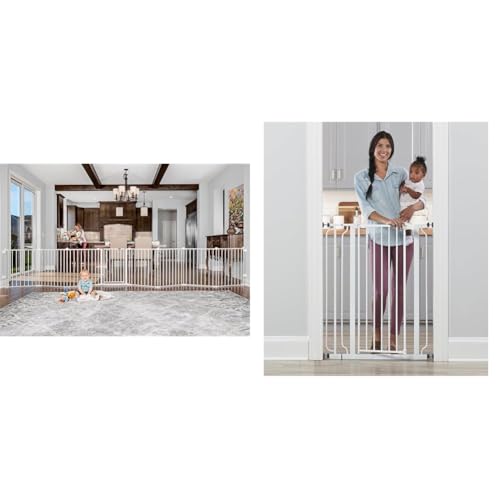
Linked gate panels that close into a pen or stretch into an extra-wide barrier, so one purchase covers both jobs. Lighter than a dedicated pen, ideal for flexible indoor spaces and calm dogs.
🐾 Also Great: Simple Wire Pen
A straightforward eight-panel wire exercise pen without frills, easy to fold and carry to a training class or a weekend rental. A solid spare or starter pen for average-sized, non-escape-artist dogs.

Setting a Pen Up for Success
Furnish the pen like a room, not a holding cell: a bed in one corner, water anchored to a panel so it cannot be tipped, and a couple of chew-safe toys. Introduce it with the door open and meals inside, so the pen means good things before it ever means confinement. Keep the pen away from window cords, power outlets, and anything the dog can pull through the bars, because a bored puppy’s reach through a wire panel is longer than it looks.
Build up alone-time gradually, the same way as crate training: minutes first, errand-length later. A dog that panics in a pen is telling you the training moved too fast, not that the pen is the wrong brand. And check the hardware monthly, since door latches and corner connections loosen with use, especially on pens that get folded and moved often. Multi-dog homes have extra layout questions, covered in our multi-dog household setup guide.
Common Mistakes to Avoid
- Buying under your dog’s weight class. A light wire pen around a strong adolescent dog is a delay, not a boundary. Panel gauge and weight are the specs that hold.
- Guessing on height. Jumpers clear medium panels with ease. When torn between two heights, take the taller one.
- Using the pen as punishment. A pen only works if the dog settles in it willingly. Meals, chews, and calm introductions build that; scolding inside it destroys it.
- Leaving a puppy penned with hazards in reach. Cords, plants, and tablecloth edges within paw-reach of the panels count as inside the pen.
- Skipping ground stakes outdoors. An unstaked pen on grass moves with the dog. Stakes are the difference between a fence and a sled.
- Treating a pen as all-day housing. Pens buy safe unsupervised stretches, not a substitute for exercise, company, and house time.
Where to Go From Here
Setting the pen up in a living space is its own puzzle of floors, layouts, and looks, solved in the indoor dog playpen guide. If your dog is in the heavy-duty class, our FXW dog playpen review takes the closest look at the brand that dominates that category. And for dividing rooms rather than enclosing dogs, the best dog gate hub is the parallel read.
Frequently Asked Questions
Is a playpen better than a crate? They do different jobs. A crate is a snug den for sleeping and settling; a pen is a larger safe zone for awake time. Most puppies do best with both, ideally connected, rather than either alone.
How tall should a dog playpen be? Small, non-jumping dogs manage with panels around two feet. Medium dogs and known jumpers need roughly three feet or more, and athletic escape artists need the tallest class plus supervision while they learn the boundary.
Can I leave my dog in a playpen while at work? Short absences, yes, once the dog is trained to settle there with water, a bed, and safe chews. A full workday is a lot to ask of a young puppy in any enclosure; midday breaks or help make the difference.
Do playpens work on hardwood floors? Yes, with grip and protection added: a rug or waterproof mat under the pen stops both sliding and scratches. Light pens on bare hardwood tend to migrate when the dog leans on them; see our indoor playpen guide for setups.
Are outdoor dog playpens safe? As supervised space with shade, water, stakes, and heavy panels, yes. As all-day unsupervised housing, no: heat, boredom, and escape attempts all scale with time alone, so keep outdoor pen sessions short and watched.
The Bottom Line
Match the pen’s weight class to the dog before anything else: a foldable wire exercise pen with a door covers most indoor dogs and puppies, heavy steel panels cover strong dogs and yards, and plastic pens cover the small-dog stage. Buy taller than you think you need, anchor or stake against sliding, and furnish the pen so your dog settles in it willingly. Used that way, a playpen is the most flexible piece of dog equipment in the house.