Last updated: August 10, 2026
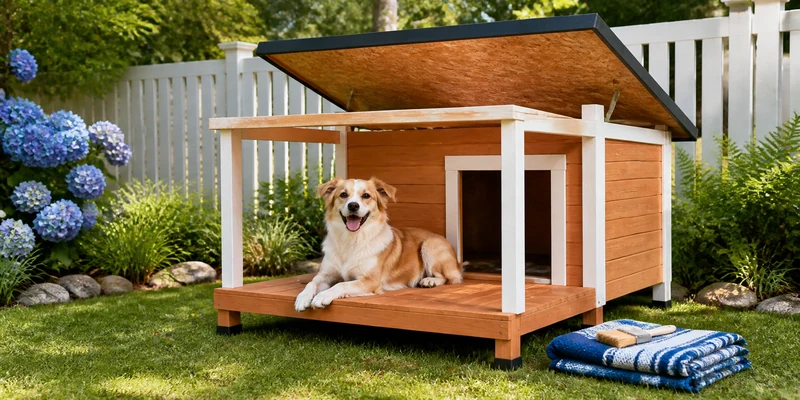
A wood dog house is the one your eye goes to. Cabin styling, a pitched shingle-look roof, maybe a little porch: wood is the only material in this category that makes a yard look better rather than more cluttered, and timber genuinely does slow heat loss better than a thin plastic shell. But wood also asks for something back. It needs sealing, it can rot at the floor line, and the quality gap between a solid cedar build and a thin fir kit is wider than any product photo will admit.
This guide covers what separates good wooden houses from disposable ones, the maintenance reality nobody puts in the listing, the wood-look composite alternative that skips most of it, and our picks for classic wood, big dogs, and low-upkeep buyers.
This article contains affiliate links. If you buy through them, we may earn a commission at no extra cost to you. Learn more.
Quick Answer
Is a wooden dog house a good idea?
- Yes, if looks matter and you will do light annual maintenance: check the sealant, watch the floor line, and touch up the roof. Wood insulates modestly and blends into a yard like nothing else.
- Buy on construction, not photos: solid boards over thin panels, a raised floor, a sloped weatherproofed roof, and dog-safe (non-toxic) finishes.
- Want the look without the upkeep? Wood-look composites like New Age Pet’s ECOFLEX line will not rot, warp, or need repainting.
Wood vs Composite vs Plastic
The material decides what owning the house is like three years in. Here is the honest comparison.
| Property | Solid wood | Wood-look composite | Molded plastic |
|---|---|---|---|
| Looks in the yard | The benchmark | Convincing at a short distance | Utilitarian |
| Insulation | Modest, built in | Similar; some lines add insulated panels | Depends on wall thickness |
| Maintenance | Sealing, repainting, rot checks | Hose off, done | Hose off, done |
| Rot and pests | The known weakness, floor first | Resistant by design | Immune |
| Chewers | Edges and corners are targets | Harder to start on | Rounded, least purchase |
| Weight and stability | Heavy, stays put in wind | Middleweight | Light, may need anchoring |
| Typical cost | Budget kits to premium builds | Premium | Budget to midrange |
If winter performance is your first priority rather than looks, the construction-first logic in our insulated dog house guide should drive the choice, and the overall trade-offs across every shape live in the dog house buying guide.
What Separates a Good Wooden House From a Kit That Fails
Wooden dog houses fail in predictable places, so inspect listings for exactly these points. The floor comes first: it should be raised on legs or runners so the boards never touch soil, because ground contact is how wooden floors rot out in a couple of seasons. The roof comes second: a real slope so water runs off, covered with asphalt-style sheeting or proper overlapping panels, and ideally hinged or removable so you can clean inside.
Then the wood itself. Naturally weather-resistant species like cedar and fir are the category standards, but board thickness varies wildly between brands, and thin panels warp, gap at the joints, and let wind through. Look for stainless or galvanized hardware, and confirm the finish is described as pet-safe or non-toxic, since dogs chew corners and lick walls. Finally, check the doorway position: an opening set to one side shelters the sleeping area better than one centered on the front wall, and a flap can be added to almost any of them.
Our Wooden and Wood-Look Picks
How we chose: we compared wooden and composite houses on board and panel construction, floor elevation, roof design, hardware, finish safety, and recurring themes in owner reviews. Selections are based on manufacturer specifications and owner feedback, not hands-on assessment.
A word of reassurance on assembly: all three arrive as flat-packed panels with pre-drilled holes, and none require more than a screwdriver and an hour or so. These are furniture kits, not carpentry projects.
🏆 Best Overall
A lodge-style house from recycled plastic-wood composite: the cabin look with none of wood’s failure modes. It will not rot, warp, or need repainting, cleans with a hose, and assembles fast. The buy-once answer in this category.

💛 Best Value in Real Wood
A classic timber house with an elevated base, a weatherproof openable roof, and cabin styling at an accessible price. Expect to keep the sealant up annually, which is the honest cost of real wood at this price.
🐾 Best for Large Dogs
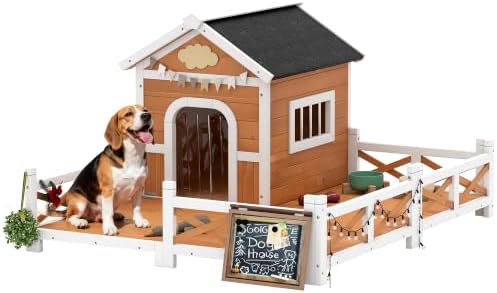
A bigger-footprint wooden house with generous door height and a porch-style overhang that keeps rain off the entrance. Check the interior dimensions against your dog before ordering; large labels vary between brands.

Making a Wooden House Winter-Ready
Wood gives you a head start on cold weather, and the same system as every other house finishes the job: snug sizing so the interior warms from body heat, elevation on blocks or pavers even if the house has legs, deep straw bedding rather than blankets, a flap over the doorway, and placement with the entrance out of the prevailing wind. Timber walls also take DIY insulation well, since foam board fits neatly between framing and behind a plywood liner. The full retrofit process is in how to insulate a dog house, and the complete cold-weather setup lives in the winter dog house guide.
Size follows the same logic as every other material: measure your dog standing and stretched out, compare against the listed interior dimensions, and buy snug rather than roomy. Wooden houses are especially tempting to oversize because the styling scales up so gracefully, but a half-empty cabin is a cold cabin.
One wood-specific winter note: moisture is the enemy of the structure as well as the dog. Keep gutters, drip lines, and snow piles away from the walls, and give the house a once-over each fall, sealant intact, no soft spots at the floor edges, roof covering flat and sealed. Ten minutes of checking prevents the slow failures that finish wooden houses off.
Common Mistakes to Avoid
- Buying on photos. Thin panels photograph exactly like thick ones. Read the construction details and the critical owner reviews.
- Letting the floor touch soil. This is how wooden houses die. Legs, runners, or pavers, always.
- Skipping the annual seal check. Finishes wear. A quick fall inspection and touch-up doubles the life of a timber house.
- Unknown finishes. If a listing cannot say the paint or stain is pet-safe, assume it is not and pick another house.
- Oversizing for style. A house bought to look proportional to the yard rather than the dog will be cold all winter. Size to the dog.
- Ignoring composites out of purism. If you know maintenance will not happen, wood-look composite is the honest choice, not the compromise.
Where to Go From Here
If maximum cold-weather performance matters more than the cabin look, compare the dome logic in the igloo dog house guide; if you want to see how the plastic benchmark stacks up model-for-model, the Petmate Indigo review is the counterpoint to everything wooden. And for climates where even a good wooden house needs help, the heated dog house guide covers safe supplemental warmth.
Frequently Asked Questions
Are wooden dog houses warmer than plastic ones? Timber slows heat loss better than a thin single-wall plastic shell, but a thick-walled or double-wall plastic house closes that gap. Setup, snug sizing, straw, a flap, elevation, matters more than the material either way.
What wood is best for a dog house? Cedar and fir are the category standards for their natural weather resistance. More important than species is board thickness, a raised floor, and a properly weatherproofed roof.
How do I protect a wooden dog house from rot? Keep it off the ground, keep the sealant intact, and keep water moving away from the base. Check the floor line and roof covering every fall; rot starts where wood stays damp.
Is composite better than real wood for a dog house? For low-maintenance owners, usually yes: wood-look composites resist rot, warping, and chewing, and never need repainting. Real wood wins on authentic looks and repairability, at the cost of annual attention.
Can I insulate a wooden dog house? Yes, wood takes insulation upgrades particularly well: rigid foam board between framing, covered with a solid liner so the dog cannot reach it. The step-by-step method is in our insulation guide.
Are painted dog houses safe for dogs? Only with pet-safe, non-toxic finishes, since dogs chew edges and lick surfaces. If a listing does not state the finish is pet-safe, treat that as a reason to pass.
The Bottom Line
A wood dog house is the right call when the yard matters and light annual maintenance is realistic: buy solid construction with a raised floor and a weatherproofed roof, and keep the sealant honest. If that upkeep will not happen, wood-look composite delivers the same charm without the rot. Either way, winter performance comes from the setup, not the species.