Last updated: August 10, 2026
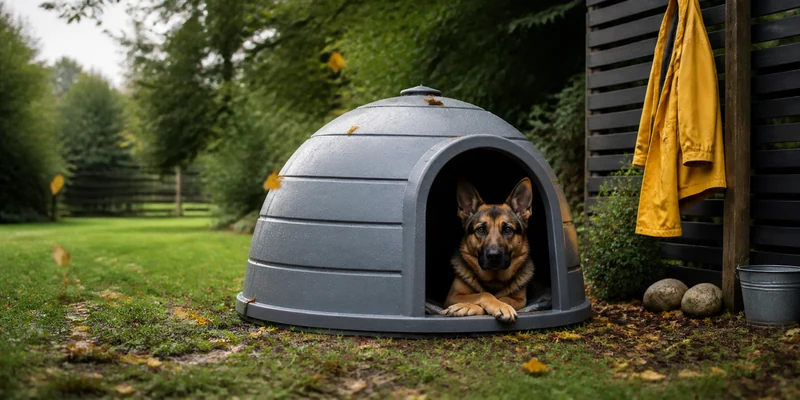
The igloo dog house is one of the few pet products where the shape is the feature. That familiar dome with the tunnel entrance is not styling, it is thermal design: a rounded chamber has less air to warm and no cold corners, and the offset tunnel keeps wind and rain from blowing straight onto a sleeping dog. It is why the igloo has been the default recommendation for outdoor dogs in cold and windy regions for decades, and why one model, the Petmate Indigo, has come to define the entire category.
This guide explains what the dome actually does, how to size an igloo correctly, which models are worth buying, and the setup details, bedding, placement, and an optional heated pad, that decide how warm it really gets inside.
This article contains affiliate links. If you buy through them, we may earn a commission at no extra cost to you. Learn more.
Quick Answer
Is an igloo dog house a good choice?
- Yes for cold, wind, and rain: the dome holds body heat better than a boxy shell and the tunnel entry blocks weather. It is the strongest passive cold-weather shape you can buy.
- Size it snug. An igloo works by trapping your dog’s warmth, so buy the size your dog fills comfortably, not the next one up.
- Know the trade-offs: igloos are plastic, look like igloos, and offer no flat roof or porch. Style-led yards are better served by wood or composite houses.
Igloo vs Conventional Dog Houses
The differences between a dome and a classic gabled box are practical, not cosmetic. Here is how they stack up on the points that matter outdoors.
| Feature | Igloo (dome) | Conventional (box or cabin) |
|---|---|---|
| Heat retention | Strong: less interior air, no cold corners | Depends on wall build; more air to warm |
| Wind protection | Offset tunnel entry shields the chamber | Doorway often opens straight into the sleeping area |
| Rain and snow | Sheds off the dome; raised floor channels water out | Good with a sloped roof; flat roofs pool water |
| Ventilation | Top vent built into most designs | Varies; often needs adding |
| Looks in the yard | Unmistakably an igloo | Cabin and lodge styles blend in better |
| Maintenance | Molded plastic, rinse and done | Wood needs sealing; plastic boxes are easy |
If the aesthetics rule the igloo out for you, the wood dog house guide covers the better-looking alternatives, and the general dog house buying guide weighs all the shapes side by side.
Why the Dome Shape Works
A dog house has one heat source: the dog. A dome encloses the most floor area with the least air volume and wall surface, which means less space for a dog’s body heat to fill and less surface to lose it through. Combine that with thick structural foam walls, and the sleeping chamber of a well-sized igloo sits noticeably above the outside temperature once a dog settles in.
The tunnel does the second half of the work. Because the entrance is offset and extended, wind cannot blow directly onto the dog, and rain has to travel around a corner before it reaches the chamber. Most designs add a roof vent, which matters more than it looks: a dog’s breath carries moisture, and without a high vent that moisture condenses into damp bedding. Raised, channeled floors keep the interior above any water that does get in.
Sizing an Igloo: Snug Beats Spacious
Igloo sizing trips people up because the dome makes interiors look small, and buyers instinctively size up. Resist it. The rule is the same as for any dog house: your dog should walk in, turn around, and lie stretched out with a little headroom. Any bigger and the chamber will not hold warmth, which removes the reason to buy an igloo at all.
Check the listed interior dimensions against your dog’s measurements, standing and stretched out, and remember the tunnel entrance is lower than the dome. A dog ducks slightly through the door of a correctly sized igloo; that is by design, since a smaller opening keeps heat in. Our guide to measuring your dog for furniture shows exactly what to measure.
Our Igloo Picks
How we chose: we compared igloo-style houses and their accessories on wall construction, entry design, ventilation, floor drainage, available sizes, and recurring themes in owner reviews. Selections are based on manufacturer specifications and owner feedback, not hands-on assessment.
Fair warning: this category has a dominant player. Petmate’s Indigo is the igloo most owners mean when they say igloo, and the supporting picks below build the complete setup around it.
🏆 Best Overall
The definitive igloo: heavy structural foam construction, offset tunnel entry, top ventilation, raised floor with drainage, and no-tool assembly. Available in multiple sizes, and the benchmark every other dome is measured against.

🚪 Best Upgrade: Door Flap
The flap for the tunnel entrance, sold separately. It is the cheapest meaningful warmth upgrade an igloo can get, closing off the one opening the dome cannot protect on its own.

❄️ Best for Hard Freezes
An outdoor-rated heated bed shaped for igloo interiors, with a thermostat, low wattage, and a steel-wrapped cord. The safe way to add real warmth when insulation alone stops being enough.

Setting Up an Igloo for Winter
Placement first: face the tunnel away from the prevailing wind and set the igloo on pavers, blocks, or a pallet so the floor never sits in water or on frozen ground. A spot against a wall, fence, or hedge adds a windbreak for free. The dome sheds rain and snow by itself, but drainage around the base still needs to run away from the entrance.
Inside, use straw, not blankets. Straw sheds moisture and keeps its insulating loft; fabric absorbs damp and freezes. Pile it deep enough that the dog nests into it, and refresh it when it flattens. Add the door flap before the first cold snap, and keep the roof vent clear rather than taping it over, since sealed-up igloos turn damp instead of warm. For the complete cold-weather checklist, including when to add heat, see how to insulate a dog house and the broader winter dog house guide.
Common Mistakes to Avoid
- Sizing up “to be safe.” An oversized igloo is just a cold plastic cave. Snug is the entire point of the shape.
- Skipping the door flap. The tunnel blocks wind, but an open doorway still leaks heat all night. The flap finishes the design.
- Blankets as bedding. They hold moisture and freeze stiff outdoors. Straw does the job properly.
- Blocking the roof vent. It is there to let breath moisture escape. Cover it and the bedding turns damp.
- Ground placement. Directly on soil, the floor drains heat and wicks moisture. A few inches of elevation fixes both.
- Full sun in summer. A plastic dome in direct sun gets hot inside. Move it to shade or make sure the dog has alternatives in warm months.
Where to Go From Here
If the Indigo is the direction you are leaning, our Petmate Indigo review takes the model apart in detail: sizing between the versions, assembly, and where it falls short. If you want maximum passive warmth and are weighing the dome against double-wall boxes, read insulated dog houses. And if your winters demand more than insulation, the heated dog house guide covers the safe way to add electricity.
Frequently Asked Questions
Are igloo dog houses warmer than regular ones? Shape for shape, yes: a dome has less interior air to warm and no cold corners, and the tunnel entry blocks wind. Actual warmth still depends on correct sizing, a raised floor, straw bedding, and a door flap.
What size igloo dog house should I get? The size your dog fills comfortably: walk in, turn around, lie stretched out, modest headroom. Compare the listed interior dimensions to your dog’s measurements and resist sizing up, because extra volume is lost warmth.
Do igloo dog houses need a door flap? They work without one, but the flap is the single best warmth upgrade available. The tunnel handles wind direction; the flap stops the steady heat leak through the opening.
Can you put a heated pad in an igloo dog house? Yes, and rounded outdoor-rated heated beds exist specifically for igloo interiors. Use only outdoor pet-rated pads with a thermostat and protected cord, and route the cord out of the dog’s reach, as our heated dog house guide explains.
Are igloo dog houses good in summer? They are usable in shade, and the top vent helps, but a plastic dome in direct sun heats up quickly. In hot months prioritize shade and airflow, and expect the igloo to be mainly a rain shelter.
The Bottom Line
The igloo dog house earns its long run as the cold-weather default: less air to warm, a wind-blocking tunnel, and tough molded walls with almost no upkeep. Buy it snug, raise it off the ground, bed it with straw, and add the door flap; add an igloo-shaped heated pad only when your climate demands it. If yard aesthetics outrank thermal design, look at wood or composite instead.