Last updated: August 10, 2026
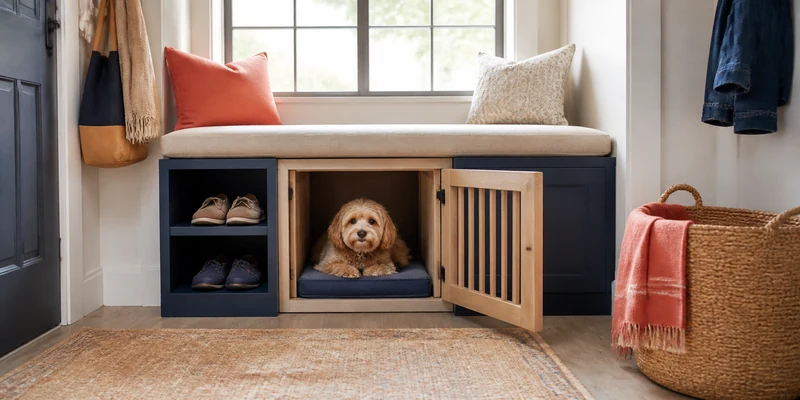
Some owners want a crate that looks good. Others want the crate to vanish entirely, and that is where hidden dog crate furniture comes in: crates disguised as end tables, consoles and benches, crates tucked into built ins and under stairs, and cabinets converted so completely that guests set their drink on the dog’s bedroom without ever knowing.
Hiding a crate well is a design problem with a welfare rule attached: however invisible the crate becomes to people, it still has to work as a den for the dog, with real airflow, real sightlines and enough room to stand, turn and stretch. This guide covers every workable way to hide a crate, ranked picks for the ready made options, and the checks that keep a disguised crate from becoming a pretty box your dog refuses to enter.
This article contains affiliate links. If you buy through them, we may earn a commission at no extra cost to you. Learn more.
Quick Answer
What is the best way to hide a dog crate in plain sight?
- The easiest route is a furniture style crate that doubles as an end table, console or credenza: no carpentry, and it moves with you.
- Built ins, under stairs conversions and cabinet hacks hide the crate even more completely, at the cost of flexibility and effort.
- Whatever you choose, the den rules still apply: ventilation on at least two sides, a sightline out, and interior room to stand, turn and lie stretched.
Every Way to Hide a Dog Crate, Compared
Hidden covers a spectrum, from “reads as furniture” to “structurally invisible.” Here is the whole menu with the honest trade offs.
| Approach | How hidden is it? | Effort | Best for |
|---|---|---|---|
| Crate end table | Reads as a side table next to the sofa | None, buy and place | Most living rooms, first time buyers |
| Crate console or credenza | Reads as a TV stand or sideboard | None, buy and place | Media walls, larger dogs, bigger rooms |
| Bench with crate below | Reads as entryway or window seating | Low | Mudrooms, hallways, bay windows |
| Cabinet or closet conversion | Fully concealed behind existing doors | Medium, doors off, vents in | Renters with a spare closet, small dogs |
| Under stairs conversion | Part of the architecture | Medium | Homes with open stair space |
| Custom built in | Completely invisible until pointed out | High, joinery or contractor | Renovations and forever homes |
The first three are products you can order this week, and they are where our picks below focus. The conversions reward planning: the under stairs route has its own full build guide, and the general sizing rules live in the main dog crate furniture guide.
The Den Rules That Survive Any Disguise
Before styling, the non negotiables. A hidden crate that fails these gets refused by the dog, and a refused crate hides nothing.
- Interior size beats exterior looks. Standing without crouching, turning freely, lying fully stretched: measure your dog, then check the crate’s interior dimensions, because panels and frames eat inches. Our guide on measuring your dog for furniture takes five minutes.
- Air must move. Slatted or barred openings on at least two sides. This is the spec that separates real crate furniture from a cabinet with a dog in it, and it is the first thing to check on any DIY conversion.
- The dog needs a view. Dogs settle in dens they can see out of. Full concealment should hide the crate from the room, not the room from the dog.
- Chewers wait. Wood, rattan and composite disguises suit dogs already calm in a crate. If your dog is mid training or an active chewer, run the routine in crate training in a furniture crate first and buy the pretty version after.
Our Top Picks for Hidden Crate Furniture
How we chose: we compared the ready made options on how convincingly they read as furniture, interior space, ventilation, build sturdiness and finish quality. Availability and sizes shift often, so check the current listing against your dog’s measurements before ordering.
One reassurance up front: hiding the crate does not mean settling for flimsy. Several of these pieces are heavier and more rigid than the wire crate they replace.
🏆 Best Overall
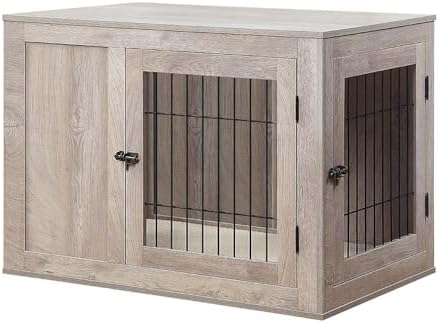
The category benchmark: a wooden crate end table with slatted sides for airflow and a top sturdy enough for a lamp and a stack of books. Reads as a side table from across the room.
💛 Best Value
A simple, classic wooden crate table that has anchored this category for years. Fewer refinements than the premium options, but the disguise works and the price stays friendly.

📺 Best for Media Walls
A wider, console style crate that stands in for a TV unit or sideboard, which is often the easiest disguise in an open plan room. The extra width also buys real interior space for bigger dogs.

If the end table format is the one you keep coming back to, the dedicated crate end table roundup compares that field in more depth, and big dog households should start at large dog crate furniture where interior space leads the ranking.
Hiding a Crate in Specific Rooms
Living room. The end table beside the sofa and the console under the TV are the two disguises that work almost everywhere, because both positions give the dog a wall at its back and a view of the family. The full playbook, including restyling a wire crate you already own, is in dog crate in the living room.
Bedroom and office. A crate as a nightstand or printer stand is a genuinely good use of the format: these rooms are calm, the dog wants to be where you are, and the top surface earns its keep. Watch the alarm clock cable and anything that dangles.
Entryway and mudroom. The bench with a crate below is the working champion here, seating for boot changes above, den below, leash hooks beside. It suits homes where the dog’s day starts and ends at the back door.
The DIY route. Converting an IKEA cabinet or a thrifted sideboard is a legitimate weekend project if you respect the den rules: remove doors or replace panels with slats or mesh, sand every edge, skip the shelf above unless it is fixed, and never rely on a latch the dog can nose open. A converted piece should meet the same ventilation and sizing bar as anything you would buy.
Two More Picks for Specific Problems
Beyond the classic disguises, two options solve problems the standard wooden pieces do not.
🧼 Best for Easy Cleaning
A composite build that does not absorb odors or moisture and wipes clean in one pass, with the visual weight of painted wood. The practical choice for puppies past the chewing stage, seniors and anyone tired of scrubbing grooves.
🧩 Also Great
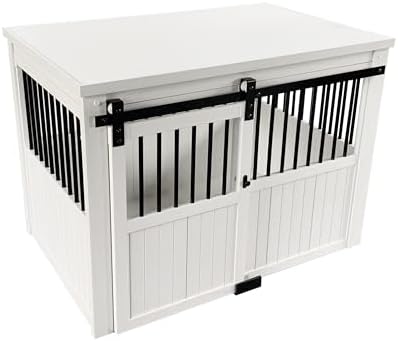
A configurable wooden piece that converts between a pet home and a freestanding gate. Useful when you are not ready to commit to one hiding spot, or when the crate needs to move with the seasons.

Design first households should also know the direct to consumer end of this market: Diggs and Fable both make crates styled to be seen rather than hidden, sold through their own sites at premium prices. They solve the same room problem from the opposite direction, and the modern dog furniture guide covers that whole design led approach.
Common Mistakes When Hiding a Dog Crate
- Prioritizing the disguise over the den. A crate that photographs beautifully but has one ventilation face and no sightline gets abandoned by the dog. Welfare specs first, styling second.
- Buying to fit the alcove, not the dog. The console that slots perfectly under the window but leaves your dog crouching is a failed purchase twice over.
- Hiding it somewhere isolated. Concealment is about looks, not location. A crate hidden in an unused dining room fails exactly like a visible crate there would.
- Converting a cabinet without fixing the hardware. Old latches, sharp shelf pins and doors that swing shut are the classic DIY hazards. Strip the interior back to smooth and simple.
- Upgrading before the training is done. Wood is a finish, not a containment strategy. Let the wire crate absorb the adolescent phase, then buy the furniture.
Where to Go Next
The wider crate furniture market, including sizes, materials and the storage topped variants, lives in the main dog crate furniture guide. If you are weighing hiding against showing off, the modern dog furniture guide makes the case for pieces designed to be seen. And if the whole corner is up for redesign rather than one piece, dog room ideas zooms out to the full space.
Frequently Asked Questions
Is it okay to hide a dog crate inside furniture? Yes, provided the den fundamentals survive the disguise: airflow on at least two sides, a sightline out and interior room to stand, turn and lie stretched. Hidden should describe how the piece looks, not how the dog experiences it.
Can I put a dog crate inside a closet? Only with the door removed or permanently fixed open, ventilation added and the interior stripped of hazards. A dog behind a closed closet door is shut in, not denned, and most dogs will tell you the difference loudly.
What is the easiest way to hide a large dog’s crate? The console or credenza format, which spreads the volume horizontally where the eye forgives it. Big crates disguise better as sideboards than as side tables, and interior height is usually the spec to check first.
Are hidden crates safe for puppies? Generally not yet. Puppies chew, scratch and test panels, and wooden furniture crates are built for dogs already settled in a crate. Train in wire, hide later.
Do furniture crates smell more than wire crates? Wood holds odor more than steel if accidents soak in, which is why removable trays and washable bedding matter, and why composite builds appeal to owners who prioritize easy cleaning.
The Bottom Line
Hiding a dog crate well means passing two tests at once: the room’s test, where the piece reads as furniture, and the dog’s test, where the interior still works as a den with air, a view and space to stretch. Ready made crate tables, consoles and benches pass both with no effort, while closet, under stairs and built in conversions hide more completely for more work. Choose by your dog’s size and stage first, the room’s style second, and the crate disappears without your dog giving up a thing.