Last updated: August 10, 2026
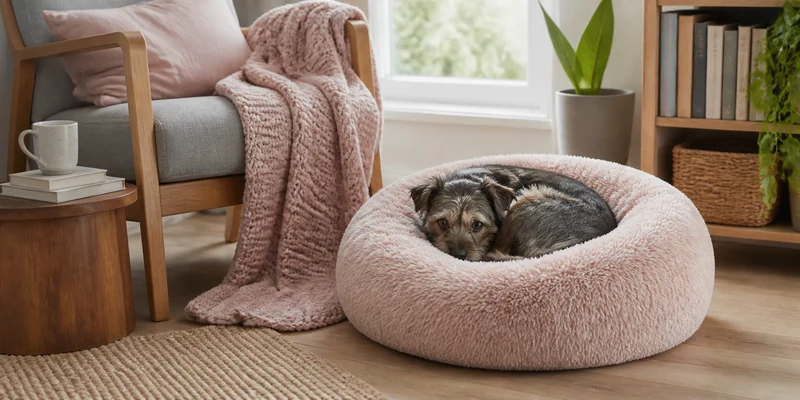
A calming dog bed is a donut-shaped bed with a high plush wall, marketed with a big promise: put an anxious dog in it and the anxiety melts away. The honest version is more modest and still worth having. Dogs who curl to sleep, lean against things, and back into corners are seeking contact and enclosure, and a raised plush rim gives them exactly that. Many owners report their dogs settle faster and stay put longer in a donut bed. What the bed does not do is treat anxiety, and it helps to be clear-eyed about that before you buy.
This guide covers what calming beds actually provide, which dogs take to them and which ignore them, how to pick a well-made one in a market full of lookalikes, and where a bed stops and real behavioral help starts.
This article contains affiliate links. If you buy through them, we may earn a commission at no extra cost to you. Learn more.
Quick Answer
Do calming dog beds work, and which one should you buy?
- They give curlers and leaners the enclosure and contact they naturally seek, and many owners report their dogs settle faster in one. They are comfort furniture, not anxiety treatment.
- Buy on build, not on the word calming: a donut with a supportive rim, a washable design, and honest sizing beats any marketing claim.
- For real anxiety, pair the bed with a predictable quiet spot in the house, and talk to your veterinarian or a qualified behaviorist about the anxiety itself.
What a Calming Bed Does and Does Not Do
Separating the furniture from the promise makes the buying decision easy, so here is the category in one honest table.
| Claim you will see | What is actually going on |
|---|---|
| Raised rim mimics a mother’s touch | The rim gives contact and a headrest. Dogs who curl and lean often love it; the mimicry story is marketing. |
| Reduces anxiety | A comfortable, enclosed spot can help a dog settle. It does not treat separation anxiety, noise phobia, or fear. Those are conversations for your veterinarian or a behaviorist. |
| Self-warming shag fabric | Plush long-pile fabric does hold body heat, which curlers appreciate in winter and hot sleepers dislike in summer. |
| Helps dogs sleep deeper | Many owners report longer, calmer stays in the bed. That is a real pattern in reviews, not a measured guarantee for your dog. |
| For all dogs | Sprawlers, hot sleepers, and dogs who dislike enclosure often ignore donut beds entirely. Match the bed to the sleeper. |
If the last row sounds like your dog, save the money and start at the dog bed hub guide, which matches every sleeping style to its bed type.
Which Dogs Actually Take to Donut Beds
The best predictor is what your dog already does. Dogs who curl into a tight ball, tuck their nose under a tail or paw, press against your leg on the couch, back into corners, or burrow under blankets are all seeking the same two things: contact and enclosure. Those are the dogs who step into a donut bed, turn twice, and disappear into it. Small breeds, thin-coated dogs who chase warmth, and dogs who grew up crated often fall in this group.
The dogs who ignore donut beds are just as predictable. Sprawlers want length, and a donut wall physically prevents stretching out. Thick-coated and heat-sensitive dogs find a plush shag bowl too warm for most of the year, and are usually happier on a flat mattress or an elevated bed with air underneath. And some confident dogs simply prefer surveying the room to hiding from it.
The anxiety question, handled honestly
A calming bed can be one useful piece of a calmer setup: a predictable, quiet, comfortable spot the dog can retreat to, ideally in a low-traffic corner with a sightline to the family. That environment does real work. But a dog who panics when left alone, destroys doorframes, trembles through storms, or has stopped eating is not having a furniture problem. Persistent or severe anxiety belongs with your veterinarian, who can rule out medical causes and refer you to a qualified behaviorist. Buying a rounder bed instead of making that call just delays help. For dogs whose safe place is a den rather than a bowl, a covered crate setup can serve the same retreat function, and crate training in a furniture crate covers how to build that association properly.
Our Top Picks for Calming Beds
How we chose: we compared the most widely available donut and cuddler beds on rim support, fabric quality, washability, and sizing honesty, weighting the themes that repeat across owner reviews. Selections are based on manufacturer specifications and owner reporting, not hands-on testing.
One category-wide warning first: donut beds are the most cloned design in the pet aisle, and the cheapest copies flatten within weeks. The rim is the product; a rim with no structure is a fabric ring.
🏆 Best Overall
The original shag donut cuddler that started the category, with a high plush wall for leaning and nose-tucking. The reference point everything else copies, in a wide size run; measure your dog curled up before choosing.

💛 Best Value
A faux-fur donut with a supportive rim at a friendlier price, from a brand known for washable budget bedding. The sensible way to find out whether your dog is a donut dog at all.

🐾 Best for Burrowers
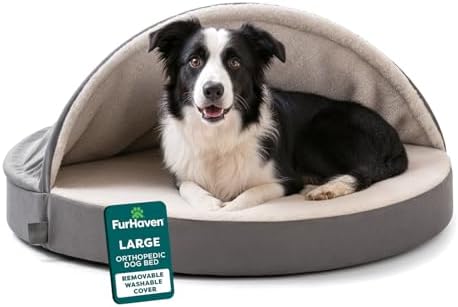
A plush bed with an attached blanket-style top layer the dog can wriggle under, for the dogs whose safe place is underneath something rather than inside a ring.
Build Quality: How to Spot a Donut That Lasts
Three things separate a donut bed that still works in a year from one that becomes a flat fabric puddle by Thanksgiving.
The rim. Press it in the store or read reviews for the word flat. A rim needs enough fill density to hold a leaning head week after week. Reviews that mention the wall collapsing within a month are describing the category’s most common failure, and no amount of shag hides it.
Washability. Long-pile fabric traps fur, dust, and smells faster than any other bed surface, so a calming bed you cannot wash is on a countdown from day one. The best designs either zip apart into machine-washable pieces or are built to survive whole-bed washing on a cold gentle cycle; air drying protects the pile and the fit. Check the label before buying, not after the first accident.
Honest sizing. Donut listings quote outer diameter, and the wall can eat several inches of it on every side. Measure your dog curled in his normal sleeping ball, widest span, and compare that against the inner sleeping area. Between sizes, go up; a cramped donut gets abandoned, an oversized one just gets extra blanket. The tape-measure method for every furniture type is in how to measure your dog for furniture.
One More Option Worth a Look
Anxious dogs who chew are their own case: soft plush walls do not survive a stress chewer, and replacing shredded donuts monthly helps nobody.
💪 Best for Anxious Chewers
A reinforced bolster bed with chew-resistant fabric and a supportive rim, built for the dogs who want something to lean on but treat plush bedding as a project. Pair it with actual behavioral help for the chewing itself.

If chewing is the dominant problem rather than a side effect, the full range of survivable options is in our chew proof dog bed guide.
Setting Up a Calmer Sleeping Spot
The bed is half the equation; the spot is the other half. Put the calming bed where quiet and sightlines overlap: a corner of the living room away from the walking path, not the middle of the hallway and not an isolated laundry room, since separation from the family creates its own stress for most dogs. Keep the location consistent so the bed becomes a reliable retreat, and make it a rule, especially for children, that a dog in his bed is left alone. That predictability is a large part of what actually calms.
Introduce the bed without pressure: familiar blanket in the middle, a treat dropped in when the dog investigates, and no lifting the dog into it. Most donut dogs claim the bed within days. In multi-dog homes, each dog needs his own retreat, because a shared safe place is not a safe place; the room-by-room logic is in multi-dog household setup. For seniors, note that high donut walls can become a genuine obstacle for stiff dogs, a detail that matters more each year and one we cover in senior dog mobility at home.
Common Mistakes to Avoid
- Buying a donut for a sprawler. The wall that comforts a curler blocks a stretcher. Watch how your dog sleeps first.
- Expecting the bed to fix anxiety. It is a comfortable retreat, not treatment. Persistent anxiety goes to the veterinarian or a behaviorist.
- Ignoring the wash label. Long-pile fabric plus no washing plan equals a bed you will throw away, not clean.
- Sizing off the outer diameter. The wall eats inches on every side. Compare your dog’s curled width to the inner area.
- Buying the cheapest clone. The rim is the whole product, and collapsed rims are the category’s signature failure.
- Plush walls for a stress chewer. That dog needs reinforced fabric and behavioral help, in that order or both at once.
Frequently Asked Questions
Do calming dog beds actually work? They reliably provide what curlers and leaners seek, enclosure and contact, and many owners report their dogs settle faster in one. They do not treat anxiety disorders, and no bed does.
Will a calming bed help with separation anxiety? Not by itself. It can be part of a predictable, comfortable setup, but separation anxiety is a behavioral condition that belongs with your veterinarian and a qualified behaviorist.
What size calming bed should I get? Measure your dog curled in his normal sleeping position at the widest point and compare against the inner sleeping area, not the listed outer diameter. When between sizes, go up.
Are calming beds too warm for summer? Often, yes. Long-pile plush holds heat, which is the point in winter and the problem in July. Many households pair a donut with a cooler flat or elevated bed and let the dog choose by season.
How do you wash a calming dog bed? Check the label first: the better designs zip apart or machine wash whole on a cold gentle cycle, then air dry to protect the pile. Beds with no washing route do not survive real dog ownership.
Why does my dog ignore his calming bed? Usually he is not a curler, the bed is too small inside the wall, or it is parked somewhere isolated. Recheck the sleeping-style match and move it to a quiet spot with a view of the family.
The Bottom Line
A calming dog bed is a well-matched piece of comfort furniture for dogs who curl, lean, and burrow, and many owners report faster settling in one. Buy it on build quality, a rim that holds, a real washing route, honest inner sizing, and place it in a quiet spot with a sightline to the family. What it is not is anxiety treatment: for a dog who is genuinely struggling, the bed is the easy part and your veterinarian is the call that matters.