Last updated: August 10, 2026
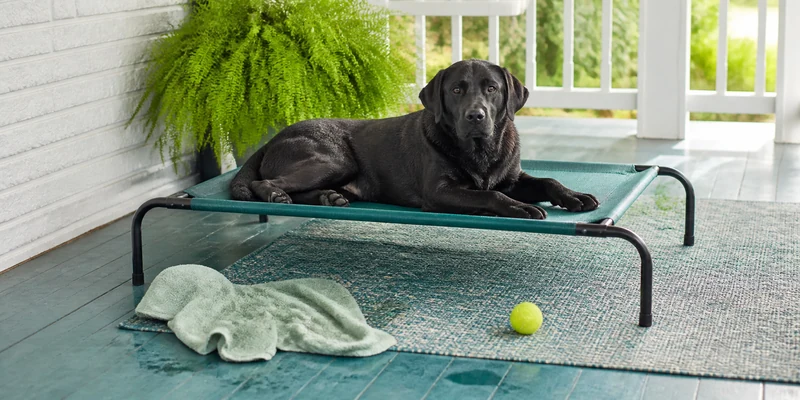
An elevated dog bed is the rare piece of pet gear that earns its keep in almost any climate. In summer it lets air move under a hot sleeper instead of trapping body heat in a slab of foam. In winter it lifts your dog out of the cold layer of air that pools on tile and concrete. And year round it is the easiest dog bed to keep clean, because there is no stuffing to absorb smells and no bed-shaped ring of fur on the floor around it.
The category looks simple, a fabric panel stretched over a frame, but the differences between a bed that lasts one season and one that lasts five come down to the fabric, the frame joints, and how the corners are finished. This guide covers what the height actually does, which format fits your dog and your setup, our picks across budgets, and the setup details that decide whether your dog uses it at all.
This article contains affiliate links. If you buy through them, we may earn a commission at no extra cost to you. Learn more.
Quick Answer
What should you look for in an elevated dog bed?
- Match the fabric to the job: breathable knitted mesh for cooling and outdoor use, tighter coated fabric for chewers and heavy dogs.
- Check the frame before the looks. Steel or aluminum legs, a snug fabric tension, and a stated weight capacity above your dog’s weight are what keep a cot steady.
- Plan the entry. A cot adds several inches of step-up height, which healthy adults ignore and puppies, small breeds, and older dogs sometimes do not.
Elevated Dog Bed Formats at a Glance
Elevated covers several different builds, and the format decides more than the brand does. Use this table to work out which type your dog and your setup call for, then compare models within that lane.
| Format | Best at | Worth checking |
|---|---|---|
| Knitted mesh cot, steel frame | Airflow and cooling, hosing off, outdoor and kennel use | Mesh can feel bare in a cold room; corners are the wear point |
| Coated fabric cot | Durability with heavy dogs, resisting claws and light chewing | Less airflow than open mesh; check the fabric is removable |
| Chew-resistant cot, metal frame | Determined chewers, aluminum rails with no exposed fabric edges | Heavier and pricier; confirm the warranty terms for chewers |
| Cot with canopy | Yards and patios, shade over the sleeping surface | Canopy catches wind; check how the poles lock in |
| Folding travel cot | Camping and road trips, packs flat with a carry bag | Folding joints are the weak spot; not built for daily chewers |
If your dog is on the large side, frame strength and center support matter more than anything in this table, and we cover that separately in our guide to the elevated dog bed for large dogs. If you are still deciding whether elevated is even the right category, the dog bed hub guide walks through every bed type by sleeper.
What the Height Actually Does
A few inches of clearance changes three practical things, and it helps to know which one you are buying for.
- Air under the dog. On a foam or stuffed bed, body heat soaks into the fill with nowhere to go. A taut mesh panel lets air circulate on all sides, which is why owners in warm states report their dogs abandoning plush beds for the cot every summer.
- Distance from the ground. Outdoors, elevation keeps the sleeping surface away from damp ground, mud, and crawling insects. Indoors, it lifts a dog out of the cold air layer that sits on tile and concrete floors, which is why cots also get used in winter basements and garages.
- Cleaning access. No stuffing means nothing to absorb odors, and most mesh cots can be wiped down or hosed off and are dry within the hour. You can also vacuum straight under the bed instead of dragging it around the room.
What the height does not do is add softness. A cot is a firm, flat, supportive surface, closer to a trampoline than a mattress. Many dogs love exactly that, especially in warm weather. Dogs who burrow, nest, or curl into a ball for security often prefer a padded or donut-style bed, a preference we cover in the dog bed guide. Plenty of households simply run both and let the dog choose by season.
Fabric, Frame, and Weight Capacity
Three components decide how long an elevated bed lasts, and cheap models cut corners on all three.
The fabric. The classic surface is a knitted high-density polyethylene mesh, the material Coolaroo built its reputation on: breathable, quick to dry, and resistant to mold and mites. The step up for rough dogs is a tightly woven coated fabric or ballistic-style nylon, which trades some airflow for a surface that shrugs off claws. Whichever you choose, look for a replaceable cover or panel, because on a well-made cot the fabric wears out long before the frame does.
The frame. Powder-coated steel is the standard and handles most dogs without complaint. PVC pipe frames are lighter and cheaper but flex more and are easier for a chewer to destroy. Aluminum frames on chew-resistant models add rigidity without rust, which matters if the bed lives outside. Push down hard on the center of any cot before you trust it: a deep sag or a creaking joint under your hand will be worse under a dog who lands on it at speed.
The capacity. Manufacturers state a weight limit for a reason. Buy comfortably above your dog’s weight rather than at it, since a dog does not lower itself gently onto a bed the way the rating assumes. For dogs who treat every bed as a chew toy, the fabric edge where it meets the frame is the first casualty, and the formats built around that problem are covered in our chew proof dog bed guide.
Our Top Picks at a Glance
How we chose: we compared widely available elevated dog beds on fabric quality, frame construction, stated weight capacity, ease of cleaning, and the themes that come up consistently in owner reviews. Selections are based on manufacturer specifications and owner reporting, not hands-on testing.
One note before the picks: elevated beds are sized generously, and a dog needs to fit fully on the panel with legs extended. Measure your dog stretched out before choosing a size, and when in doubt, size up.
🏆 Best Overall
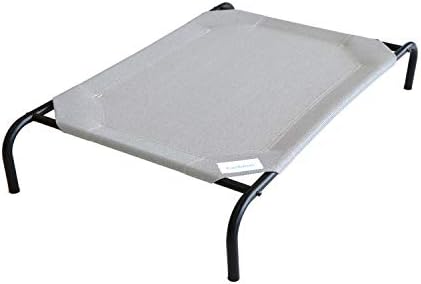
The original knitted-mesh cot on a powder-coated steel frame, breathable, quick-drying, and easy to hose off. Replacement covers are sold separately, which is exactly the repairability you want in this category.
💛 Best Value
A no-frills steel-frame cot with a breathable mesh panel at an entry-level price. A sensible way to find out whether your dog takes to sleeping off the floor before you spend more.

💪 Best Heavy-Duty
An aluminum-framed cot with a tough rip-stop style fabric and no exposed edges for a chewer to start on. Built for the dogs who have already destroyed a regular cot, with a warranty aimed squarely at them.

Indoors, Outdoors, and In Between
The same cot behaves differently depending on where it lives, so it is worth deciding the primary location before you buy.
Indoors on hard floors, the questions are stability and floor protection. Look for rubber or capped feet that will not skate on laminate when a dog launches off, and check that the frame sits flush so it does not rock. A cot near a sunny window in winter and a shaded corner in summer will get used year round.
Outdoors, UV resistance is the difference between a fabric that lasts and one that goes brittle in a season. Knitted HDPE mesh handles sun well, which is why it dominates the patio and kennel market. Position the bed so part of it stays shaded, or choose a canopy model, and bring folding travel cots in overnight since their joints are not built for permanent weather exposure. For dogs who live outside part of the day, an elevated bed pairs naturally with real shelter, which we cover in the dog house guide.
For older dogs, the step-up height deserves a moment of thought. A few inches is nothing to a healthy adult, but a senior who has become careful about jumping may hesitate, and a cot that wobbles on entry will be abandoned. If your older dog has started avoiding furniture or stairs he used to manage, that pattern is worth reading about in senior dog mobility at home, and worth mentioning to your veterinarian, since mobility changes are a medical question before they are a furniture question.
Two More Elevated Beds Worth a Look
If the main picks do not match your setup, these two cover the outdoor-shade case and the padded-cot middle ground.
🐾 Best for Sunny Yards
An elevated cot with a removable canopy that keeps the sleeping surface shaded on a patio or in a yard. The practical choice when the bed’s main job is summer afternoons outside.

👍 Also Great
A classic pet cot from a brand with decades in the category, with a taut breathable panel and simple tool-free assembly. A solid alternative if the top pick is out of stock in your size.

Setup, Placement, and Cleaning
Assembly on most cots takes minutes, but the fabric is meant to be stretched taut before the final corner or leg goes in, and forcing that last joint instead of easing the frame together is how corners get bent on day one. Build it on a flat surface, confirm all four feet touch the floor, and give every joint a second pass after the first week of use, because new frames settle.
Placement decides whether the bed gets used. Dogs choose resting spots with a view of the household and a comfortable temperature, so a cot against a wall with a sightline to the main room beats one tucked in a corner facing nothing. Introduce it with a treat or a familiar blanket on the panel rather than lifting the dog onto it, and let him find it on his own schedule.
Cleaning is the category’s quiet superpower. Mesh panels rinse off and air dry fast, frames wipe down, and there is no fill to hold smells. In shedding season, a quick brush-off or vacuum pass over the mesh keeps fur from working into the weave. Check the fabric tension monthly: a panel that has gone slack sags in the middle, and a sagging cot loses both the airflow and the support that made it worth buying.
Common Mistakes to Avoid
- Buying at the weight limit. A rating is a static number and a dog is not a static load. Choose a capacity comfortably above your dog’s weight.
- Choosing open mesh for a determined chewer. The fabric edge at the frame is the starting point for every destroyed cot. Chewers need the armored formats, not the classic ones.
- Sizing by breed name instead of measuring. Dogs vary enormously within a breed. Measure your dog stretched out and compare against the panel dimensions.
- Leaving a travel cot outside permanently. Folding joints and weather do not mix. Fixed-frame beds are for permanent outdoor duty.
- Ignoring the wobble. A cot that shifts or skates when the dog steps on teaches the dog to avoid it. Rubber feet, level floors, and tight joints fix nearly all of it.
Where to Go From Here
If your dog is a big breed, start with the elevated dog bed for large dogs guide, where frame strength and panel size do the deciding. If you want the full story on the best-known name in the category before you commit, our Coolaroo dog bed review goes model by model through what the mesh does well and where it falls short. And if you are not sure elevated is the right lane at all, the dog bed hub matches every bed type to a sleeper.
Frequently Asked Questions
Do dogs actually like elevated beds? Many do, particularly hot sleepers, thick-coated breeds, and dogs who already choose tile over carpet in summer. Dogs who burrow or curl tightly for security often prefer padded or donut beds instead, so watch how your dog already sleeps.
Are elevated dog beds good for winter? They can be, because cold air pools at floor level and a few inches of lift takes the dog out of that layer. In a genuinely cold room, add a fleece blanket over the panel, since open mesh sheds heat in both directions.
How high off the ground is an elevated dog bed? Most sit roughly 4 to 8 inches up, enough for airflow and cleaning underneath while keeping the step-up easy for most adult dogs.
Can an elevated bed stay outside? Fixed steel or aluminum frames with UV-resistant mesh handle outdoor life well, though partial shade extends fabric life. Folding travel cots should come in overnight.
Are elevated beds good for older dogs? The firm, flat surface suits many seniors, but the step-up height and any frame wobble matter more with age. If your older dog hesitates at small heights he used to ignore, mention it to your veterinarian, and see our guide to senior dog mobility at home.
How do you clean an elevated dog bed? Hose or wipe the mesh, let it air dry, and vacuum underneath. Models with removable covers can usually be machine washed cold and air dried; check the label.
The Bottom Line
An elevated dog bed earns its place with airflow in summer, clearance from cold floors in winter, and cleaning that takes minutes instead of a wash cycle. Match the fabric to the job, mesh for cooling, coated or armored panels for chewers, and buy a frame rated comfortably above your dog’s weight. Get the entry steady and the placement right, and most dogs claim it within the week.