Last updated: August 10, 2026
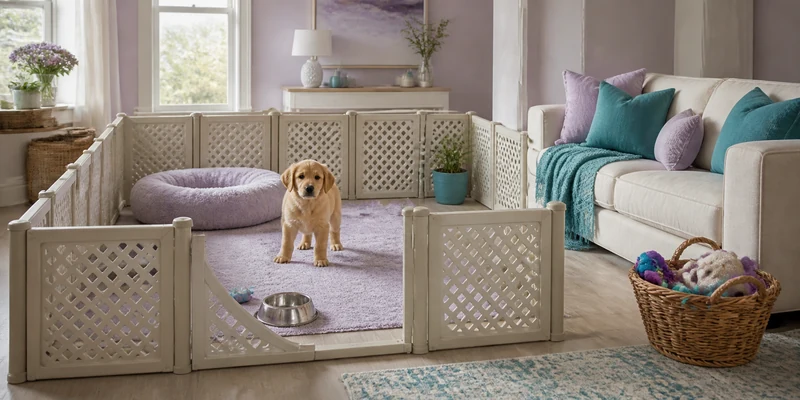
Shopping for a large indoor dog playpen is a negotiation between two square footages: the space your dog needs and the space your living room can actually give up. Outdoors, you can always add panels. Indoors, the pen has to share the floor with a couch, a coffee table, and the path to the kitchen, and it has to do it without gouging the hardwood or looking like a construction site.
The good news is that indoor pens are a solved problem once you think in layouts instead of products. This guide covers how big an indoor pen really needs to be, how to protect floors and keep panels from wandering, and which pens earn a place inside the house, from the puppy stage to full-grown large dogs.
This article contains affiliate links. If you buy through them, we may earn a commission at no extra cost to you. Learn more.
Quick Answer
What makes a good indoor dog playpen?
- A foldable metal exercise pen with a door is the indoor default: reshapeable to the room, connectable to a crate, flat-folding when guests come.
- Protect the floor and stop the slide: a rug or waterproof mat under the pen, plus a wall or furniture anchoring one side.
- Size for the dog, not the room: several body lengths of walking space, a bed zone, and panels tall enough that jumping is not worth trying.
What to Check on an Indoor Pen
Indoors, the pen is judged on more than containment. These are the specs and questions that decide whether it works in a living space.
| What to check | Why it matters indoors | What to look for |
|---|---|---|
| Footprint flexibility | Rooms are rectangles with furniture in them | Hinged panels that form squares, rectangles, or run along a wall |
| Floor friendliness | Metal feet meet hardwood and laminate | Rounded or capped panel bottoms, plus a mat or rug underneath |
| Door quality | You will reach in and step through constantly | A full-height door with a latch that adults open one-handed and dogs cannot |
| Panel height | Indoor pens tempt jumpers at couch-level confidence | Taller class for medium and large dogs, and for any known jumper |
| Fold and storage | Indoor pens are often part-time | Flat folding without tools, light enough to carry to a closet |
| Crate connection | The best puppy setups pair pen and den | Panels that attach to a crate opening, or a layout that hugs the crate |
For the full type overview, including the heavy outdoor class and plastic small-dog pens, the parent guide is our best dog playpen hub.
How Big Should an Indoor Pen Be?
Aim for the largest footprint your room absorbs without blocking traffic, and measure your dog against it honestly. Inside the pen the dog should walk several body lengths in a line, stretch out flat away from the bed, and, for young puppies, keep a clear separation between the sleeping corner and a mess-safe zone. An eight-panel exercise pen arranged as a square gives a medium dog room to move; the same panels stretched into a rectangle along a wall often fit a living room better while giving more walking length. Large dogs need the bigger panel sets or two pens linked, and there is no way around that arithmetic.
Height is the second half of sizing, and indoor life raises the stakes: a pen next to a couch or an armchair hands your dog a launch pad. Keep the pen clear of climbable furniture, and pick the taller panel class for any dog with spring. If your dog’s measurements are a mystery, our explainer on how to measure your dog for furniture turns the guesswork into numbers.
The layout patterns that work
Three arrangements cover most homes. The corner pen uses two walls as free panels, maximizing space per panel and anchoring the pen against sliding. The wall run stretches the pen long and shallow along one wall, keeping the room’s center open. And the crate-and-yard pattern attaches the pen to the crate’s open door, giving a puppy a den plus a living room in one footprint; how the den half should work is covered in crate training in a furniture crate.
Our Top Picks at a Glance
How we chose: we compared indoor-suitable pens from MidWest Homes for Pets, IRIS USA, FXW, and Regalo on layout flexibility, door and latch quality, floor friendliness, and how consistently owners report them holding up in living spaces. We rely on manufacturer specifications and recurring review themes rather than hands-on testing of our own.
All three set up without tools and come apart just as fast, which matters more indoors than any other spec sheet line.
🏆 Best Overall
The foldable wire exercise pen with a step-through door, in multiple heights and connectable to a crate. It reshapes to any of the classic indoor layouts and folds flat when the floor is needed back.

🐶 Best for Small Dogs
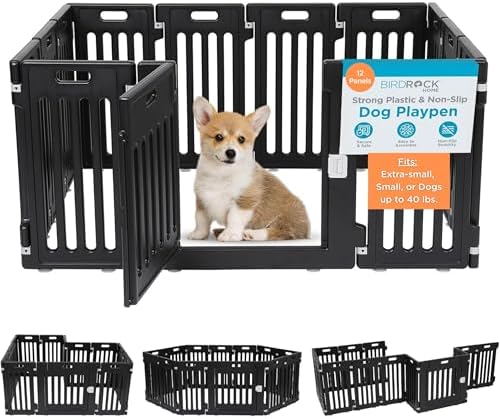
A molded plastic panel pen with an integrated swing door, light on floors and easy to lift for cleaning. Sized for small dogs and young puppies, and friendlier-looking than bare wire in a living room.
🧱 Best Heavy-Duty Indoors
Thick steel panels with a latched door for large, strong dogs that treat wire pens as a puzzle. Heavier and more permanent-feeling, but rigid enough that leaning and pawing change nothing.

Protecting Floors and Keeping the Pen Put
Hard floors create the two classic indoor pen complaints: scratches and drift. Both have the same fix, a layer under the pen. A low-pile rug, interlocking foam tiles, or a waterproof training mat protects the finish, gives paws traction, and roughly anchors the panels through friction. For puppies, make that layer waterproof and larger than the pen footprint, because accidents find edges with uncanny precision.
Drift needs one more move: anchoring. Set at least one side of the pen against a wall or a heavy piece of furniture so a leaning dog pushes into something solid, and weight the free corners if your dog is a dedicated leaner. Renters have extra reasons to get this right, since pet damage and deposits are old enemies; more damage-free strategies are in dog furniture for renters. Beyond that, indoor pen keeping is mostly housekeeping: check latches and corner joints monthly, wipe panels when you mop, and keep cords, plants, and curtain hems a full paw-reach away from every side of the pen.
Picks for Flexible Indoor Layouts
Two more options round out the indoor field, for homes where the pen has to earn its floor space by doing double duty.
🚪 Best Room Divider Setup
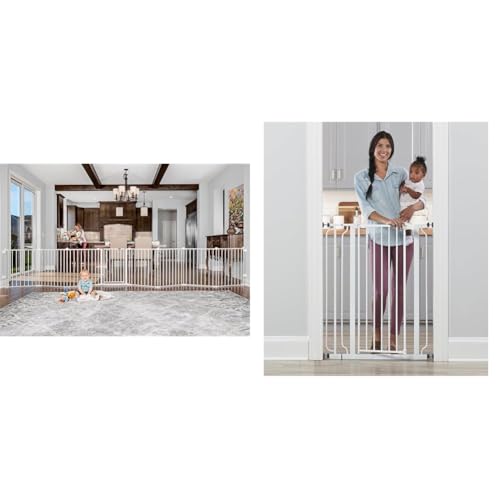
Configurable gate panels that close into a pen or open into an extra-wide barrier across a room. One purchase covers penning the puppy and zoning the living room.
🐾 Also Great: Simple Wire Pen
A no-frills eight-panel wire exercise pen with a step-through door, quick to fold flat between uses. A solid pick for part-time pen homes and average-sized, non-escape-artist dogs.

Common Mistakes to Avoid
- Sizing to the room’s leftover corner. The dog’s needs set the minimum footprint. If the corner cannot fit it, change the layout, not the requirement.
- Bare panels on bare hardwood. That combination produces scratches and a pen that migrates across the room. Always interpose a rug or mat.
- Placing the pen against the couch. Furniture beside a pen is a staircase out of it. Leave jumping-distance clearance on all sides.
- Buying the short panels for a growing puppy. The medium-height pen that contains a twelve-week-old is cleared easily by the same dog at eight months. Buy for the adult.
- Treating the pen as a storage unit for the dog. A pen is for safe awake time and short absences, layered on top of exercise and company, not instead of them.
- Forgetting the reach-through zone. Anything within a leg’s reach of the panels, cords especially, is effectively inside the pen.
Where to Go From Here
If your dog sits at the strong end of the spectrum, the heavy-panel class deserves a closer look: our FXW dog playpen review covers the leading name there, indoors and out. For the full playpen landscape, including outdoor use and gate-style play yards, return to the best dog playpen hub. And if dividing the room would serve better than enclosing the dog, the best dog gate guide walks that path.
Frequently Asked Questions
How big should an indoor dog playpen be? Big enough for several body lengths of walking, a full stretch flat, and a bed zone, which for a medium dog means an eight-panel exercise pen or larger. Puppies additionally need separation between sleeping and mess zones.
Do indoor playpens ruin hardwood floors? Not when set up on a rug, mat, or foam tiles, which also stop the pen from sliding. Bare metal panel feet on bare wood is the combination to avoid.
Can a playpen attach to a crate? Many wire exercise pens can connect to a matching crate opening, or simply enclose the crate with its door fixed open. That crate-plus-yard layout is one of the best puppy setups; see our dog playpen hub for the pattern.
Will an indoor pen hold a large dog? A calm large dog, yes, in a tall wire pen anchored against a wall. A strong dog that leans, jumps, or tests panels needs the heavy-duty steel class, which trades portability for rigidity.
Where should I put the playpen in the house? In or beside the room where the household actually lives, with one side against a wall, clear of climbable furniture and reachable cords. Dogs settle far better in a pen that keeps them part of the action than in a spare-room exile.
The Bottom Line
An indoor dog playpen works when three things line up: a footprint sized to the dog rather than the spare corner, a rug or mat that protects the floor and stops the drift, and panels tall and heavy enough that your particular dog stops testing them. A foldable exercise pen with a door covers most homes, small dogs do well in plastic panel pens, and strong dogs justify the heavy steel class. Get the layout right and the pen becomes part of the room instead of an obstacle in it.