Last updated: August 10, 2026
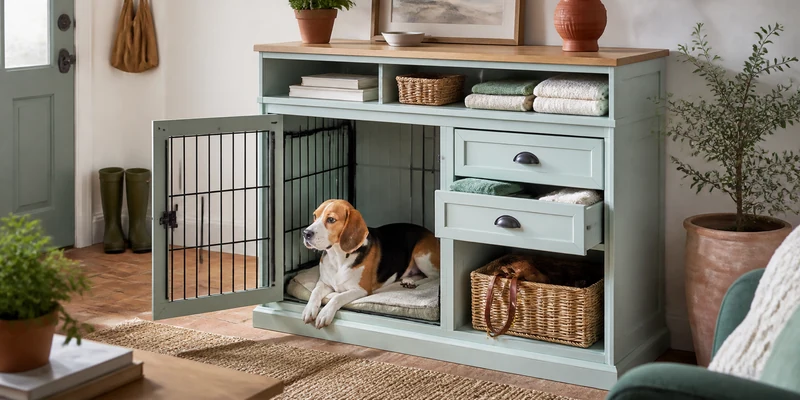
Dog crate furniture with storage answers a truth every dog owner knows: the dog comes with stuff. Leashes, towels, treats, brushes, poop bags, the backup harness, and somehow it all collects on the nearest counter. A crate with a built-in cabinet, drawers, or shelving turns one footprint into the dog’s den and the dog’s closet at once, which in a small home is the difference between organized and overrun.
The format ranges from end tables with a single drawer to full sideboards where the crate occupies one half and cabinetry the other. This guide sorts the storage layouts, flags the structural details that matter when a cabinet also houses an animal, and picks the models owners consistently rate for both jobs.
This article contains affiliate links. If you buy through them, we may earn a commission at no extra cost to you. Learn more.
Quick Answer
What should you look for in dog crate furniture with storage?
- Crate first, storage second: the dog’s compartment must still let it stand, turn, and lie stretched out. Storage that shrinks the den below that line is a bad trade.
- Closed storage beats open shelves for anything edible or chewable; treats and food need a door or drawer the dog cannot nose open.
- Watch total weight and panel thickness. A cabinet loaded with supplies plus a leaning dog demands sturdier board than a plain crate.
Storage Layouts Compared
Storage crates come in four recurring layouts, each with a natural use case.
| Layout | How it works | Best for |
|---|---|---|
| Side cabinet | Crate on one side, a door-fronted cabinet or shelves beside it | Food bins, towels, and bulk supplies; the true “dog station” setup |
| Drawer above or below | A slim drawer built into the crate’s frame | Leashes, bags, brushes; small homes that need every inch |
| Hutch or shelf top | Open shelving stacked above the crate | Display and daily-grab items; rooms where vertical space is free |
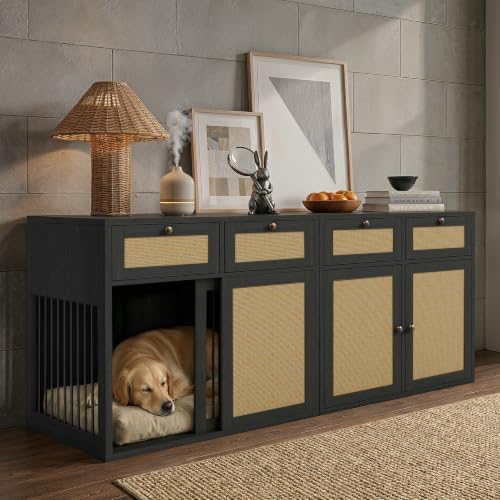
| Console combo | Long sideboard: crate, cabinet, and styled top in one run | Living rooms replacing a media unit or sideboard anyway |
Whichever layout you choose, the core crate rules from the dog crate furniture hub apply unchanged: interior dimensions against your measured dog, a real latch, ventilation on at least two sides, and a cleanable floor.
The Structural Catch of Combined Pieces
A storage crate carries loads a plain crate never sees. Twenty pounds of kibble in the side cabinet, a drawer slammed daily, books on the top, and a dog leaning on the shared wall between den and cabinet: it all lands on the same board and fasteners. That is why panel thickness and hardware quality matter more in this niche, and why the honest signal is, once again, shipping weight. Between two similar sized storage crates, the heavier one is using board that will not sag mid-span a year in.
Also look at how the storage meets the den. The shared wall should be solid, not slatted, so the dog cannot smell and worry at the food stored inches from its nose all night. Drawers need stops that keep them from being pushed out backwards, and cabinet doors want magnetic catches or better, because a food-motivated dog learns friction hinges embarrassingly fast.
Our Top Storage Crate Picks
How we chose: we compared storage-equipped furniture crates on den dimensions, storage usability, panel and hardware quality, and the durability themes repeating in owner reviews, working from manufacturer specifications and review patterns rather than our own testing.
Set assembly expectations accordingly: more panels and more hardware than a plain crate, so budget a long afternoon and tighten in stages. Owners report the payoff is a piece that replaces two other furniture buys.
🏆 Best Overall
A crate-and-cabinet combo whose storage side genuinely swallows a food bin and supplies while the den keeps honest interior space. The full dog-station concept done right.
💛 Best Value
A budget-friendly crate with built-in shelf or drawer storage that adds real organizing capacity for barely more than the plain version costs. The small-space sweet spot.

🐕 Best for Living Rooms
A console-format piece that runs crate, cabinet, and a long styled top in one line, sized to stand in for a media unit. For rooms where the piece will be seen from every seat.

What to Store Where (and What Not to Store)
The closed section is for anything with a smell or a squeak: food, treats, chews, and the toy rotation, all behind a door the dog cannot operate. Open shelves take the neutral items, folded towels, grooming kit, the lint roller, and whatever you grab on the way out the door. The drawer, if you have one, becomes leash-and-bags mission control beside the exit-adjacent crate. What should not live in the piece: medications, which belong out of any dog’s reach entirely, and open water, which threatens the board every time it sloshes.
Two-dog households double the supplies and the argument for a combined piece; the double-crate formats in double dog crate furniture increasingly offer storage variants. And if you are designing a whole corner or room around the dog rather than one cabinet, the ideas in dog room ideas show where a storage crate fits into the bigger picture.
🧱 Also Great
An end table crate with a slim drawer in the frame, for households that need just enough storage for the daily kit without growing the footprint at all.

🛡️ Best Heavy-Duty
A composite-built crate that takes moisture and rough use in stride, the pick when the piece will live in a mudroom or high-traffic hallway rather than a formal living room.
Placement, Loading, and Upkeep
Place the piece where the supplies get used: near the door you walk the dog from, or along the living room wall where evenings happen. Load heavy items low, food bins in the base cabinet rather than on the hutch, and keep the top under its stated weight limit once lamps and decor pile on. Leave clearance for the storage doors and the crate door to open fully at the same time, which is the detail room sketches always miss.
Upkeep is a plain crate’s routine plus cabinet sense. Re-tighten all hardware after the first month, then check drawer slides and door hinges whenever they start to sound different. Vacuum the den corners with the floors, wipe the storage shelves when you refill the food bin, and audit the cabinet quarterly, since expired treats and outgrown harnesses are how the storage side silently fills. A washable mat in the den keeps accidents away from the shared cabinetry board.
Common Mistakes to Avoid
- Letting storage shrink the den. The dog’s compartment is non-negotiable. Compare interior dimensions before admiring drawer counts.
- Storing food behind slats. A dog sleeping nose-to-kibble all night is a frustration machine. Solid wall, closed door.
- Overloading thin tops. Hutch shelves and console tops have limits; heavy items go low.
- Ignoring door clearances. Crate door, cabinet doors, and drawers all need open space at once. Sketch the wall first.
- Buying combined pieces for chewers. More edges, more corners, more regret. Chewers get durable simple crates first.
- Forgetting the piece must move someday. Fully loaded combos are heavy. Empty the storage before shifting it, or the fasteners pay.
Where to Go From Here
If your storage needs outgrow one piece, a dedicated dog corner might serve better; dog room ideas and the entryway logic in mudroom ideas for dogs both scale the concept up. For the styled version of the combined piece, the console formats in modern dog crate furniture overlap heavily with this niche. And the category fundamentals live at the dog crate furniture hub.
Frequently Asked Questions
Is crate furniture with storage worth it over a plain crate? In small homes, usually yes: one footprint does two jobs, and dog supplies get a fixed address. In larger homes with existing storage, a plain crate plus a closet shelf can be the cheaper, sturdier combination.
Can I store dog food in the crate cabinet? Yes, ideally in a sealed bin behind a closed door with a solid wall between food and den. Avoid storing food behind open slats where the dog smells it all night, and never rely on friction hinges against a food-motivated dog.
Do storage crates come in large dog sizes? Fewer than plain crates, since the combined footprint gets enormous. They exist in console formats; check the den’s interior dimensions carefully, and see large dog crate furniture for what big dogs need from the den itself.
Are the drawers and doors dog-proof? Assume determined dogs defeat friction catches. Look for magnetic or positive-latch hardware on any compartment holding food or chews, and store medications elsewhere entirely.
How much weight can the tops hold? It varies by model, so check the stated capacity. As a rule, treat hutch shelves as display-weight only and keep bins and heavy gear in the base cabinet.
The Bottom Line
Dog crate furniture with storage is small-space logic at its best: den, closet, and console in one footprint. Judge the den by the same interior-dimension rules as any crate, demand closed storage with a solid wall for anything edible, and let shipping weight steer you toward board that can carry both a dog and its supplies. One good combined piece can genuinely replace three.