Last updated: August 10, 2026
If you are shopping for a chew proof dog bed, you have probably already paid the tuition: a trail of shredded covers, a living room snowed under with polyfill, and a dog who looked genuinely pleased with himself. The bad news first, because you deserve honesty over marketing: no bed is truly indestructible to a determined dog with unlimited time. The good news is that a real chew-resistant bed changes the odds dramatically, by removing the loose edges, seams, and zipper pulls that give a chewer somewhere to start.
This guide explains how chew-resistant beds are actually built, why warranties matter more here than in any other bed category, which picks survive the most dogs, and the part most guides skip: what the chewing itself is telling you.
This article contains affiliate links. If you buy through them, we may earn a commission at no extra cost to you. Learn more.
Quick Answer
What actually makes a dog bed chew proof?
- Design beats fabric: beds survive chewers by hiding every edge, seam, and zipper inside a metal frame or welded construction, not by using magic material.
- Elevated aluminum-frame cots with no exposed fabric edges are the most survivable format; reinforced ballistic-fabric mattresses are the comfort compromise.
- Buy the warranty as much as the bed: serious chew-resistant brands back their beds against chewing damage, which tells you who believes their own construction.
Chew-Resistant Bed Formats, Ranked by Survivability
Every format trades some comfort for some toughness. Start at the top of this table for the most destructive dogs and work down as the risk drops.
| Format | How it survives | The trade-off |
|---|---|---|
| Armored elevated cot | Fabric edges locked inside an aluminum frame; nothing to grip, nothing to start on | Firm surface, no padding; some dogs miss softness |
| Ballistic fabric mattress | Tightly woven rip-stop style cover, hidden zippers, reinforced seams | Tough, not invincible; a committed chewer can eventually breach a corner |
| Reinforced bolster bed | Chew-resistant fabric over a supportive rim, seams tucked away | The rim is a temptation; best for moderate chewers who want something to lean on |
| Standard cot (mesh) | No stuffing to unstuff, cheap to replace | Exposed fabric edges at the corners; light chewers only |
| Plush bed, any kind | It does not | Polyfill snow. You have seen it |
The elevated formats at the top overlap heavily with our elevated dog bed guide, which covers the airflow and cleaning benefits that come along free. If your chewer is also a big dog, frame strength stacks on top of chew resistance, and the large-dog elevated guide handles that combination.
How Chewers Defeat Beds, and How Design Fights Back
Watch a dog destroy a bed and the sequence is nearly always the same. He does not bite through the middle of the fabric; he finds an edge, a corner seam, a zipper pull, a loose fold, gets a grip, and pulls. Once there is a breach, the stuffing does the rest. Chew-resistant design is simply the systematic removal of starting points.
Edges disappear into metal. On armored cots, the fabric wraps into an aluminum frame channel, so no cut edge is ever exposed. This is the single most effective trick in the category and the reason elevated formats dominate the survivable end of the market.
Seams and zippers hide. On tough mattresses, zippers sit under flaps or underneath the bed, pulls are removed or recessed, and seams are doubled and tucked. A zipper pull is a handle; serious brands treat it that way.
Fabric buys time. Ballistic-style woven nylon and rip-stop fabrics resist puncture and tearing far better than fleece or canvas. But fabric alone only slows a dog down, which is why the construction details above matter more than the material name on the label.
The warranty tells the truth. Chew-resistant specialists, K9 Ballistics most prominently, back their beds with warranties that specifically cover chewing damage, with terms that vary by product line. A brand that guarantees its bed against the exact failure you are worried about has aligned its incentives with yours. Check the current terms before you buy; they are the honest signal in a category full of tough-sounding adjectives.
Our Top Picks for Chewers
How we chose: we compared chew-resistant beds on construction (hidden edges, seams, and zippers), frame material, warranty coverage for chewing damage, and survival stories in owner reviews of destructive dogs. Selections are based on manufacturer specifications and owner reporting, not hands-on testing.
🏆 Best Overall
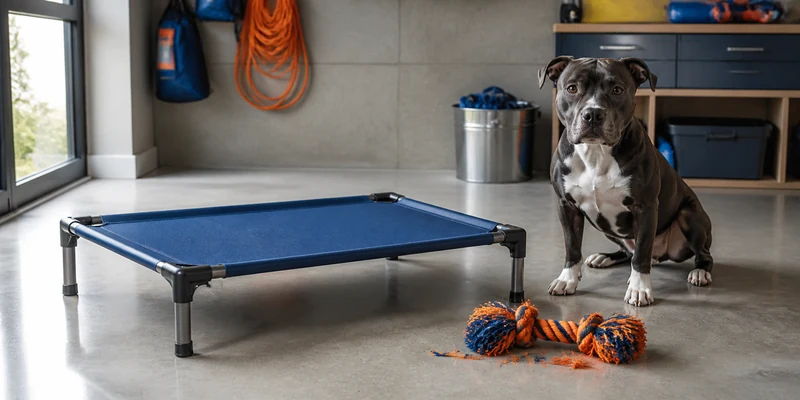
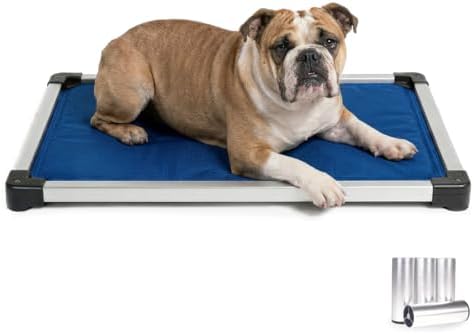
An aluminum-framed elevated cot with rip-stop style fabric locked into the frame, leaving no exposed edge to start on. The reference design for serious chewers, backed by a warranty aimed specifically at them.

🐾 Best for Comfort Seekers
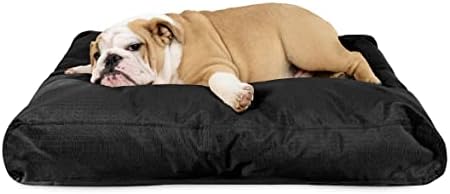
A padded mattress in tough ballistic-style fabric with hidden zippers and reinforced seams, for moderate chewers who genuinely want a soft bed. Tough, washable, and honest about being resistant rather than invincible.
💛 Best Value
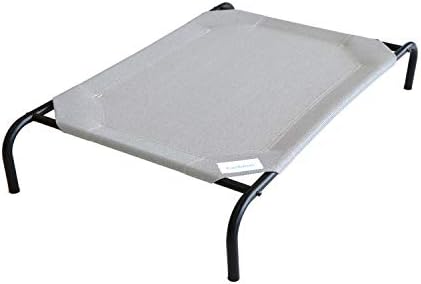
The classic knitted-mesh cot: no stuffing to eviscerate, cheap to replace, and covers sold separately. The right call for light chewers and adolescent dogs who mostly grow out of it.
Why Dogs Chew Beds in the First Place
A tougher bed treats the symptom, and sometimes that is all you need: adolescent dogs chew because their mouths are how they explore, and most simply age out of it with enough appropriate outlets. But persistent bed destruction in an adult dog usually has a reason, and it is worth naming, because the reason decides whether any bed will survive.
Boredom is the big one. A young, under-exercised dog alone with a soft bed for hours will make his own project. More physical exercise, more sniffing time outdoors, and chew toys that are actually meant to be destroyed change bed outcomes more than any fabric can.
Stress chewing is different. A dog who only destroys bedding when left alone, who also scratches doors, drools, or vocalizes, is not bored but distressed. That pattern deserves a conversation with your veterinarian, who can rule out medical causes and point you to a qualified behaviorist. A calmer setup can support that work, and our calming dog bed guide covers the honest version of what comfort furniture can and cannot do. For dogs who need confinement without drama, a properly introduced crate den helps some chewers settle, covered in crate training in a furniture crate.
One More Pick for Crate Chewers
Crate-destroyed bedding is its own niche, because a bored dog in a crate has nothing but time and a fabric target.
💪 Best Heavy-Duty for Crates
A chew-resistant crate pad sized to standard wire crates, with the same hidden-seam construction as the full beds. The pad that finally stays in one piece overnight.
Fit matters doubly in a crate: a pad that slides or bunches creates the loose fold a chewer needs. Measure the crate floor and size the pad to it, and if the crate itself is part of a furniture setup, the sizing rules live in how to measure your dog for furniture.
Living With a Chewer: Practical Rules
A few habits extend any bed’s life, including the armored ones. Rotate real chew outlets, rubber toys, safe edible chews, so the bed is never the most interesting texture in the room, and put the good chew down at the moments destruction usually happens, like when you leave. Pick up and inspect the bed weekly: a lifted corner, a loose thread, or a breached seam caught early is a repair or a warranty claim instead of a midnight polyfill scene.
Supervise the first week with any new bed as if it were a trial, because it is. Some dogs test a new bed once, lose interest when it does not yield, and never try again. Others tell you within days that they need the next tier up. Either way you learn cheaply. And keep expectations calibrated for swallowers: a dog who ingests fabric rather than just shredding it is a genuine safety concern, since swallowed material can cause a blockage that veterinarians treat as urgent. For that dog, choose the formats with nothing loose at all, an armored cot with a bare panel, and call your veterinarian if you suspect he has swallowed bedding.
Common Mistakes to Avoid
- Believing indestructible. No bed is. Buy hidden-edge construction and a chewing warranty, not an adjective.
- Buying plush again, but tougher-looking. If the last three soft beds died, the next bed should be a different format, not a different pattern.
- Ignoring why the dog chews. Bored dogs need exercise and outlets; stressed dogs need the veterinarian and a behaviorist. The bed is the supporting cast.
- Loose-fitting crate pads. Bunched fabric is a starting point. Size the pad to the crate floor.
- Skipping the warranty terms. Coverage differs by product line. Read what is covered and for how long before you rely on it.
- No chew alternatives. A chewer without legal outlets will always find illegal ones, and the bed is right there.
Frequently Asked Questions
Do chew proof dog beds really exist? Truly indestructible, no. But armored elevated cots with no exposed fabric edges survive the vast majority of chewers, and serious brands back that construction with warranties against chewing damage.
What is the toughest type of dog bed? An aluminum-framed elevated cot with the fabric locked inside the frame. There is no edge, seam, or zipper to start on, which removes the way dogs actually destroy beds.
Why does my dog chew his bed? Adolescence, boredom, or stress, roughly in that order of frequency. Persistent destruction that happens mainly when the dog is alone can signal distress and is worth discussing with your veterinarian.
Is a chewed bed dangerous? It can be if the dog swallows fabric or stuffing, which can cause an intestinal blockage that veterinarians treat as urgent. Swallowers should sleep on bare-panel formats with nothing loose, and suspected ingestion is a call to the veterinarian, not a wait-and-see.
Will my dog find a chew-resistant bed comfortable? Cot formats are firm and many dogs love them, especially warm sleepers. Dogs who need padding do better on ballistic-fabric mattresses, the middle ground between soft and survivable.
Do puppies need a chew proof bed? Often, temporarily. Most puppies chew bedding and most grow out of it, so a cheap replaceable cot or tough pad through adolescence beats a premium bed that becomes confetti.
The Bottom Line
A chew proof dog bed is really a bed with no starting points: edges locked in metal, seams and zippers hidden, fabric that resists the first tear. Armored elevated cots are the most survivable format, ballistic mattresses the comfort compromise, and the warranty is the tell for who believes their own build. Pair the bed with real chew outlets, and treat chronic or anxious chewing as information for your veterinarian rather than a shopping problem.